Johnpierre Paglione Receives $1.55M from the Moore Foundation

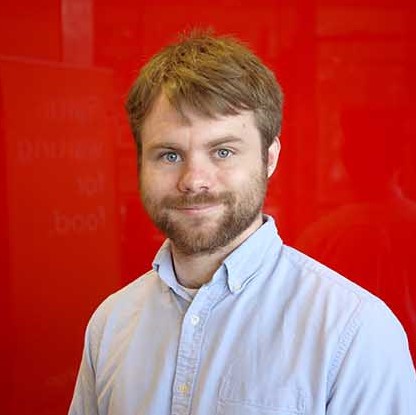
Physics Professor Johnpierre Paglione has been awarded more than $1.5 million by the Gordon and Betty Moore Foundation to study the complex behavior of electrons in quantum materials.paglione jpJohnpierre Paglione
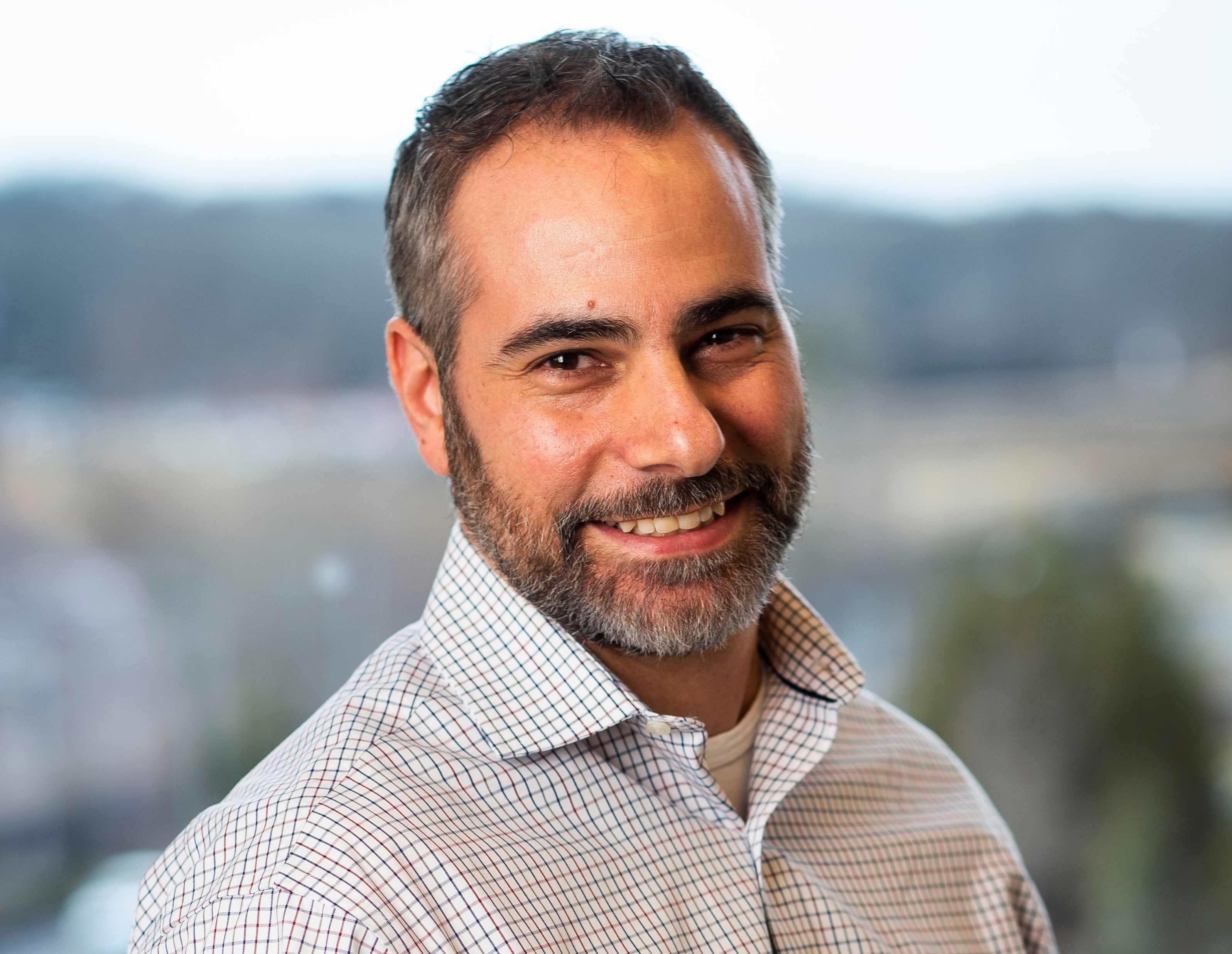
“The Moore Foundation has played a pivotal role in supporting and promoting quantum materials research over the last five years, and I am extremely excited to continue to be part of this effort,” said Paglione, who also directs UMD’s Quantum Materials Center (formerly the Center for Nanophysics and Advanced Materials).

The new grant was awarded by the Moore Foundation’s Emergent Phenomena in Quantum Systems (EPiQS) initiative, a quantum materials research program that funds work on materials synthesis, experiments, and theory, with an interdisciplinary approach that includes physicists, chemists, and materials scientists. EPiQS focuses on exploratory research that develop deep questions about the organizing principles of complex quantum matter, and it also supports progress toward new applications, like quantum computing and precision measurement. 

Paglione’s award for materials synthesis was one of only 13 in the U.S. and renews an earlier grant he received from EPiQS, which has provided more than $120 million to researchers since 2013.

“Fundamental studies of quantum materials play a critical role in not only supporting current development of quantum technologies, but also the discovery of new phenomena that hold promise for future applications,” Paglione said.

In recognition of that critical role, UMD’s Center for Nanophysics and Advanced Materials was renamed to the Quantum Materials Center (QMC) in October. The change emphasized the evolving interests of the Center’s members, and it was announced at a one-day symposium in September organized by Paglione and several colleagues.

“Our center’s purpose will remain focused on the fundamental exploration and development of advanced materials and devices using multidisciplinary expertise drawn from the physics, chemistry, engineering and materials science departments,” Paglione said. “But we will place strong emphasis on the pursuit of optimized and novel quantum phenomena with potential to nucleate future computing, information and energy technologies.”

The symposium brought together many local scientists who study quantum materials, including researchers from the university’s Departments of Physics, Chemistry and Biochemistry, Electrical and Computer Engineering, and Materials Science and Engineering, in addition to researchers from the National Institute of Standards and Technology (NIST) and the Laboratory for Physical Sciences. Amitabh Varshney, dean of UMD’s College of Computer, Mathematical, and Natural Sciences, and Robert Briber, associate dean of UMD’s A. James Clark School of Engineering, attended and shared their perspectives on campus initiatives in quantum science, including the newly formed Quantum Technology Center.

That meeting was bookended by several exciting research results from Paglione and his colleagues in the QMC. In June, they reported capturing the best evidence yet of Klein tunneling, a quantum quirk that allows electrons to burrow through a barrier like it’s not even there. The result, which was featured on the cover of the journal Nature, arises from a duo of quantum effects at the junction of two materials. One is superconductivity, which keeps electrons paired off in highly correlated ways. The other has to do with the precise kind of superconductivity present—in this case, topological superconductivity that further constrains the way that electrons interact with the interface between the two materials. In a nutshell, electrons heading toward the junction aren’t allowed to reflect back, which leads to their perfect transmission.

In August, Paglione and his collaborators published a paper in the journal Science about a new, unconventional superconductor. That material—uranium ditelluride—may also exhibit some effects expected of a topological superconductor, including a demonstrated resilience to magnetic fields that typically destroy superconductivity. One of the paper’s co-authors, NIST scientist and Adjunct Associate Professor of Physics Nicholas Butch, called the material a potential “silicon of the quantum information age,” due to its stability and potential use as a storage medium for the basic units of information in quantum computers.

In a follow-up paper published in the journal Nature Physics in October, many of the same researchers teamed up with scientists from the National High Magnetic Field Laboratory to test the properties of uranium ditelluride under extreme magnetic fields. They observed a rare phenomenon called re-entrant superconductivity, furthering the case that uranium ditelluride is not only a profoundly exotic superconductor, but also a promising material for technological applications. Nicknamed “Lazarus superconductivity” after the biblical figure who rose from the dead, the phenomenon occurs when a superconducting state arises, breaks down, then re-emerges in a material due to a change in a specific parameter—in this case, the application of a very strong magnetic field.

“This is indeed a remarkable material and it’s keeping us very busy,” Paglione said. “Uranium ditelluride may very well become the ‘textbook’ spin-triplet superconductor that people have been seeking for dozens of years and, more importantly, may be the first manifestation of a true intrinsic topological superconductor with potential for all sorts of technologies to come!”

Written by Chris Cesare with contributions from Matthew Wright
A Physics Career Along the Path Less Traveled

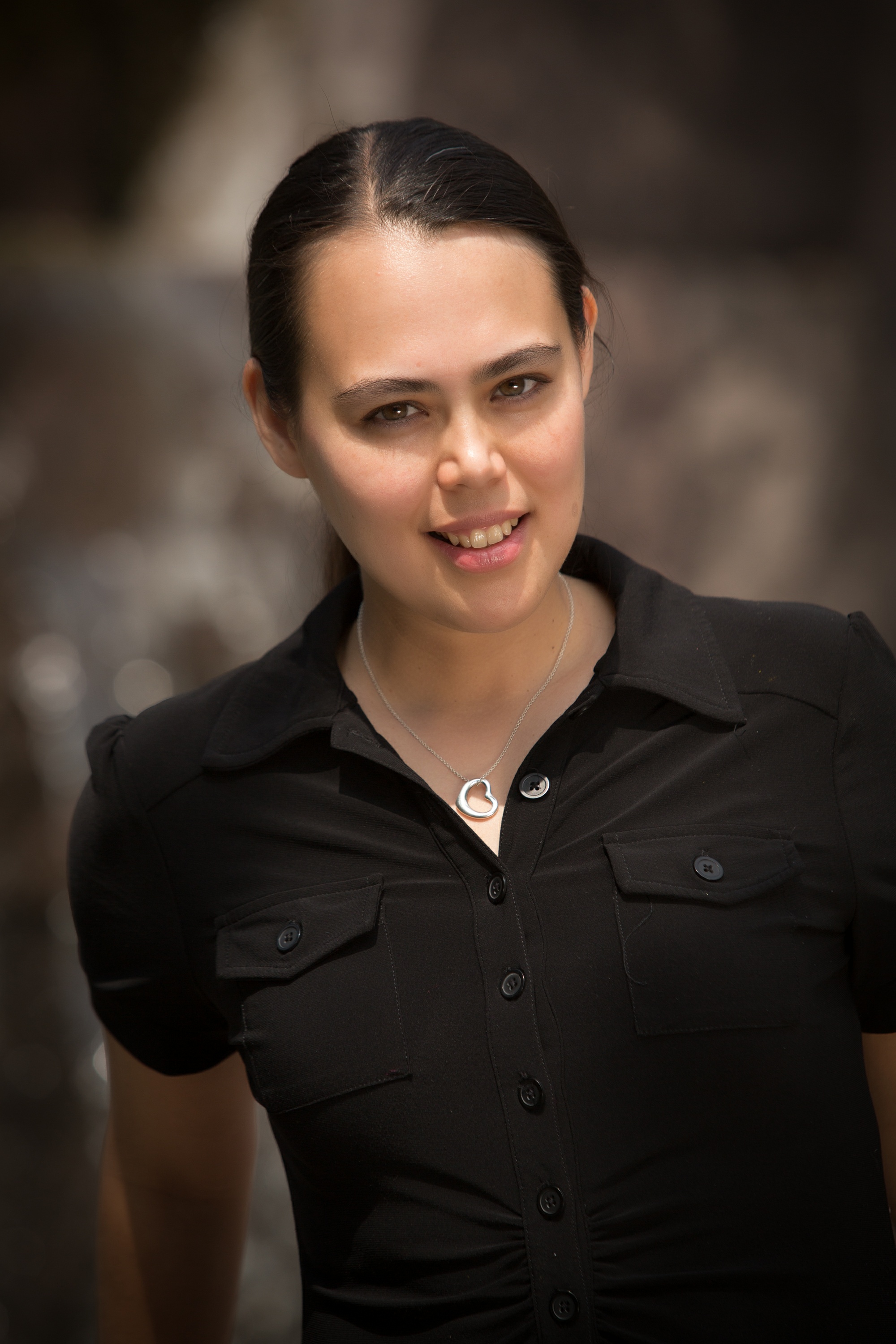
Michelle Girvan’s career defies easy categorization. Currently a professor of physics at the University of Maryland, very little of her research would be immediately recognizable to a physics traditionalist. Instead, she applies her physics training to tackle discipline-spanning scientific questions that range from social relationships and cancer genetics to artificial intelligence (AI). 

When asked how she identifies herself to new colleagues, a thoughtful smile crossed her face as she pondered a reply.GirvanMichelle Girvan

“That’s a very interesting question. I often say I’m a physics professor who does applied mathematics. It’s a broader umbrella that allows me to work on nearly any problem, as long as I focus on the math that underlies it,” explained Girvan, who also has joint appointments in UMD’s Institute for Physical Science and Technology and Institute for Research in Electronics and Applied Physics. “But I still think of myself as a physicist, because physicists seek simple, cohesive explanations for complex phenomena. I’m still looking for those overarching organizing principles, even if I’m applying them to biological or social problems.”

Girvan is quick to point out that, while her approach may be nontraditional, she’s far from alone. She notes a recent meeting of the American Physical Society that featured sessions on neural networks, gene regulation and econophysics—a relatively new field that applies physical theories and methodologies to the study of economics. The common thread among these scientists, Girvan said, is that they tackle their research by first asking, “How would a physicist solve this problem?”

“I think we need more of that,” Girvan added. “A physicist’s perspective might help identify patterns and phenomena that can go unnoticed by others who focus on fine-scale details.”

Girvan’s unorthodox path began during her undergraduate studies in physics and math at the Massachusetts Institute of Technology, where a course in the Department of Earth, Atmospheric and Planetary Sciences first introduced her to the concepts of chaos, nonlinear dynamics and complexity. From there, she went to Cornell University to pursue her Ph.D. with applied mathematician Steven Strogatz, then on to a postdoctoral fellowship at the Santa Fe Institute, where she now holds an external faculty position. 

During her first stint at the Santa Fe Institute, she co-developed the well-known Girvan-Newman algorithm in collaboration with Mark Newman, now at the University of Michigan. They published their work in the Proceedings of the National Academy of Sciences in 2002. Broadly stated, the algorithm helps to identify relationships, connections and groupings in networks that might not be readily apparent. 

“If you were to apply the algorithm to a social media network, for example, you might logically expect to find people divided into strong social or professional groups. Among scientists, you’d expect physicists to be grouped with other physicists, biologists with biologists, and so on,” Girvan said. “Our algorithm can also help identify interesting deviations from these expected norms.”  

The Girvan-Newman algorithm can also be applied to the recommendation systems used by online retailers and streaming entertainment services like Netflix and Spotify, Girvan noted. 

“If you link two movies together, in terms of the frequency they’re watched by the same person, the algorithm can uncover groupings that might not be obvious,” Girvan said. “Action movie fans interested in science fiction might also like a third kind of movie you wouldn’t expect.”

Girvan joined UMD in 2007, drawn in no small part by the university’s strong tradition in nonlinear dynamics. She has collaborated frequently with many researchers across campus, including two world-renowned experts: Distinguished University Professors Edward Ott and James Yorke, both well known for their landmark publications in chaos theory and other aspects of nonlinear dynamics. 

Here at UMD, Girvan has applied the tools and philosophical framework of physics to investigate questions in ecology, genetics, development, cancer biology, neuroscience, social networks, machine learning and more. At the moment, she is highly interested in the interface between the human brain and artificial neural networks. 

“Living in this age of rapid advancements in AI, I want to know how our understanding of the human brain, at an abstract level, can help us develop more effective AI methodologies,” Girvan said. 

Girvan is also pursuing approaches for integrating knowledge-based models derived from physics with knowledge-free AI models. 

“So many successes in AI and machine learning have come from ‘black box’ approaches—you throw a lot of data at an AI system and it learns how to make predictions. But these black-box models don’t help us understand the natural world any better,” Girvan said. “By incorporating what we already know about the underlying physics, we can build hybrid systems that combine knowledge-based approaches and knowledge-free approaches, enabling more accurate predictions that also give us new insights into how the world works.” 

Girvan also has a strong interest in training the next generation of discipline-defying researchers. She currently serves as the principal investigator for COMBINE: Computation and Mathematics for Biological Networks, UMD’s National Science Foundation (NSF)-funded Research Traineeship (NRT) program in network biology. The program immerses graduate students in research and training that integrates tools from physics, mathematics and computer science to gain deeper insights into the principles that govern living systems. 

“We’re interested in students who want to solve life science problems where network structure matters, from neurological to ecological networks,” Girvan said. “We brought in a diverse group of faculty from a wide range of disciplines to help with the effort. We have about two and a half years of NSF funding left, so we’re looking into other ways to keep it going.”

While her career path as a physicist may play fast and loose with tradition, Girvan isn’t opposed to all time-honored conventions. In her free time, she participates in one of the oldest sporting endeavors known: equestrian competition. 

“I have some of my best thoughts after I’m done riding,” Girvan mused. “I feel like it takes me out of the local landscape where I’m stuck on the small problems and clears any blockages I might have in my head.”

Written by Matthew Wright

Listen to Michelle Girvan discuss how artificial intelligence can help predict chaotic behavior. 


Recent Alumnus Zachary Eldredge Studies Solar Energy as ORISE Fellow

As a student, Zachary Eldredge (Ph.D. ’19, physics) examined the use of quantum mechanics to improve measurements.

“If you nEldredge 2020Zach Eldredge. Photo by Faye Levine.eed to know the difference in some quantity between two points, a common method is to measure the quantity at each point and then subtract,” Eldredge explained. “Instead, we developed methods to measure the difference directly. Our methods are more accurate because we only measure once, not twice.”

After graduating last May, Eldredge took this expertise and his strong physics foundation to the Department of Energy’s Solar Technologies Office, which aims to make solar energy less expensive and more accessible and increase the amount of renewable energy in the United States. He spent seven months working in the office as an Oak Ridge Institute for Science and Education (ORISE) Fellow and is now a technology manager.

“The process of how technologies progress from lab science to usable products is really interesting to me and was important to my quantum research, as quantum technology is trying to make that same leap at the moment,” he said. “In addition, physics has been a wonderful foundation. A good physics education prepares you to pick out the relevant patterns and generalize knowledge really quickly, and it's been a great help in giving me the background to get up to speed on all kinds of other technologies.”

Eldredge knew early on in his studies that he was interested in finding a science policy job to align with his interests in climate, renewable energy and technology development. 

“I really wanted to shift gears from my academic work into something more climate focused, and the ORISE fellowship provided a great opportunity.”

During his time at Maryland, Eldredge co-authored nine publications, including three first-author papers published in the journals Physical Review A and Physical Review Letters. 

“I’m proud to say that two of Zach’s papers are the highlights of my own research over the past few years,” said Alexey Gorshkov, Eldredge’s advisor who is an adjunct associate professor in the Department of Physics and a physicist at the National Institute of Standards and Technology. “In fact, these two papers are so promising that we filed patents for the corresponding ideas, all having to do with the harnessing of the peculiarities of quantum mechanics for technologies such as powerful computing, secure communication and superior sensing.”

In addition to his work in the lab, Eldredge served as president of the social activism group Science for the People UMD and as a member of the Graduate Student Government. 

“Not only is Zach an excellent physicist, he was also an excellent citizen of the department,” said Steve Rolston, professor of physics and department chair. “He was one of the most active members of our self-organized graduate student committee, which strives to make graduate school as positive an experience as possible.” 

Eldredge also participated in public outreach activities, such as the American Physical Society’s Congressional Visits Day, the USA Science & Engineering Festival, and UMD’s Maryland Day. 

“I felt I had a duty as a publicly funded scientist at a major public university to reach out and talk to people, because the knowledge I gained there belongs to everyone,” Eldredge said. “When we discover amazing things, it is on us to communicate about them to the public.”


Written by Chelsea Torres

Fifth Edition of “Exploring Quantum Physics” to Launch on Coursera

Charles Clark and Victor Galitski will launch the fifth edition of their Coursera class on quantum physics Jan. 20, 2020. Alireza Parhizkar, a UMD graduate student will serve as teaching assistant.

“The course begins by establishing the conceptual grounds of quantum mechanics and promises an exciting journey,” says Parhizkar, who joined Galitski’s research group in the summer of 2019. “It fulfills this promise by immersing the learner in advanced subjects of quantum physics, like superconductivity and path integrals, and illustrating them with colorful exercises.”   coursera cats bannerTwo JQI Fellows will launch the fifth edition of "Exploring Quantum Physics" on Coursera Jan. 20. (Credit: Anna Bogatin)

The free course, titled “Exploring Quantum Physics,” explains topics in quantum physics at a level appropriate for an advanced undergraduate or beginning graduate student. The previous four editions had a total of about 100,000 enrollees, with roughly 2,000 people completing the course. “That’s a good number for a massive open online course, or MOOC,” says Clark, who is an Adjunct Professor of Physics, a Fellow of the Joint Quantum Institute (JQI), and a Fellow at the National Institute of Standards and Technology in Gaithersburg, Maryland. Clark adds that the new edition of the course has a revised grading system as well as updated homework and exam questions.

“Exploring Quantum Physics” consists of eight weeks of video lectures, with a number of five- to fifteen-minute videos per week. The videos include voluntary ungraded quizzes, which automatically pause the presentation so that students have an opportunity to answer relevant questions. There are also weekly homework assignments—some will include reading historical papers by influential early quantum scientists such as Albert Einstein and Niels Bohr—as well as a final exam. “We tried to strike a balance between providing a historical perspective on the early development of quantum physics and modern concepts,says Galitski, who holds the Chesapeake Chair of Theoretical Physics at the University of Maryland (UMD).

An advantage of MOOCs is that the course material is available to anyone, including some students who are younger than traditional undergraduates. Khadija Niazi and her twin brother Muhammad, who grew up in Pakistan, were 13 years old when they enrolled in an earlier edition of the course. Khadija, who once spoke about her experience with MOOCs at the World Economic Forum, says that she “thoroughly enjoyed that course [e]specially because of the peer's help and Charles Clark's constant help and encouragement in the forums.” Before beginning the quantum physics course, the twins had completed some introductory physics classes on the site and learned some calculus from videos on YouTube. Muhammad says that they wanted “to get a taste of what lies ahead.”

Both Niazi siblings stayed in contact with Clark after completing the class. Muhammad, who went on to publish his first experimental physics paper in the journal Royal Society Open Science when he was 16, says he will probably take the new edition of the course to solidify his understanding of the content.

Michael Winer, a physics graduate student at UMD, took an earlier edition of the course when he was a 10th grader at Montgomery Blair High School in Silver Spring, Maryland because he hoped to do physics research over the summer. “By far the greatest thing that came out of my taking the course was that I contacted professor Galitski and did research with him for two summers,” Winer says. “This was my first real research experience, and taught me a lot about the scientific process.” That work led Winer to win the Intel Science Talent Search competition in 2015, earning him a prize of $150,000 and a meeting with President Obama.

“Exploring Quantum Physics” is now open for enrollment. To learn more about the course and to see a detailed syllabus, please visit the landing page at Coursera.

Original story by by Jillian Kunze