• Home
  • About Us
    • Physics Administration
    • Directions
    • Awards
    • Student Awards
    • Make a Donation
    • News
      • Research News
      • Department News
      • Newsletters
    • PTK Policy
  • People
    • All
    • Faculty
      • Current
      • Emeritus
      • Adjunct
      • Affiliate
      • Research Professors
    • Research Scientists
    • Postdocs
    • Staff
    • Lecturers
    • Visitors
    • Graduate Students
  • Research
    • Research Areas
      • AI and Physical Sciences
      • Astro Metrology
      • Atomic, Molecular & Optical
      • Biophysics
      • Chemical Physics
      • Condensed Matter Experiment
      • Condensed Matter Theory
      • Cosmic Ray Physics
      • Elementary Particles
      • Gravitation Experiment
      • Gravitational Theory
      • High Energy Physics
      • Nonlinear Dynamics, Chaos and Complex Systems
      • Nuclear Physics
      • Particle Astrophysics
      • Physics Education Research
      • Plasma Physics
      • Plasma Theory
      • Quantum Science and Technology
      • Quarks, Hadrons and Nuclei
      • Space Physics
    • Centers & Institutes
  • Academics
    • OSES Home (Student Services)
    • OSES News
    • Undergraduate Program
      • Prospective Students
      • Apply Now
      • Degree Requirements and Policies
      • Scholarships
      • Undergraduate Research
      • Advising
      • Undergraduate Forms
      • Undergraduate Events
      • Departmental Honors
      • Society of Physics Students
      • FAQ
      • Undergraduate Student Committee
    • Graduate Program
      • Prospective Students
      • Open House
      • Degree Requirements
      • Graduate Resources
      • Deadlines and Forms
      • PhD Defenses
        • PhD Defenses 2026
        • PhD Defenses 2025
        • PhD Defenses 2024
        • PhD Defenses 2023
        • PhD Defenses 2022
        • PhD Defenses 2021
        • PhD Defenses 2020
        • PhD Defenses 2019
        • PhD Defenses 2018
        • PhD Defenses 2017
        • PhD Defenses 2016
      • Events
      • Scholarships & Awards
      • Qualifier
      • Graduate Student Organizations
      • FAQ
    • Student Opportunities
      • GRAD-MAP
      • Graduate Student Organizations
      • Outreach Volunteering
      • Society of Physics Students
      • NSF S-STEM Program
      • Undergraduate Research
      • The Noether Physics Society
      • Undergraduate Quantum Association
    • Courses
    • Academic Support
    • NSF S-STEM Program
    • Teaching Assistants
  • Events
    • Calendar
    • Physics Colloquia
    • W.J. Carr Lecture
    • Research Interaction Team (RIT) Math/Physics
    • Mechanick Quantum Biology Lecture
    • Irving and Renee Milchberg Endowed Lectureship
    • Charles W. Misner Endowed Lectureship in Gravitational Physics
    • Charles W. Misner Memorial Symposium
    • John S. Toll Endowed Lecture
    • Prange Prize Lecture
    • Maryland Day
    • Outreach
      • Outreach Home
      • Physics is Phun
      • Discovery Days
    • Summer Programs
      • Physics Makers Camp
      • Physics of Quidditch
      • Science Discovery Camp
      • Advanced Physics Summer Program
      • Toolkit for Success
    • CUWiP
    • Vortex Makerspace
    • QURiSE Conference
  • Services
    • Building Access Requests
    • Computing Services
    • Conference Room Reservations
    • Department Operations Directory
    • Electronic and Mechanical Development
    • Hiring Procedures
    • Lecture Demo
    • Mental Health Resources
    • Parking
    • Physics Ombudspersons
    • Printing Services
      • Poster Print Request
    • Proposal Submissions
    • Purchase Order
    • Suggestion Box
    • Textbook Information
  • Give
  1. Home
  2. About Us
  3. News

Written on 07 February 2019. Posted in Research News.

Researchers Develop First Fabric to Automatically Cool or Insulate Depending on Conditions

Physics Professor Min Ouyang and Biochemistry Professor YuHuang Wang have created a fabric that dynamically regulates heat passing through it.

Despite decades of innovation in fabrics with high-tech thermal properties that keep marathon runners cool or alpine hikers warm, there has never been a material that changes its insulating properties in response to the environment. Until now.
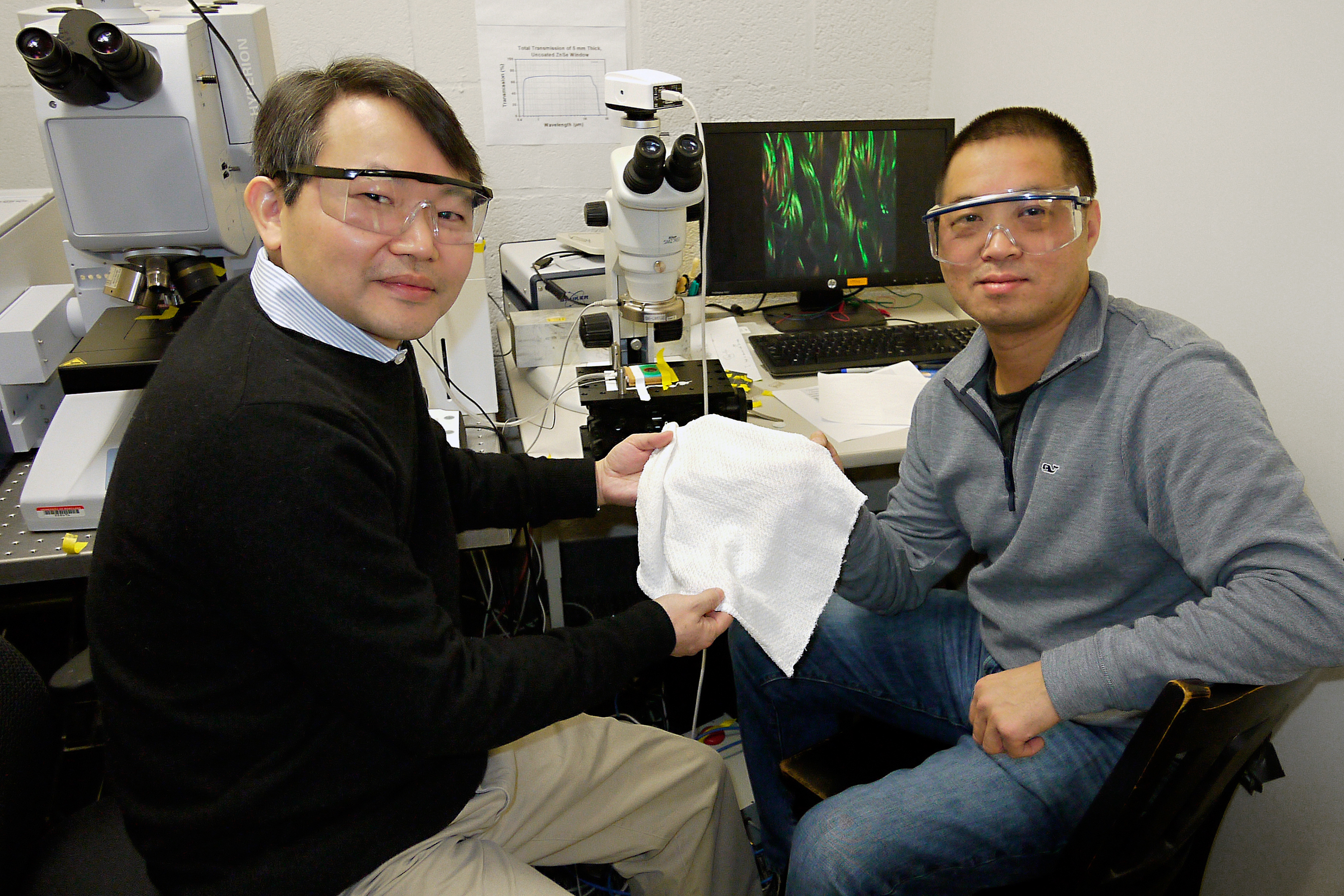
University of Maryland Chemistry and Biochemistry Professor YuHuang Wang (left) and Physics Professor Min Ouyang hold a swatch of their new fabric that can automatically adjust its insulating properties to warm or cool a human body. Photo: Faye Levine, University of Maryland 

University of Maryland researchers have created a fabric that can automatically regulate the amount of heat that passes through it. When conditions are warm and moist, such as those near a sweating body, the fabric allows infrared radiation (heat) to pass through. When conditions become cooler and drier, the fabric reduces the heat that escapes. The development was reported in the February 8, 2019 issue of the journal Science.

The researchers created the fabric from specially engineered yarn coated with a conductive metal. Under hot, humid conditions, the strands of yarn compact and activate the coating, which changes the way the fabric interacts with infrared radiation. They refer to the action as “gating” of infrared radiation, which acts as a tunable blind to transmit or block heat.

“This is the first technology that allows us to dynamically gate infrared radiation,” said YuHuang Wang, a professor of chemistry and biochemistry at UMD and one of the paper’s corresponding authors who directed the studies.

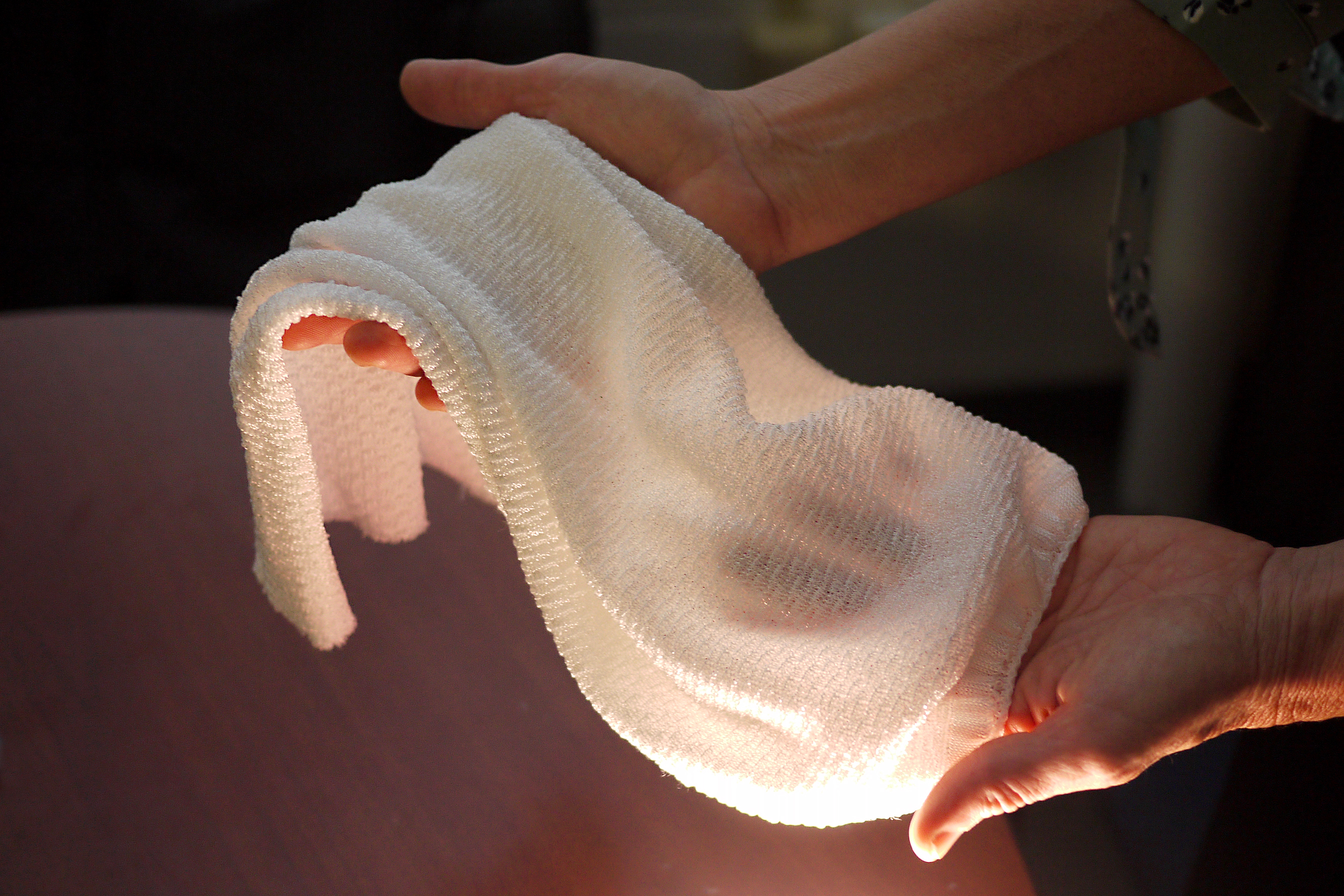
New IR regulating fabric in development at UMDThis new fabric being developed by University of Maryland scientists YuHuang Wang and Ouyang Min is the first textile to automatically change properties to trap or release heat depending on conditions. Photo: Faye Levine, University of Maryland

The base yarn for this new textile is created with fibers made of two different synthetic materials—one absorbs water and the other repels it. The strands are coated with carbon nanotubes, a special class of lightweight, carbon-based, conductive metal. Because materials in the fibers both resist and absorb water, the fibers warp when exposed to humidity such as that surrounding a sweating body. That distortion brings the strands of yarn closer together, which does two things. First, it opens the pores in the fabric. This has a small cooling effect because it allows heat to escape. Second, and most importantly, it modifies the electromagnetic coupling between the carbon nanotubes in the coating.

“You can think of this coupling effect like the bending of a radio antenna to change the wavelength or frequency it resonates with,” Wang said. “It’s a very simplified way to think of it, but imagine bringing two antennae close together to regulate the kind of electromagnetic wave they pick up. When the fibers are brought closer together, the radiation they interact with changes. In clothing, that means the fabric interacts with the heat radiating from the human body.”

Depending on the tuning, the fabric either blocks infrared radiation or allows it to pass through. The reaction is almost instant, so before people realize they’re getting hot, the garment could already be cooling them down. On the flip side, as a body cools down, the dynamic gating mechanism works in reverse to trap in heat.

“The human body is a perfect radiator. It gives off heat quickly,” said Min Ouyang, a professor of physics at UMD and the paper’s other corresponding author. “For all of history, the only way to regulate the radiator has been to take clothes off or put clothes on. But this fabric is a true bidirectional regulator.”
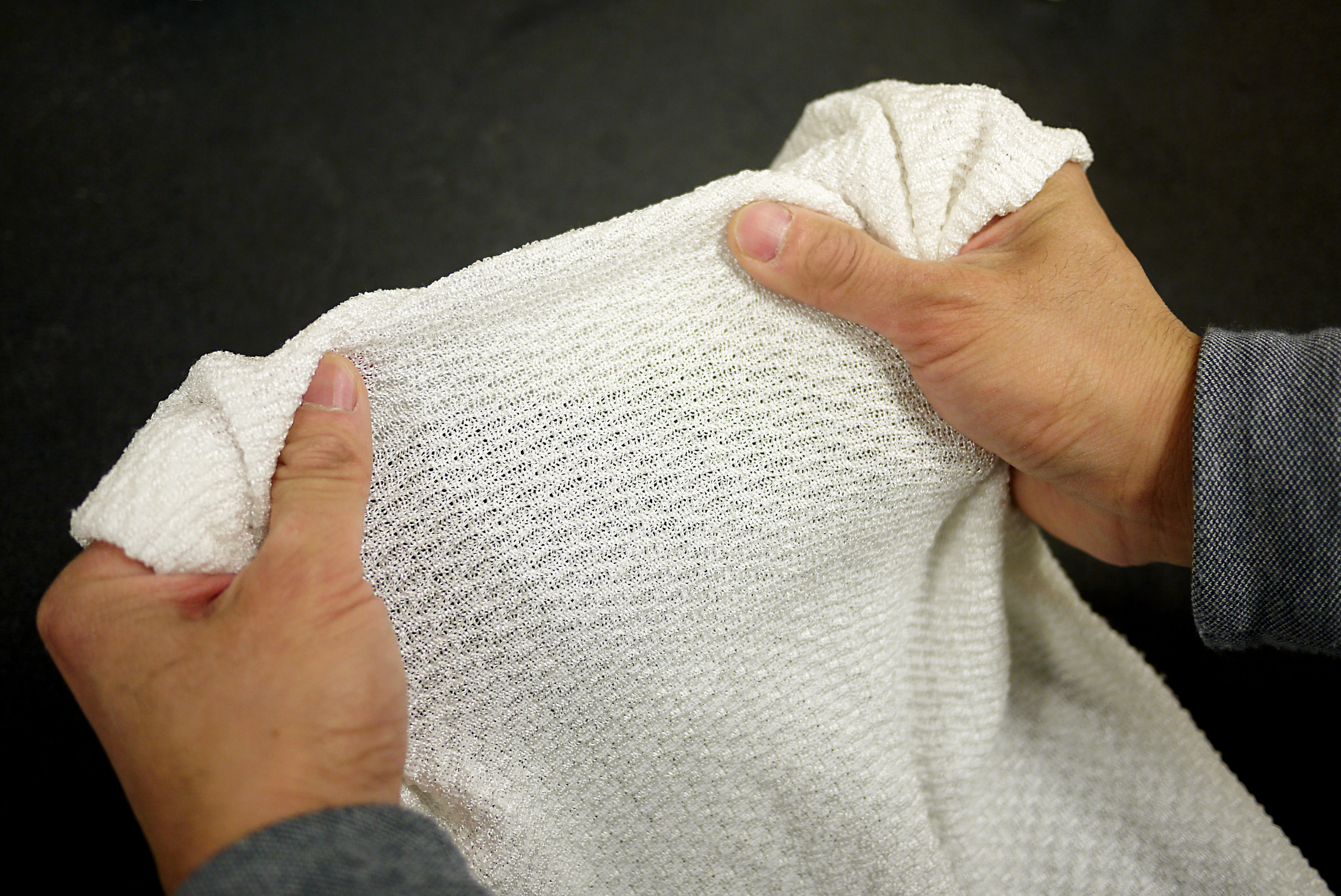
This new fabric being developed by University of Maryland scientists YuHuang Wang and Ouyang Min is the first textile to automatically change properties to trap or release heat depending on conditions. Photo: Faye Levine, University of Maryland This new fabric being developed by University of Maryland scientists YuHuang Wang and Ouyang Min is the first textile to automatically change properties to trap or release heat depending on conditions. Photo: Faye Levine, University of Maryland

According to the Science paper, this is first textile shown to be able to regulate heat exchange with the environment.

“This pioneering work provides an exciting new switchable characteristic for comfort-adjusting clothing,” said Ray Baughman, a professor of chemistry at the University of Texas who was not involved in the study. “Textiles were known that increase porosity in response to sweat or increasing temperature, as well as textiles that transmit the infrared radiation associated with body temperatures. However, no one before had found a way to switch both the porosity and infrared transparency of a textile so as to provide increased comfort in response to environmental conditions.”

More work is needed before the fabric can be commercialized, but according to the researchers, materials used for the base fiber are readily available and the carbon coating can be easily added during standard dyeing process.

“I think it’s very exciting to be able to apply this gating phenomenon to the development of a textile that has the ability to improve the functionality of clothing and other fabrics,” Ouyang said.

###

Additional co-authors of the research paper from UMD’s Department of Chemistry and Biochemistry include visiting research scientist Xu A. Zhang; postdoctoral researchers Xiaojian Wu, Beibei Xu, Min Li and Yongxin Wang; associate research professor Zhiwei Peng; postdoctoral associate  Shunliu Deng; and graduate student Zupeng Wu. UMD Department of Physics graduate research associate Shangjie Yu is also a co-author. In addition, Wen-An Chiou of the Maryland NanoCenter performed the microtome and Transmission Electron Microscopy (TEM) analysis.

This work was supported by the Advanced Research Projects Agency-Energy (ARPA-E), U.S. Department of Energy, as part of its “Delivering Efficient Local Thermal Amenities (DELTA)” program (Award No. DE-AR0000527). The content of this article does not necessarily reflect the views of this organization.

The research paper, “Dynamic gating of infrared radiation in a textile,” Xu A. Zhang, Shangjie Yu, Beibei Xu, Min Li, Zhiwei Peng, Yongxin Wang, Shunliu Deng, Xiaojian Wu, Zupeng Wu, Min Ouyang, YuHuang Wang, was published in the journal Science February 8, 2019.

Media Relations Contact: Kimbra Cutlip, 301-405-9463,

University of Maryland

College of Computer, Mathematical, and Natural Sciences

2300 Symons Hall

College Park, Md. 20742

www.cmns.umd.edu

@UMDscience

About the College of Computer, Mathematical, and Natural Sciences

The College of Computer, Mathematical, and Natural Sciences at the University of Maryland educates more than 9,000 future scientific leaders in its undergraduate and graduate programs each year. The college's 10 departments and more than a dozen interdisciplinary research centers foster scientific discovery with annual sponsored research funding exceeding $175 million.
Written on 06 February 2019. Posted in Department News.

Norbert M. Linke Joins UMD Physics

Norbert M. Linke has joined the Department of Physics as an assistant professor. He has been a member of the department since 2015, first as a post-doc and then as a research scientist at the Joint Quantum Institute. Working in the group of Chris Monroe, he led a project that turned a physics experiment into a programmable quantum computer. This work helped establish trapped atomic ions as a leading contender in the quantum computing realm, and produced the first cross-platform comparison of two quantum computers in 2017. 

Linke was born in Munich, Germany,  and graduated from the University of Ulm, Germany. He received his doctorate at the University of Oxford, UK, working on micro-fabricated ion-traps, high-fidelity quantum gates, and microwave-addressing of ions under David Lucas. 

His new group at UMD continues to work on quantum applications with trapped ions, implementing more sophisticated algorithms, but also expanding to simulations of new and unusual quantum dynamics involving the ions' motional degrees of freedom. Additionally, his lab has launched a new project to realize long-distance quantum communication using trapped ions and near-telecom photons. 

 
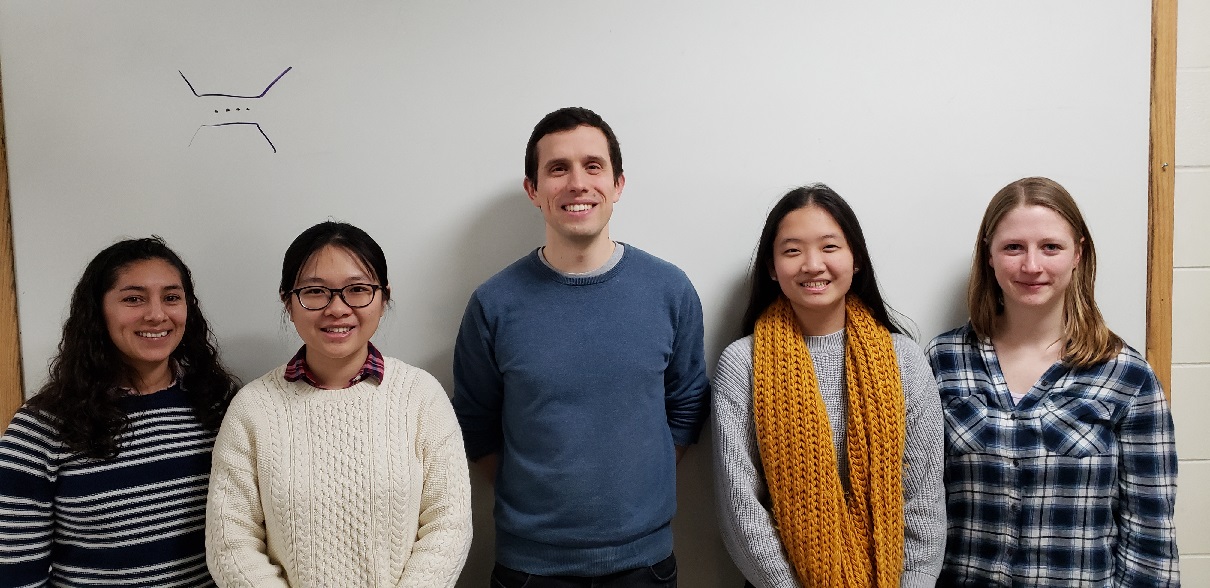
Norbert Linke and his initial research team at the Joint Quantum Institute (UMD, Jan 2019). A strong representation of women is unfortunately still unusual in the STEM realm, and the group is committed to continuously improving at providing an inclusive environment.
Written on 05 February 2019. Posted in Department News.

Daniel Lathrop Comments on Earth's Changing Magnetic Poles in Phys.org Article

Professor Daniel Lathrop commented on the movement of Earth's magnetic poles and an eventually flipping of the poles in an article titled, "Check Your Compass: The Magnetic North Pole is on the Move" on Phys.org this week. 

Written on 01 February 2019. Posted in Research News.

Glass Fibers and Light Offer New Control Over Atomic Fluorescence

Electrons inside an atom whip around the nucleus like satellites around the Earth, occupying orbits determined by quantum physics. Light can boost an electron to a different, more energetic orbit, but that high doesn’t last forever. At some point the excited electron will relax back to its original orbit, causing the atom to spontaneously emit light that scientists call fluorescence.   

Scientists can play tricks with an atom’s surroundings to tweak the relaxation time for high-flying electrons, which then dictates the rate of fluorescence. In a new study, researchers at the Joint Quantum Institute observed that a tiny thread of glass, called an optical nanofiber, had a significant impact on how fast a rubidium atom releases light. The research, which appeared as an Editor’s Suggestion in Physical Review A, showed that the fluorescence depended on the shape of light used to excite the atoms when they were near the nanofiber.

“Atoms are kind of like antennas, absorbing light and emitting it back out into space, and anything sitting nearby can potentially affect this radiative process,” says Pablo Solano, the lead author on the study and a University of Maryland graduate student at the time this research was performed.  

To probe how the environment affects these atomic antennas, Solano and his collaborators surround a nanofiber with a cloud of rubidium atoms. Nanofibers are custom-made conduits that allow much of the light to travel on the outside of the fiber, enhancing its interactions with atoms. The atoms closest to the nanofiber—within 200 nanometers—felt its presence the most. Some of the fluorescence from atoms in this region hit the fiber and bounced back to the atoms in an exchange that ultimately modified how long a rubidium atom’s electron stayed excited.   

The researchers found that the electron lifetime and subsequent atomic emissions depended on the wave characteristics of the light. Light waves oscillate as they travel, sometimes slithering like a sidewinder snake and other times corkscrewing like a strand of DNA. The researchers saw that for certain light shapes the electron lingered in the excited state, and for others, it made a more abrupt exit.

“We were able to use the oscillation properties of light as a kind of knob to control how atomic fluorescence near the nanofiber turned on,” Solano says.  

The team originally set out to measure the effects the nanofiber had on atoms, and compare the results to theoretical predictions for this system. They found disagreements between their measurements and existing models that incorporate many of the complex details of rubidium’s internal structure. This new research paints a simpler picture of the atom-fiber interactions, and the team says more research is needed to understand the discrepancies. 

"We believe this work is an important step in the on-going quest for a better understanding of the interaction between light and atoms near a nanoscale light-guiding structure, such as the optical nanofiber we used here," says JQI Fellow and NIST scientist William Phillips, who is also one of the lead investigators on the study.   

Written by Emily Edwards

Solano is currently a postdoctoral researcher at the MIT-Harvard University Center for Ultra Cold Atoms.  In addition, the following researchers were authors on this study.  

Read more information on this and the Joint Quantum Institute.

Written on 28 January 2019. Posted in Department News.

Weber Garden Dedication Held March 12

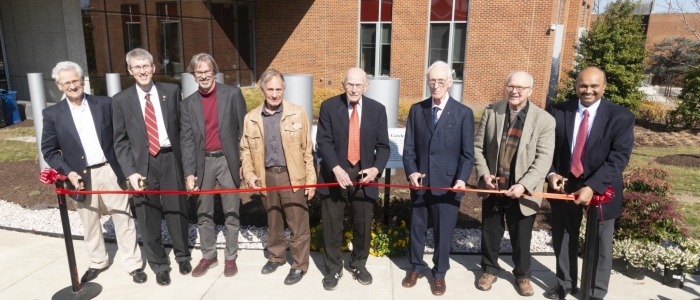
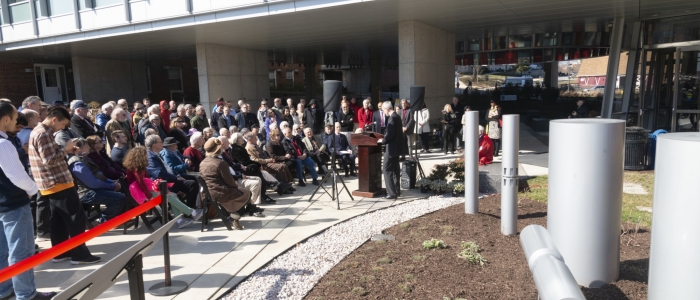
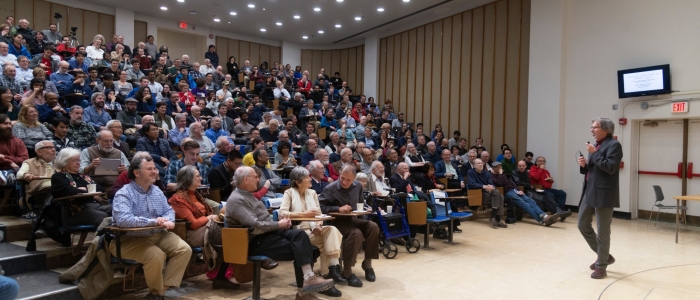
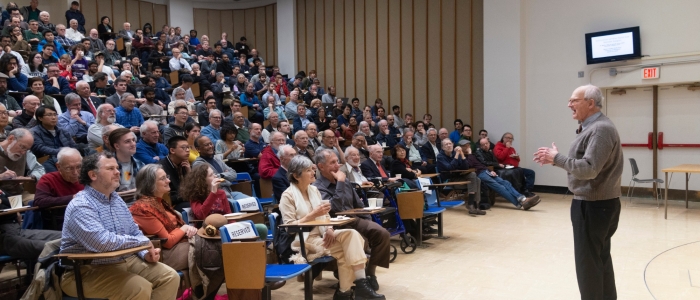
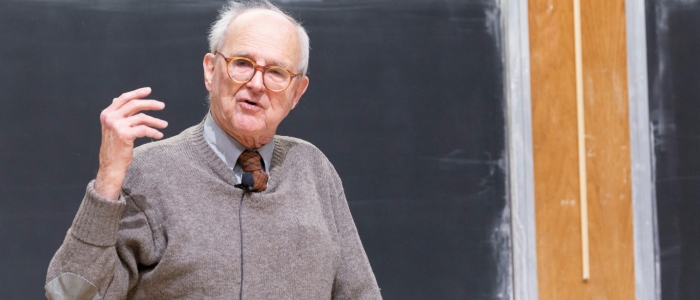
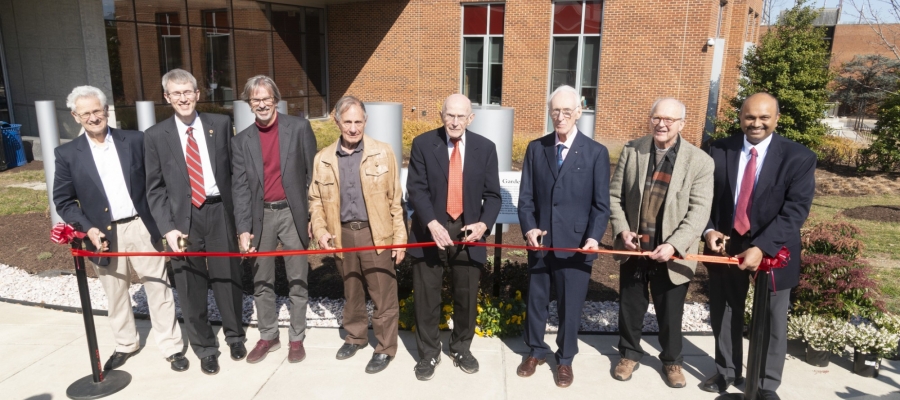
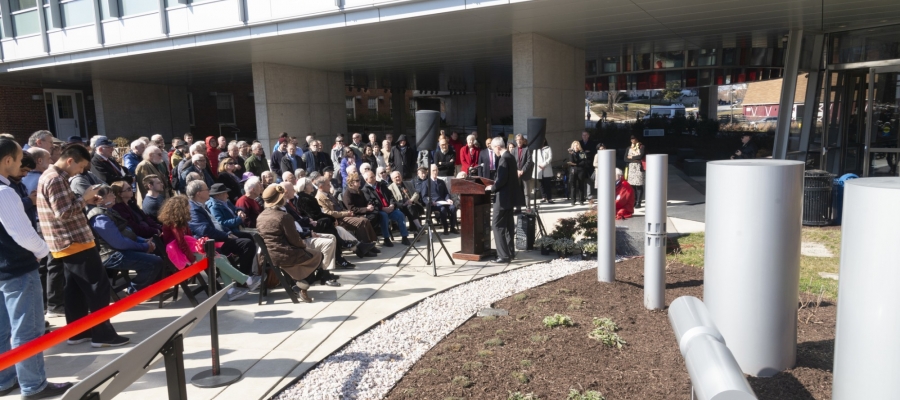
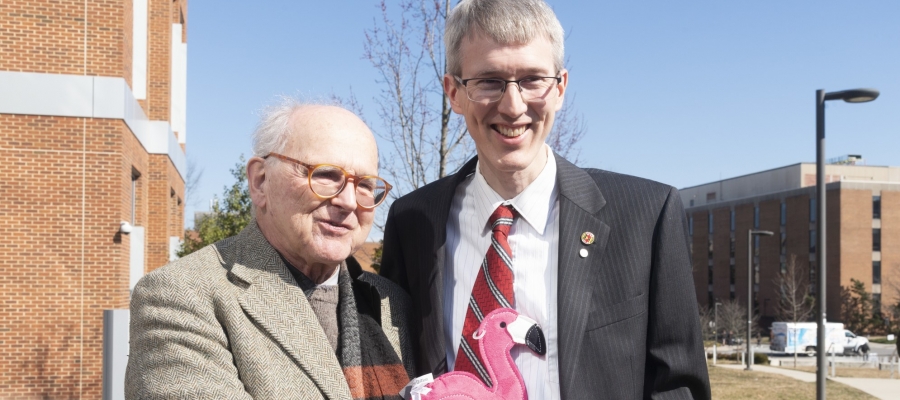
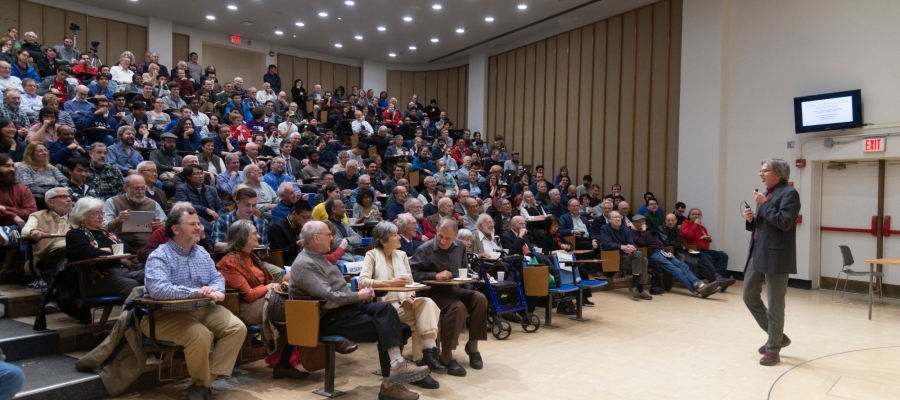
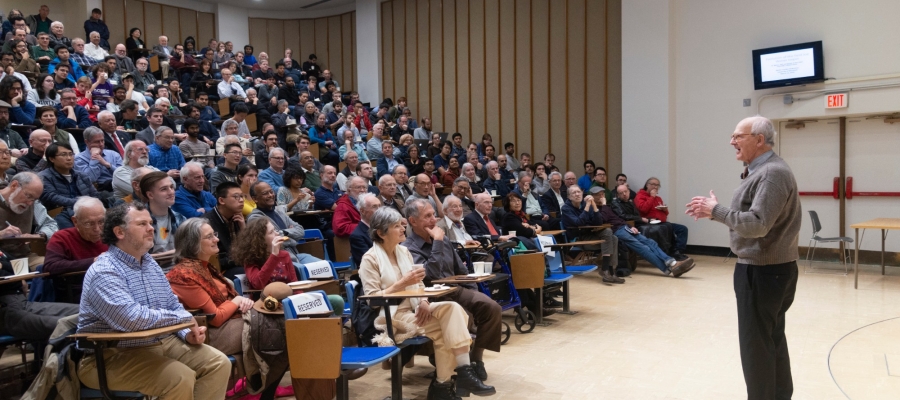
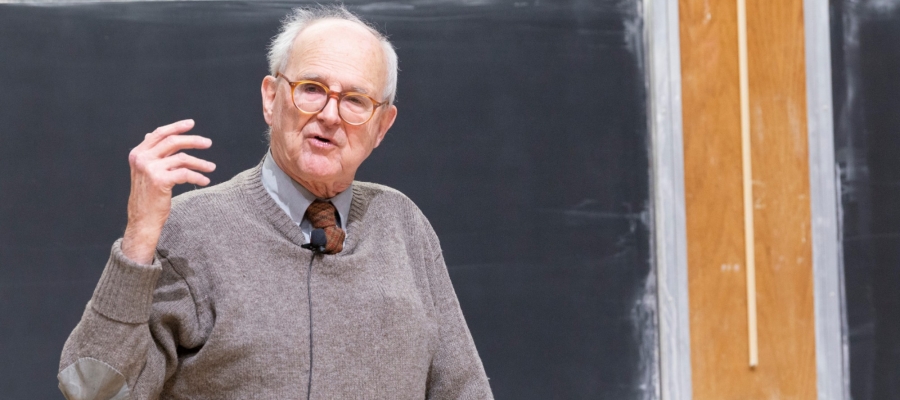
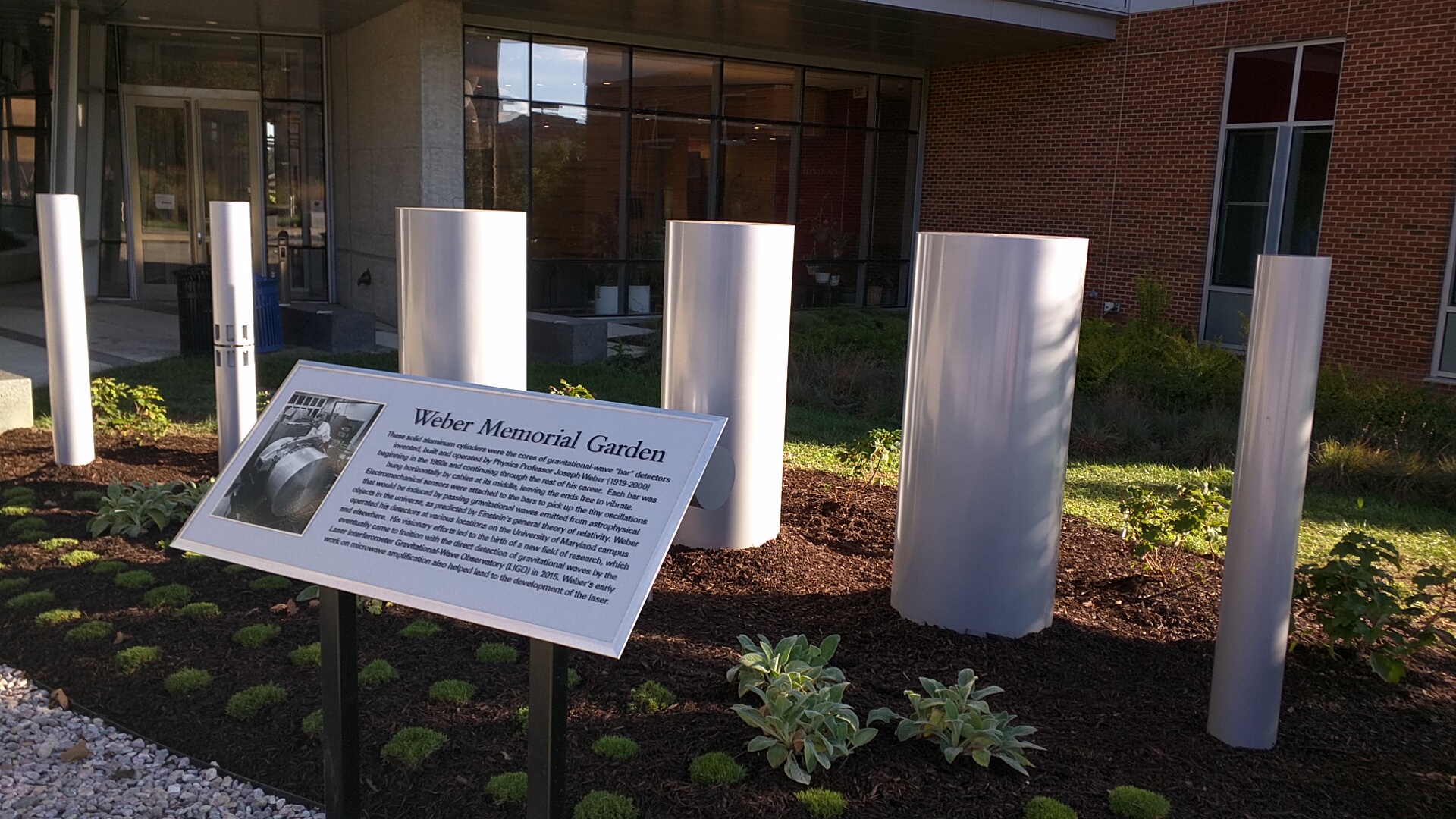
WeberMemorialNews12919 2The Department of Physics and College of Mathematical and Natural Sciences held a dedication of the Weber Garden on Tuesday, March 12, 2019, which included remarks by colleagues and friends of Joe Weber and a colloquium by Nobel Laureate Rai Weiss: What Joe Weber started: Gravitational wave astronomy. 
 
The garden, next to the main entrance of the Physical Sciences Complex, highlights the ultrapure aluminum gravity bars of UMD physicist Joseph Weber, a pioneer in the search for gravitational waves. Prof. Emeritus Charles W. Misner and his wife Susanne established the Weber Endowment for Gravitational Physics. 
 
The 2016 announcement that the LIGO experiment had detected gravitational waves led to the Nobel Prize for Weiss, Kip Thorne and Barry Barish.  UMD's key contributions in theoretical and experimental gravitational physics were discussed at a Nov. 1, 2016 symposium, A Celebration of Gravitational Waves.
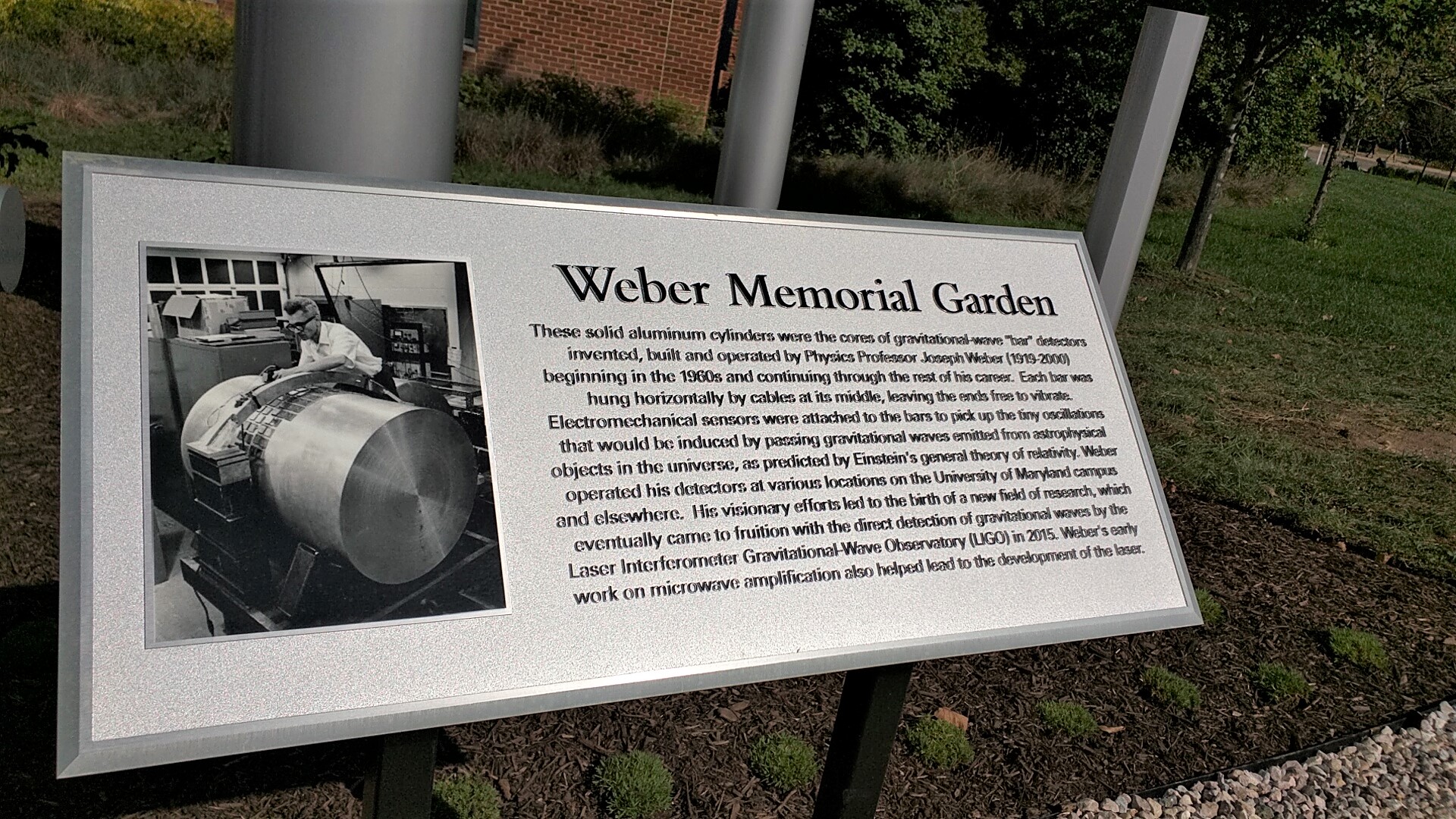
The plaque on display at the Weber Memorial outside of the Physical Sciences Complex

ribbon 661
bars3 663
Weiss and Shawhan 667
Weiss colloq 2 669
Weiss colloq 1 668
RaiWeiss 666

Jon Weber, Peter Shawhan, Steve Rolston, John Giganti, Wally Greenberg, Charlie Misner, Rai Weiss and Amitabh Varshney dedicate the Weber Garden on March 12, 2019.

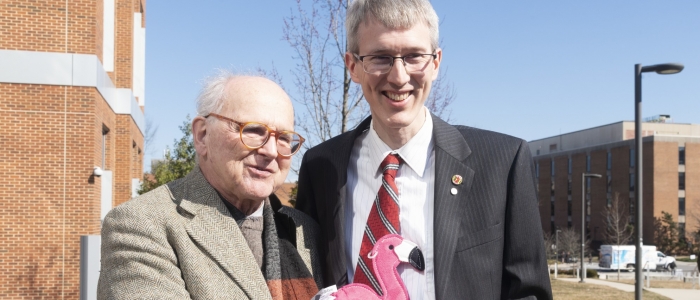
Rai Weiss and Peter Shawhan

Rai Weiss gives his colloquium.

  • Jon Weber, Peter Shawhan, Steve Rolston, John Giganti, Wally Greenberg, Charlie Misner, Rai Weiss and Amitabh Varshney dedicate the Weber Garden on March 12, 2019.

    ribbon 661
  • bars3 663
  • Rai Weiss and Peter Shawhan

    Weiss and Shawhan 667
  • Weiss colloq 2 669
  • Weiss colloq 1 668
  • Rai Weiss gives his colloquium.

    RaiWeiss 666
 

More Articles …

  1. Christopher Monroe Quoted in Gizmodo Article on IBM's New Quantum Computer
  2. Third Annual Fundamentals of Quantum Materials Winter School
  3. Cold Atoms Offer a Glimpse of Flat Physics
  4. Researchers Measure Casimir Torque for the First Time

Page 99 of 207

  • 94
  • 95
  • 96
  • 97
  • 98
  • 99
  • 100
  • 101
  • 102
  • 103
  • Physics Administration
  • Directions
  • Awards
  • Student Awards
  • Make a Donation
  • News
    • Research News
    • Department News
    • Newsletters
  • PTK Policy

College and Department Links

Department of Physics

Physical Sciences Complex
4296 Stadium Dr
College Park, MD 20742
Phone: 301.405.3401

Information

  • Campus Directory
  • Undergraduate Research
  • Scholarships
  • Prospective Undergraduates
  • Directions & Transit
  • Web Accessibility
© 2026 University of Maryland - Department of Physics
Top
  • Home
  • About Us
    • Physics Administration
    • Directions
    • Awards
    • Student Awards
    • Make a Donation
    • News
      • Research News
      • Department News
      • Newsletters
    • PTK Policy
  • People
    • All
    • Faculty
      • Current
      • Emeritus
      • Adjunct
      • Affiliate
      • Research Professors
    • Research Scientists
    • Postdocs
    • Staff
    • Lecturers
    • Visitors
    • Graduate Students
  • Research
    • Research Areas
      • AI and Physical Sciences
      • Astro Metrology
      • Atomic, Molecular & Optical
      • Biophysics
      • Chemical Physics
      • Condensed Matter Experiment
      • Condensed Matter Theory
      • Cosmic Ray Physics
      • Elementary Particles
      • Gravitation Experiment
      • Gravitational Theory
      • High Energy Physics
      • Nonlinear Dynamics, Chaos and Complex Systems
      • Nuclear Physics
      • Particle Astrophysics
      • Physics Education Research
      • Plasma Physics
      • Plasma Theory
      • Quantum Science and Technology
      • Quarks, Hadrons and Nuclei
      • Space Physics
    • Centers & Institutes
  • Academics
    • OSES Home (Student Services)
    • OSES News
    • Undergraduate Program
      • Prospective Students
      • Apply Now
      • Degree Requirements and Policies
      • Scholarships
      • Undergraduate Research
      • Advising
      • Undergraduate Forms
      • Undergraduate Events
      • Departmental Honors
      • Society of Physics Students
      • FAQ
      • Undergraduate Student Committee
    • Graduate Program
      • Prospective Students
      • Open House
      • Degree Requirements
      • Graduate Resources
      • Deadlines and Forms
      • PhD Defenses
        • PhD Defenses 2026
        • PhD Defenses 2025
        • PhD Defenses 2024
        • PhD Defenses 2023
        • PhD Defenses 2022
        • PhD Defenses 2021
        • PhD Defenses 2020
        • PhD Defenses 2019
        • PhD Defenses 2018
        • PhD Defenses 2017
        • PhD Defenses 2016
      • Events
      • Scholarships & Awards
      • Qualifier
      • Graduate Student Organizations
      • FAQ
    • Student Opportunities
      • GRAD-MAP
      • Graduate Student Organizations
      • Outreach Volunteering
      • Society of Physics Students
      • NSF S-STEM Program
      • Undergraduate Research
      • The Noether Physics Society
      • Undergraduate Quantum Association
    • Courses
    • Academic Support
    • NSF S-STEM Program
    • Teaching Assistants
  • Events
    • Calendar
    • Physics Colloquia
    • W.J. Carr Lecture
    • Research Interaction Team (RIT) Math/Physics
    • Mechanick Quantum Biology Lecture
    • Irving and Renee Milchberg Endowed Lectureship
    • Charles W. Misner Endowed Lectureship in Gravitational Physics
    • Charles W. Misner Memorial Symposium
    • John S. Toll Endowed Lecture
    • Prange Prize Lecture
    • Maryland Day
    • Outreach
      • Outreach Home
      • Physics is Phun
      • Discovery Days
    • Summer Programs
      • Physics Makers Camp
      • Physics of Quidditch
      • Science Discovery Camp
      • Advanced Physics Summer Program
      • Toolkit for Success
    • CUWiP
    • Vortex Makerspace
    • QURiSE Conference
  • Services
    • Building Access Requests
    • Computing Services
    • Conference Room Reservations
    • Department Operations Directory
    • Electronic and Mechanical Development
    • Hiring Procedures
    • Lecture Demo
    • Mental Health Resources
    • Parking
    • Physics Ombudspersons
    • Printing Services
      • Poster Print Request
    • Proposal Submissions
    • Purchase Order
    • Suggestion Box
    • Textbook Information
  • Give