• Home
  • About Us
    • Physics Administration
    • Directions
    • Awards
    • Student Awards
    • Make a Donation
    • News
      • Research News
      • Department News
      • Newsletters
    • PTK Policy
  • People
    • All
    • Faculty
      • Current
      • Emeritus
      • Adjunct
      • Affiliate
      • Research Professors
    • Research Scientists
    • Postdocs
    • Staff
    • Lecturers
    • Visitors
    • Graduate Students
  • Research
    • Research Areas
      • AI and Physical Sciences
      • Astro Metrology
      • Atomic, Molecular & Optical
      • Biophysics
      • Chemical Physics
      • Condensed Matter Experiment
      • Condensed Matter Theory
      • Cosmic Ray Physics
      • Elementary Particles
      • Gravitation Experiment
      • Gravitational Theory
      • High Energy Physics
      • Nonlinear Dynamics, Chaos and Complex Systems
      • Nuclear Physics
      • Particle Astrophysics
      • Physics Education Research
      • Plasma Physics
      • Plasma Theory
      • Quantum Science and Technology
      • Quarks, Hadrons and Nuclei
      • Space Physics
    • Centers & Institutes
  • Academics
    • OSES Home (Student Services)
    • OSES News
    • Undergraduate Program
      • Prospective Students
      • Apply Now
      • Degree Requirements and Policies
      • Scholarships
      • Undergraduate Research
      • Advising
      • Undergraduate Forms
      • Undergraduate Events
      • Departmental Honors
      • Society of Physics Students
      • FAQ
      • Undergraduate Student Committee
    • Graduate Program
      • Prospective Students
      • Open House
      • Degree Requirements
      • Graduate Resources
      • Deadlines and Forms
      • PhD Defenses
        • PhD Defenses 2026
        • PhD Defenses 2025
        • PhD Defenses 2024
        • PhD Defenses 2023
        • PhD Defenses 2022
        • PhD Defenses 2021
        • PhD Defenses 2020
        • PhD Defenses 2019
        • PhD Defenses 2018
        • PhD Defenses 2017
        • PhD Defenses 2016
      • Events
      • Scholarships & Awards
      • Qualifier
      • Graduate Student Organizations
      • FAQ
    • Student Opportunities
      • GRAD-MAP
      • Graduate Student Organizations
      • Outreach Volunteering
      • Society of Physics Students
      • NSF S-STEM Program
      • Undergraduate Research
      • Women in Physics
      • Undergraduate Quantum Association
    • Courses
    • Academic Support
    • NSF S-STEM Program
    • Teaching Assistants
  • Events
    • Calendar
    • Physics Colloquia
    • W.J. Carr Lecture
    • Research Interaction Team (RIT) Math/Physics
    • Mechanick Quantum Biology Lecture
    • Irving and Renee Milchberg Endowed Lectureship
    • Charles W. Misner Endowed Lectureship in Gravitational Physics
    • John S. Toll Endowed Lecture
    • Prange Prize Lecture
    • Maryland Day
    • Outreach
      • Outreach Home
      • Physics is Phun
      • Discovery Days
    • Summer Programs
      • Physics Makers Camp
      • Physics of Quidditch
      • Science Discovery Camp
      • Advanced Physics Summer Program
      • Toolkit for Success
    • CUWiP
    • Vortex Makerspace
    • QURiSE Conference
  • Services
    • Building Access Requests
    • Computing Services
    • Conference Room Reservations
    • Department Operations Directory
    • Electronic and Mechanical Development
    • Hiring Procedures
    • Lecture Demo
    • Mental Health Resources
    • Parking
    • Physics Ombudspersons
    • Printing Services
      • Poster Print Request
    • Proposal Submissions
    • Purchase Order
    • Suggestion Box
    • Textbook Information
  • Give
  1. Home
  2. About Us
  3. News

Written on 27 August 2025. Posted in Department News.

Driving AI Innovation for Autonomous Vehicles

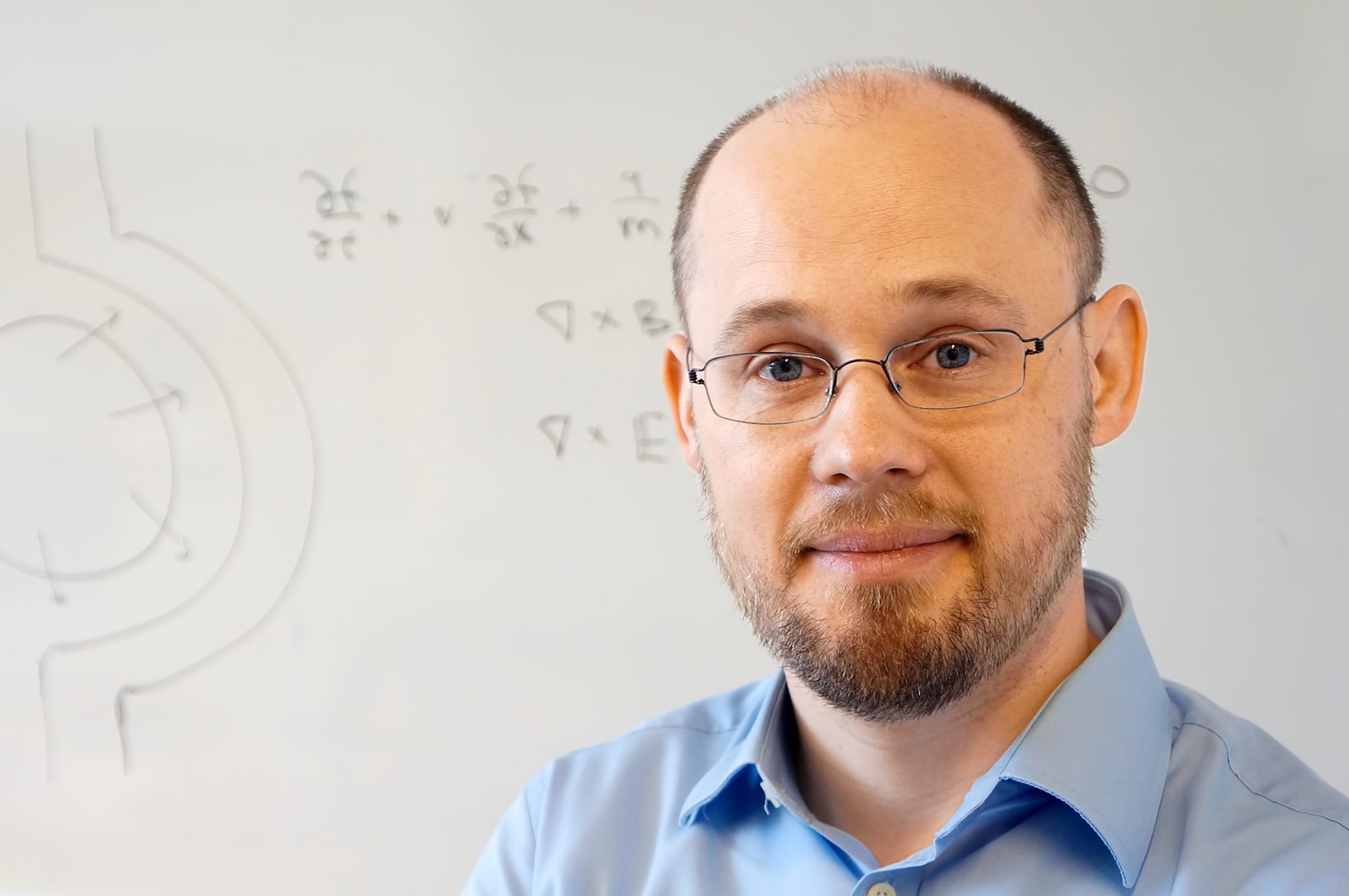
When John Wyrwas gets behind the wheel, he doesn’t just think about where he’s going or how to get there; he also thinks about something else: what kind of information would a car need to have if artificial intelligence-embodied software were doing the driving?

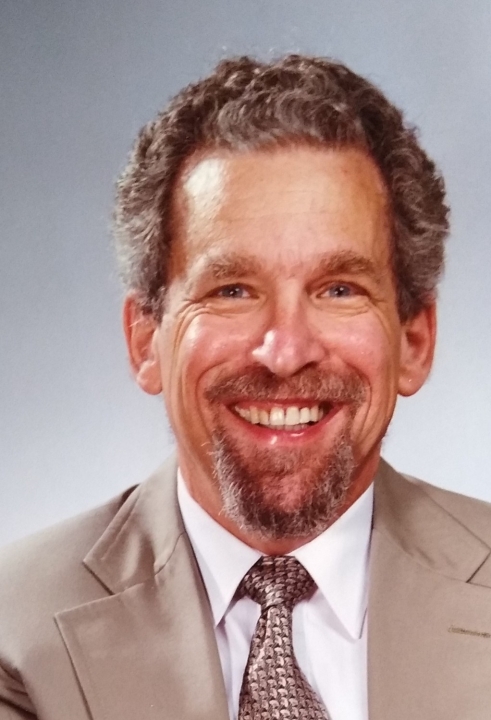
“I sometimes stop to ask myself, ‘Is the way I'm driving going to be good training data for our AI or am I doing something that, if I tried to teach the machine this, I wouldn’t be happy with the outcome?’” Wyrwas said.John Wyrwas John Wyrwas

For years, Wyrwas has been working with self-driving systems for everything from semi-trucks to passenger cars, leveraging technologies like robotics and artificial intelligence to make autonomous vehicles smarter and safer. In his current role at Wayve, Wyrwas leads the AI Evaluation software engineering division for AI Driver, Wayve’s next-generation automated driving system. It’s an intuitive end-to-end deep learning platform that integrates advanced AI into vehicles, transforming the way they predict, perceive, and learn from human behavior in real-world environments.

“So many companies in this autonomous vehicle space see this primarily as an engineering problem, but Wayve has been pushing this idea of embodied AI that relies on a machine learning-first approach,” Wyrwas explained. “I'm proud to be part of a team that is pioneering this space, taking an approach that spans software, hardware, and machine learning. We need to innovate on all those fronts to be successful.”

Driving with data

Designed to be compatible with any type of vehicle, Wayve’s automated system learns to drive using a broad spectrum of real-world data, converting and applying this data to equip vehicles with human-like driving capabilities. Wyrwas’s team puts that innovation to the test, evaluating Wayve’s AI-driven system over a wide array of simulated driving scenarios to measure its adaptability in dynamic environments. 

“The amazing thing about using the AI approach to autonomous development is its remarkable generalizability,” Wyrwas noted. “Recently, we had a global roadshow, 90 cities in 90 days, and our AI model navigated a wide variety of urban and rural highway settings across Europe, North America and Japan using a single AI model. This is unique because with more of a robotics-first development approach, you would spend months or years tuning the software and the rules to work in those locations—we can do it much more quickly with data.”

Wyrwas sees a world of possibilities on the road ahead.

“Every week when I go out on our development vehicles at Wayve, I'm always thrilled when we're doing better at performance, safety and comfort in the vehicle,” he said. “If we can get them in the hands of everyday people, it's really going to open up more quality-of-life opportunities for everyone.”

A fascination with physics

Growing up in Anne Arundel County, Md., Wyrwas was always curious about how things worked in the world around him. A memorable high school class sparked his interest in physics.

“I recall the first day of class, the teacher had a bowling ball hanging from the ceiling, and asked us, ‘How does this work?” Wyrwas recalled. “He pushed it, and it swung like a pendulum, and we dove right into trying to understand how things move in the real world. That made physics very compelling to me.”

A few years later, Wyrwas began college at the University of Maryland as an electrical engineering major, but by the time he was halfway through freshman year, memories of his high school physics experience and a class with Distinguished University Professor of Physics S. James Gates Jr. inspired him to explore physics further.

“I was very eager to take Dr. Gates' introductory physics sequence, which was known for its more in-depth approach to foundational topics because I had a big desire to understand how the world works, not just at the applied level, but at that fundamental level as well,” Wyrwas recalled. “Engineering could teach me how to build, but physics could also teach me how to think more deeply and abstractly about the world. I signed up for a dual-degree program in physics and electrical engineering and never regretted it.”

A summer research program in the late Physics Professor Bob Anderson’s lab took Wyrwas’ fascination with physics to the next level, introducing him to the challenges of quantum.

“In quantum computing, what was interesting to me was the discovery process. It was so different from my classes where everything was figured out,” Wyrwas explained. “Here we didn't always know the next step or what we were going to see in the next experiment, and that discovery process was very compelling to me.”

Wyrwas went on to earn his master’s degree and Ph.D. in electrical engineering and computer sciences at the University of California, Berkeley, and then joined Qualcomm Research, gaining valuable expertise that helped set the stage for his future work with self-driving technology.

“I worked on optical devices and learned about simulation and also got exposed to LIDAR, which is a technology for using light to measure distances of objects,” Wyrwas explained. “These are both key topics in the self-driving industry today.”

From the cloud to the road

In 2018, Wyrwas joined Aurora, an early innovator in the autonomous vehicle space, later becoming a director of software engineering at the company. 

“I had the opportunity to lead an operation that focused on behavioral simulation and testing, and for self-driving cars, this means evaluating whether the car is making the right decisions on what to do next,” he said. “When I started out, we were primarily focused on cars and later shifted to larger vehicles like semi-trucks. We built experiences for our software in the cloud to ensure that the AI we built would behave reliably and safely before it ever hits the road.” 

Now at Wayve, Wyrwas is managing a comprehensive system testing and simulation operation as the company prepares to bring its AI Driver product to market. 

“I want to make sure that these cars can handle any situation safely, so for each unique customer application, there's a rigorous process to ensure that we're meeting expectations,” Wyrwas noted. “Right now, we are hitting a lot of the crunch time on executing and taking this opportunity by the horns and getting this embodied AI in the hands of real people.”

For Wyrwas, the analytical and problem-solving skills he developed at UMD provided a valuable foundation for the real-world challenges of working in the autonomous vehicle space.

“I think most of all, my physics background shapes the way I think,” Wyrwas explained. “I try to be grounded in first principles and always focus on understanding how the real world behaves, and I think this has been valuable at Wayve because we must operate safely in a very complex physical environment. It also helps me break down the systems and ask the fundamental questions about safety, performance and autonomy that we need to answer.”

With Wayve’s first commercial contract—a partnership with Nissan set to launch in 2027—and plans underway for many more, Wyrwas looks forward to a host of new challenges and opportunities ahead, as automated vehicle technology keeps accelerating into the future. 

“I've always been drawn to complex problems, and AI and self-driving is one of the most ambitious, complex and impactful problems because it has an element of human psychology to it,” Wyrwas said. “Our systems are interacting with other people on the road alongside other cars and heavy physical vehicles, and this technology has the promise of saving lives, reducing traffic and making transportation more accessible. If that's not inspiring, I don't know what is.”

 Written by Leslie Miller

Written on 26 August 2025. Posted in Department News.

JQI Hosts Quantum Workshop for Science Communicators

More than two dozen science communicators convened on campus at the University of Maryland (UMD) from July 31 to Aug. 2 for a workshop focused on the fundamentals of quantum science and the subtleties of explaining it.

The workshop, called The Schrödinger Sessions Revisited: Quantum Information Meets Science Communication, was hosted by JQI and supported by a grant from the American Physical Society’s Innovation Fund. It was one of six quantum-focused projects sponsored in honor of 2025 being designated the International Year of Quantum Science and Technology (IYQ). Workshop participants included science writers, science journalists, science illustrators and authors of children’s books about science, along with several attendees who work on science policy.

“Quantum physics has a reputation for being challenging to understand and explain,” says Chris Cesare, the Director of Communications and Outreach at JQI and the lead organizer of the event. “We wanted to give professional science communicators, who already know how to connect with their own audiences, the confidence to add quantum science into their content and coverage. We were thrilled that APS was willing to support our idea.”

In addition to Cesare, UMD alumni Emily Edwards, an associate research professor at Duke University and an affiliate of Duke Quantum Center, and Chad Orzel, the R. Gordon Gould associate professor of physics and astronomy at Union College, also organized the event.

The workshop featured presentations and panel discussions by UMD experts, alumni and invited outside speakers. The opening day introduced quantum science and its history in the 20th century and pointed to many of its important impacts, from long-established technologies like GPS and MRI machines to more modern applications like quantum computing and quantum sensing. Talks about cosmology and high-energy physics rounded out the day. The second day included sessions about the practice of communicating quantum science and the nuts and bolts of building qubits—the basic units of quantum information that form the information-processing heart of quantum devices. The final half-day of the workshop featured an interactive session on the foundations of quantum physics with a presentation and an open-ended discussion about the philosophical questions that quantum science often invites. Many of the workshop’s sessions were recorded and will be available on YouTube—a chance for anyone to benefit from the insights and expertise shared during the event.

In a post-workshop survey, participants unanimously reported that the workshop left them with a better understanding of q(Credit: Bailey Bedford/JQI)(Credit: Bailey Bedford/JQI)uantum information science and that they felt more confident in their ability to communicate quantum physics. Many attendees expressed their eagerness to attend a follow-up event that would build upon what they learned at the workshop and delve deeper into particular quantum topics.

“Overall, this was a great workshop,” one participant said anonymously in the post-workshop survey. “I went from quantum zero to hero in the span of a few days. I really learned a lot and do appreciate this opportunity.”

The workshop followed nearly a decade after two earlier workshops, also called The Schrödinger Sessions, which brought science fiction writers to campus in 2015 and 2016. Since those earlier events, which Edwards and Orzel also organized, progress and investment in quantum information science have been accelerating at a rapid pace, supercharged by the passage of the National Quantum Initiative Act in the U.S. in 2018.

“It was really fun to celebrate a century of quantum discoveries with such a great group of communicators and content creators,” says Edwards, who also serves on the steering committee for IYQ. “During the workshop speakers talked about the basics and applications, but it is also worth noting that the last century of progress was only possible because governments, industries, and academic institutions decided that investing in fundamental physics would benefit humanity."

Original story: https://jqi.umd.edu/news/jqi-hosts-quantum-workshop-science-communicators


Written on 20 August 2025. Posted in Department News.

GRAD-MAP Students, Mentors ‘Learn From Each Other’

When a group of University of Maryland graduate students founded GRAD-MAP in 2013, they hoped the summer program would “change the status quo in physics and astronomy” by providing more students with access to research opportunities. Skye Joegriner, Jin Young Kim, Ridmi Madarasinghe, Alanis Alvarado Gierbolini, Joanna Chimalilo and Mojisola Akinwande GRAD-MAP summer scholars Skye Joegriner, Jin Young Kim, Ridmi Madarasinghe, Alanis Alvarado Gierbolini, Joanna Chimalilo and Mojisola Akinwande pose for a photo. Image credit: Mark Sherwood. Skye Joegriner, Jin Young Kim, Ridmi Madarasinghe, Alanis Alvarado Gierbolini, Joanna Chimalilo and Mojisola Akinwande GRAD-MAP summer scholars Skye Joegriner, Jin Young Kim, Ridmi Madarasinghe, Alanis Alvarado Gierbolini, Joanna Chimalilo and Mojisola Akinwande pose for a photo. Image credit: Mark Sherwood.

GRAD-MAP’s summer scholars are undergraduate students at U.S. community colleges and educational institutions where internships in scientific fields might not be offered. Over the course of nine weeks, the scholars conduct research under the guidance of UMD mentors, culminating in a research symposium where they present their findings.

While the program is designed to teach technical skills and show students what a Ph.D. program or research career could look like, GRAD-MAP’s mentors—UMD graduate students, postdocs and faculty members—say the program is mutually beneficial. Some mentors leverage GRAD-MAP to launch ambitious new research projects, while others welcome the opportunity to grow as teachers and project leads.

“One of the best parts of GRAD-MAP is how much we learn from each other,” said Mark Ugalino, a UMD astronomy Ph.D. student and GRAD-MAP mentor and co-lead. “The summer scholars get a real feel for research and life as scientists, while we as graduate leads and mentors gain hands-on experience in managing projects and guiding a team. Our collaboration fosters growth on both sides, which is the heart of GRAD-MAP’s success.”

Read below to see what two mentor-scholar pairs learned from the 2025 GRAD-MAP summer program, which is supported by UMD’s astronomy and physics departments. 

Alanis Alvarado Gierbolini, Alberto Bolatto, Serena Cronin and Keaton Donaghue

As a computer science and engineering student at the University of Puerto Rico, Alanis Alvarado Gierbolini entered the GRAD-MAP program with a firm grasp of coding.

“A lot of the students come in with very little coding,” said Serena Cronin, an astronomy Ph.D. student and Alvarado Gierbolini’s co-mentor. “Alanis is the exception. She’s better at coding than I am.” 

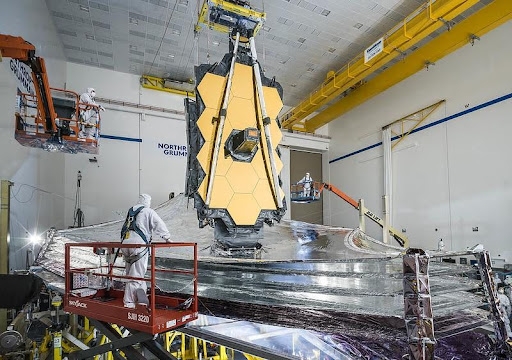
Those technical skills came in handy when Alvarado Gierbolini joined an ambitious new project led by UMD Astronomy Professor Alberto Bolatto, Cronin and Keaton Donaghue, an astronomy Ph.D. student and GRAD-MAP co-mentor. The research team applied a new algorithm to James Webb Space Telescope (JWST) imagery to understand the physics that gives rise to shapes in the interstellar medium—the cosmic soup of gas and dust between stars.

By running this algorithm, the research team ended up with a series of fractal dimensions: numbers and potentially patterns that could shed light on the complex shapes that appear in space and the processes, such as star formation, that made them that way.

Alvarado Gierbolini applied this novel method to 70 nearby galaxies and said that the process—which involved debugging and rewriting code—taught her how to overcome obstacles and manage her time more efficiently. While she initially felt timid around faculty members and graduate students, she left the program feeling more confident about academia and her place in it.

“You come here, you see grad students and you think they're these extraordinary beings with an unattainable level of smartness,” Alvarado Gierbolini said, “but then you talk to them and the professors and realize, ‘Wow, that could be me someday.’”

The summer scholars don’t just leave the program with new technical skills. Donaghue noted that they also develop a better sense of whether a future in research is right for them.

“The key takeaway for students is to find that they are capable of succeeding in academia as a professional career,” Donaghue said, “or on the flip side, that it’s OK if they discover it isn’t the right path.”

Ridmi Madarasinghe and Ankita Bera

 As a postdoctoral associate in UMD’s Department of Astronomy, Ankita Bera typically works on projects with longer timelines. Once she learned about GRAD-MAP, she realized it was the perfect opportunity for a short-term research project she had been wanting to start.

"GRAD-MAP is an excellent program to leverage if you have smaller project ideas, and it benefits both mentors and students," Bera said. "Students gain valuable, hands-on research experience, while we, as mentors, benefit from fresh perspectives and new insights along the way."

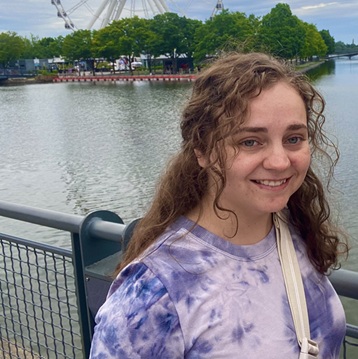
Over the summer, Bera mentored Ridmi Madarasinghe, who recently earned an associate’s degree from Montgomery College and will attend UMD this fall as an aerospace engineering major. Together, they used JWST data and advanced computational techniques to better understand reionization, an astrophysical process in which radiation from the first stars and galaxies—roughly 200 to 400 million years after the Big Bang—stripped electrons from hydrogen atoms. This transformed the universe from an opaque, neutral state to the transparent cosmos we observe today. 

With a goal of piecing together a timeline of when and how reionization occurred, Madarasinghe learned and applied two parameter inference techniques to a model of reionization, one of which incorporates machine learning methods.

Madarasinghe said GRAD-MAP’s programming not only taught her useful skills but also exposed her to research paths she had never considered. A research lunch chat featuring alum Alyssa Pagan (B.S. ’16, astronomy), who brings JWST images to light as a science visuals developer, was especially eye-opening.

“Being able to hear about the job she is doing and how she got to that position—and hearing it firsthand—was not an experience I would have gotten otherwise,” Madarasinghe said. “Careers like those seem so far off and out of reach, but now they seem a lot more attainable.”

Madarasinghe and Bera plan to continue working together in the fall and hope to publish their results in a journal. For Madarasinghe, she’s excited to see where these experiences will lead her at UMD and beyond.

“This is my first internship, and I feel really lucky to have gotten this experience with GRAD-MAP,” Madarasinghe said. “I also did not expect to have the opportunity to continue this research after the program ends, which is very exciting and opens up a lot of different paths for me.”

Original story: https://cmns.umd.edu/news-events/news/grad-map-students-mentors-learn-each-other

Written on 14 August 2025. Posted in Department News.

Vedika Khemani to Give Prange Prize Lecture Nov. 18

Vedika Khemani of Stanford University has been Vedika Khemani (credit: Stanford University)Vedika Khemani (credit: Stanford University)named the recipient of the Richard E. Prange Prize and Lectureship in Condensed Matter Theory and Related Areas for 2025.  She will speak on Tues., Nov. 18 at 3:30 p.m. in room 1410 of the John S. Toll Physics Building. Refreshments will be served at 3:00 p.m. 

The Prange Prize, established by the UMD Department of Physics and Condensed Matter Theory Center (CMTC), honors the late Professor Richard E. Prange, whose distinguished professorial career at Maryland spanned four decades (1961-2000). The Prange Prize is made possible by a gift from Dr. Prange's wife, Dr. Madeleine Joullié, a professor of chemistry at the University of Pennsylvania. 

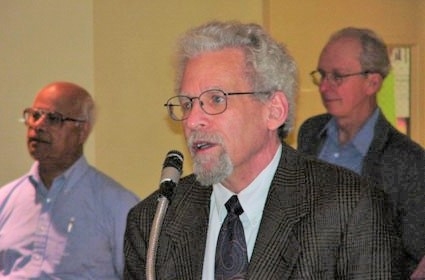
Richard E. PrangeRichard E. PrangeDr. Prange was a member of the Maryland condensed matter theory group for more than 40 years and was an affiliate of CMTC with its inception in 2002. He edited a highly-respected book on the quantum Hall effect and made important theoretical contributions to the subject. His interests extended into all aspects of theoretical physics, and continued after his retirement, recalled Sankar Das Sarma, who holds the Richard E. Prange Chair in Physics at UMD and is also a Distinguished University Professor and director of the CMTC.

While earning his Ph.D. at the University of Chicago under Nobelist Yoichiro Nambu, Prange also worked with Murray Gell-Mann and Marvin Goldberger. 

Khemani, who earned her Ph.D. at Princeton University in 2016 and accepted an appointment as a Junior Fellow with the Harvard Society of Fellows, has received a Sloan Fellowship, a Packard Fellowship, the George E. Valley Jr. Prize of the American Physical Society, the Breakthrough New Horizons in Physics Prize, the Infosys Prize and the Presidential Early Career Award for Scientists and Engineers. She serves on the Executive Committee of Q-FARM the Stanford Quantum Science and Engineering Initiative and is a member of Stanford’s Leinweber Institute of Theoretical Physics. She is well-known for her work on non-equilibrium quantum dynamics, and has made seminal contributions to many topics in quantum physics, including many-body localization, time crystals, driven quantum systems, and quantum entanglement. 

Khemani joins a prestigious list of Prange Prize recipients: Philip W. Anderson, Walter Kohn, Daniel Tsui, Andre Geim, David Gross, Klaus von Klitzing, Frank Wilczek, Juan Maldacena, Charles Kane and Pablo Jarillo-Herrero.

In addition to the Tuesday lecture, will deliver the Joint Quantum Institute Seminar on Monday, Nov. 17 at 11 a.m. in room 2400 of the Atlantic Building. 


{source}<iframe width="640" height="360" src="https://www.youtube.com/embed/t33Ze_sQfZ0" title="Prange Prize 2025" frameborder="0" allow="accelerometer; autoplay; clipboard-write; encrypted-media; gyroscope; picture-in-picture" allowfullscreen></iframe>{/source}


Written on 05 August 2025. Posted in Research News.

Researchers Spy Finish Line in Race for Majorana Qubits

Our computer age is built on a foundation of semiconductors. As researchers and engineers look toward a new generation of computers that harness quantum physics, they are exploring various foundations for the burgeoning technology.

Almost every computer on earth, from a pocket calculator to the biggest supercomputer, is built out of transistors made from a semiconductor (generally silicon). Transistors store and manipulate data as “bits” that can be in one of two possible states—the ones and zeros of binary code. Many other things, from vacuum tubes to rows of dominos, can theoretically serve as bits, but transistors have become the dominant platform since they are convenient, compact and reliable.Researchers have been working to demonstrate that devices that combine semiconductors and superconductors, like this one made by Microsoft, have the potential to be the basis for a new type of qubit that can open the way to scalable quantum computers. (Credit: John Brecher, Microsoft)Researchers have been working to demonstrate that devices that combine semiconductors and superconductors, like this one made by Microsoft, have the potential to be the basis for a new type of qubit that can open the way to scalable quantum computers. (Credit: John Brecher, Microsoft)

Quantum computers promise unprecedented computational capabilities by replacing bits with quantum bits—qubits. Like normal bits, qubits have two states used to represent information. But they have additional power since they can simultaneously explore both possibilities during calculations through the phenomenon of quantum superpositions. The information stored in superpositions, along with other quantum effects like entanglement, enables new types of calculations that can solve certain problems much faster than normal computers.

All quantum objects sometimes enter a superposition, but that doesn’t mean they all make practical qubits. A qubit needs certain traits to be useful. First, it must have states that are easy to identify and manipulate. Then, the superposition of those states must last long enough to perform calculations. Physicists typically think about the stability of a quantum state in terms of its coherence, and how long a quantum state can remain coherent is a critical metric for judging its suitability as a qubit.

So far, no platform has emerged as the default for making qubits the way silicon-based transistors did for bits. As researchers and companies build the early generations of quantum computers, many options are being used, including superconducting circuits, trapped ions, and even particles of light. 

Some researchers, including Professor and JQI Fellow Sankar Das Sarma and Professor and JQI Co-Director Jay Sau, have been exploring the possibility that semiconductors might prove to be a good foundation for quantum computing as well. In 2010, Das Sarma, Sau and JQI postdoctoral researcher Roman Lutchyn proposed that a strong magnetic field and a nanowire device made from the combination of a semiconductor with a superconductor could be used to create a particle-like quantum object—a quasiparticle—called a Majorana. Nanowires hosting Majorana quasiparticles should be able to serve as qubits and come with an intrinsic reliability enforced by the laws of physics. However, no one has definitively demonstrated even a single Majorana qubit while some quantum computers built using other platforms already contain more than 1,100 qubits.

Fifteen years after Das Sarma and Sau opened the door to experiments searching for Majorana quasiparticles, they are optimistic that the proof of Majorana-based qubits is now on the horizon. In an article published on June 18 in the journal Physical Review B, Das Sarma and Sau used theoretical simulations to analyze cutting-edge experiments hunting for Majoranas and proposed an experiment to finally demonstrate Majorana qubits.

“I think that we're at the point where we can at least see where we are in terms of qubits,” says Sau, who is also professor of physics at UMD. “It might still be a long road. It's not going to be easy, but at least we can see the goal now.”

The Tortoise and the Hare?

Since quantum computers are already being built from other types of qubits, Majoranas are behind in the race. But they have some advantages that proponents, including Das Sarma and Sau, hope will let them make up for lost time and become the preferred foundation for quantum computers. 

One advantage Majorana qubits potentially have is the extensive infrastructure that already exists around semiconductors. The established knowledge and fabrication techniques from the computer industry might allow large quantum computers with many interacting qubits to be built using Majoranas (which is a goal all the competition is currently working to achieve). If Majorana-based quantum computers prove easier to scale up than their competition that might allow them to make up for lost time and be a competitive technology.

But the thing that really sets Majorana qubits apart from the competition is that their properties should protect from errors that would derail calculations. In general, the superpositions of quantum states are easily disrupted by outside influence, which makes them useless for quantum computing. However, Majorana quasiparticles are a type of topological state, which means they have traits that the rules of physics say can only be altered by a dramatic change to the whole system and are impervious to minor influences. This “topological protection” might be harnessed to make Majorana qubits more stable than their competition.

Pursuing these potential advantages, Microsoft has been trying to develop a Majorana-based quantum computer, and in February of this year, Microsoft researchers shared new results in the journal Nature where they described their observations of the two distinct quantum states of their device designed to create Majorana quasiparticles. At the same time, they also announced additional claims of having Majorana-based qubits, which has sparked controversy. In July, Microsoft researchers posted an article on the arXiv preprint server that elaborates on their claims of creating a Majorana qubit using their device. They observe results consistent with creating a short-lived Majorana qubit, but they acknowledge in the article that the type of experiment they performed cannot prove that Majoranas are the explanation.
The experiment described in the Nature article opened new measurement opportunities by introducing an additional component, called a quantum dot, that connects to the nanowire. The quantum dot serves as a bridge that quantum particles can travel across but never stop on—a process called quantum tunneling. This development allowed them, for the first time, to hunt for Majorana quasiparticles that might be useful in making qubits. Their experiment demonstrated that they could observe two distinct states where they expect Majoranas to reside in the device, which hints at the necessary ingredients of a qubit, but didn’t prove that Majorana quasiparticles were successfully created. 

In their new article, Das Sarma and Sau analyzed Microsoft’s published data and found that the measurements described in the paper could not prove if they had an ideal Majorana quasiparticle with its guaranteed stability or if the presence of impurities in the device resulted in imperfect Majoranas that produce only some of the signs of a topological state. The imperfect Majoranas could still offer some improved stability but don’t carry the ironclad guarantee of topological protection. Even if the device didn’t hold ideal Majoranas, it still might be able to function as a qubit with useful properties. 

“We were excited that they're now actually getting into a qubit regime,” Sau says. “One of the things we wanted to do in our analysis is be agnostic to whether it's Majoranas or not. You have this device. Let's just ask ‘What kind of a qubit coherence would one get from a qubit made out of this device?’ And that's really the important question in this field.”
The Road Forward

To investigate the coherence of potential Majorana qubits, Das Sarma and Sau created a basic theoretical model of Microsoft’s device and used it to simulate nanowires that harbored various amounts of disorder—disorder that might disrupt the formation of Majoranas. Their simulations indicate that Microsoft’s device is likely plagued by a level of disorder that would prevent it from having a competitively long coherence time. However, the simulations also indicate that if enough disorder is eliminated then the device could see a dramatic jump in how long it maintains its coherence. A clear measurement of coherence is likely to be the smoking gun that leads many researchers to accept that a Majorana qubit has been fabricated. 
As researchers attempt to demonstrate the coherence of a Majorana qubit, there are two ways they can respond to the presence of disorder in their devices: eliminate it or work around it. 

In the article, Das Sarma and Sau used their simulation to describe experiments that require devices with fewer defects and that could clearly demonstrate the coherence of the Majorana quasiparticle. The experiment would require researchers to use two nanowires that can each contain a Majorana and that are connected via quantum tunneling. The tunneling would allow researchers to create a superposition where the Majorana is in a mixture of the two possible locations. When there is a superposition between the two states, the researchers can make the probability of the Majorana being in each spot oscillate so it goes from more to less likely in each location. This back and forth is predicted to provide a clear sign of how long the quantum state remains coherent but requires work in improving the nanowire quality to achieve the results.

The pair also discussed an alternative approach using simpler experiments that are similar to the one published in Nature. This approach continues to focus on measuring if a particle exists in a particular wire. The simulations Das Sarma and Sau performed suggest that if the measurement techniques were improved sufficiently the technique could give an estimate of the coherence, but it will be trickier to pick out the signature from the noise than using their proposed experiment. And the effort improving the measurement would likely not translate into making the nanowire into a Majorana qubit with a competitive coherence time.

“We can now start to see the finish line,” Sau says. “The experiments don't tell us quite where we are; that's where simulations are useful. It’s telling us that disorder is one of the key bottlenecks for this. There are various options of which path you can take, and the harder and more rewarding path is to just work on improving disorder.” 

Original story by Bailey Bedford: jqi.umd.edu/news/researchers-spy-finish-line-race-majorana-qubits


  • Capacitance-based fermion parity readout and predicted Rabi oscillations in a Majorana nanowire  , J. Sau, and S. Sarma, Phys. Rev. B, 111, 224509, (2025) 

More Articles …

  1. Superconductivity’s Halo: Physicists Map Rare High-field Phase
  2. UMD Appoints Renowned Physicist to Lead Quantum Research and Education
  3. UMD Physics Rated #19 in the World
  4. Alumni Honored with NSF Fellowships

Page 13 of 204

  • 8
  • 9
  • 10
  • 11
  • 12
  • 13
  • 14
  • 15
  • 16
  • 17
  • Physics Administration
  • Directions
  • Awards
  • Student Awards
  • Make a Donation
  • News
    • Research News
    • Department News
    • Newsletters
  • PTK Policy

College and Department Links

Department of Physics

Physical Sciences Complex
4296 Stadium Dr
College Park, MD 20742
Phone: 301.405.3401

Information

  • Campus Directory
  • Undergraduate Research
  • Scholarships
  • Prospective Undergraduates
  • Directions & Transit
  • Web Accessibility
© 2026 University of Maryland - Department of Physics
Top
  • Home
  • About Us
    • Physics Administration
    • Directions
    • Awards
    • Student Awards
    • Make a Donation
    • News
      • Research News
      • Department News
      • Newsletters
    • PTK Policy
  • People
    • All
    • Faculty
      • Current
      • Emeritus
      • Adjunct
      • Affiliate
      • Research Professors
    • Research Scientists
    • Postdocs
    • Staff
    • Lecturers
    • Visitors
    • Graduate Students
  • Research
    • Research Areas
      • AI and Physical Sciences
      • Astro Metrology
      • Atomic, Molecular & Optical
      • Biophysics
      • Chemical Physics
      • Condensed Matter Experiment
      • Condensed Matter Theory
      • Cosmic Ray Physics
      • Elementary Particles
      • Gravitation Experiment
      • Gravitational Theory
      • High Energy Physics
      • Nonlinear Dynamics, Chaos and Complex Systems
      • Nuclear Physics
      • Particle Astrophysics
      • Physics Education Research
      • Plasma Physics
      • Plasma Theory
      • Quantum Science and Technology
      • Quarks, Hadrons and Nuclei
      • Space Physics
    • Centers & Institutes
  • Academics
    • OSES Home (Student Services)
    • OSES News
    • Undergraduate Program
      • Prospective Students
      • Apply Now
      • Degree Requirements and Policies
      • Scholarships
      • Undergraduate Research
      • Advising
      • Undergraduate Forms
      • Undergraduate Events
      • Departmental Honors
      • Society of Physics Students
      • FAQ
      • Undergraduate Student Committee
    • Graduate Program
      • Prospective Students
      • Open House
      • Degree Requirements
      • Graduate Resources
      • Deadlines and Forms
      • PhD Defenses
        • PhD Defenses 2026
        • PhD Defenses 2025
        • PhD Defenses 2024
        • PhD Defenses 2023
        • PhD Defenses 2022
        • PhD Defenses 2021
        • PhD Defenses 2020
        • PhD Defenses 2019
        • PhD Defenses 2018
        • PhD Defenses 2017
        • PhD Defenses 2016
      • Events
      • Scholarships & Awards
      • Qualifier
      • Graduate Student Organizations
      • FAQ
    • Student Opportunities
      • GRAD-MAP
      • Graduate Student Organizations
      • Outreach Volunteering
      • Society of Physics Students
      • NSF S-STEM Program
      • Undergraduate Research
      • Women in Physics
      • Undergraduate Quantum Association
    • Courses
    • Academic Support
    • NSF S-STEM Program
    • Teaching Assistants
  • Events
    • Calendar
    • Physics Colloquia
    • W.J. Carr Lecture
    • Research Interaction Team (RIT) Math/Physics
    • Mechanick Quantum Biology Lecture
    • Irving and Renee Milchberg Endowed Lectureship
    • Charles W. Misner Endowed Lectureship in Gravitational Physics
    • John S. Toll Endowed Lecture
    • Prange Prize Lecture
    • Maryland Day
    • Outreach
      • Outreach Home
      • Physics is Phun
      • Discovery Days
    • Summer Programs
      • Physics Makers Camp
      • Physics of Quidditch
      • Science Discovery Camp
      • Advanced Physics Summer Program
      • Toolkit for Success
    • CUWiP
    • Vortex Makerspace
    • QURiSE Conference
  • Services
    • Building Access Requests
    • Computing Services
    • Conference Room Reservations
    • Department Operations Directory
    • Electronic and Mechanical Development
    • Hiring Procedures
    • Lecture Demo
    • Mental Health Resources
    • Parking
    • Physics Ombudspersons
    • Printing Services
      • Poster Print Request
    • Proposal Submissions
    • Purchase Order
    • Suggestion Box
    • Textbook Information
  • Give