• Home
  • About Us
    • Physics Administration
    • Directions
    • Awards
    • Student Awards
    • Make a Donation
    • News
      • Research News
      • Department News
      • Newsletters
    • PTK Policy
  • People
    • All
    • Faculty
      • Current
      • Emeritus
      • Adjunct
      • Affiliate
      • Research Professors
    • Research Scientists
    • Postdocs
    • Staff
    • Lecturers
    • Visitors
    • Graduate Students
  • Research
    • Research Areas
      • AI and Physical Sciences
      • Astro Metrology
      • Atomic, Molecular & Optical
      • Biophysics
      • Chemical Physics
      • Condensed Matter Experiment
      • Condensed Matter Theory
      • Cosmic Ray Physics
      • Elementary Particles
      • Gravitation Experiment
      • Gravitational Theory
      • High Energy Physics
      • Nonlinear Dynamics, Chaos and Complex Systems
      • Nuclear Physics
      • Particle Astrophysics
      • Physics Education Research
      • Plasma Physics
      • Plasma Theory
      • Quantum Science and Technology
      • Quarks, Hadrons and Nuclei
      • Space Physics
    • Centers & Institutes
  • Academics
    • OSES Home (Student Services)
    • OSES News
    • Undergraduate Program
      • Prospective Students
      • Apply Now
      • Degree Requirements and Policies
      • Scholarships
      • Undergraduate Research
      • Advising
      • Undergraduate Forms
      • Undergraduate Events
      • Departmental Honors
      • Society of Physics Students
      • FAQ
      • Undergraduate Student Committee
    • Graduate Program
      • Prospective Students
      • Open House
      • Degree Requirements
      • Graduate Resources
      • Deadlines and Forms
      • PhD Defenses
        • PhD Defenses 2026
        • PhD Defenses 2025
        • PhD Defenses 2024
        • PhD Defenses 2023
        • PhD Defenses 2022
        • PhD Defenses 2021
        • PhD Defenses 2020
        • PhD Defenses 2019
        • PhD Defenses 2018
        • PhD Defenses 2017
        • PhD Defenses 2016
      • Events
      • Scholarships & Awards
      • Qualifier
      • Graduate Student Organizations
      • FAQ
    • Student Opportunities
      • GRAD-MAP
      • Graduate Student Organizations
      • Outreach Volunteering
      • Society of Physics Students
      • NSF S-STEM Program
      • Undergraduate Research
      • Women in Physics
      • Undergraduate Quantum Association
    • Courses
    • Academic Support
    • NSF S-STEM Program
    • Teaching Assistants
  • Events
    • Calendar
    • Physics Colloquia
    • W.J. Carr Lecture
    • Research Interaction Team (RIT) Math/Physics
    • Mechanick Quantum Biology Lecture
    • Irving and Renee Milchberg Endowed Lectureship
    • Charles W. Misner Endowed Lectureship in Gravitational Physics
    • John S. Toll Endowed Lecture
    • Prange Prize Lecture
    • Maryland Day
    • Outreach
      • Outreach Home
      • Physics is Phun
      • Discovery Days
    • Summer Programs
      • Physics Makers Camp
      • Physics of Quidditch
      • Science Discovery Camp
      • Advanced Physics Summer Program
      • Toolkit for Success
    • CUWiP
    • Vortex Makerspace
    • QURiSE Conference
  • Services
    • Building Access Requests
    • Computing Services
    • Conference Room Reservations
    • Department Operations Directory
    • Electronic and Mechanical Development
    • Hiring Procedures
    • Lecture Demo
    • Mental Health Resources
    • Parking
    • Physics Ombudspersons
    • Printing Services
      • Poster Print Request
    • Proposal Submissions
    • Purchase Order
    • Suggestion Box
    • Textbook Information
  • Give
  1. Home
  2. About Us
  3. News
  4. Department News

Written on 25 August 2026.

NSF Renews Maryland-Led Quantum Simulation Institute’s Funding

QuantumChip KollarLabShown is a quantum chip developed in the laboratory of University of Maryland physicist Alicia Kollár, a senior investigator with the NSF Quantum Leap Challenge Institute for Robust Quantum Simulation (NSF RQS). The institute’s renewed award will support the next phase of research in robust quantum simulation. Photo by John T. Consoli / University of MarylandA University of Maryland-led institute focused on robust quantum simulation will launch a new phase of research with a five-year U.S. National Science Foundation award expected to total $37.5 million.

The renewal for the NSF Quantum Leap Challenge Institute for Robust Quantum Simulation (NSF RQS), which takes effect Sept. 1, reflects UMD’s long-term commitment to advancing quantum computing to take on society’s grand challenges and to spark a new era of scientific, technological and economic development, UMD President Darryll J. Pines said.

“Our researchers in quantum simulation are an important part of the vibrant quantum ecosystem we’ve built,” Pines said, “helping establish our campus and the surrounding region as the Capital of Quantum and making our Discovery District a dynamic hub where research, industry and community combine for real-world impact on the public good.”

Established in 2021 with a $25 million federal award, NSF RQS has developed novel ways to verify quantum systems, reduce errors and demonstrate increasingly sophisticated quantum simulations while building a collaborative community of scientists, engineers, educators and students.

Quantum simulation is widely viewed as one of the first practical applications of quantum computing. Rather than trying to make every type of computation faster, quantum simulators are designed to model extraordinarily complex quantum systems that overwhelm even today’s most powerful conventional computers.

The new award expands the institute’s scientific agenda; sustains education and workforce development programs; strengthens partnerships across academia, federal laboratories and industry; and positions NSF RQS to pursue the next generation of challenges in quantum simulation. Harvard University also will join the NSF RQS consortium, expanding the current collaboration between UMD, Duke University, Princeton University, Yale University and researchers from the National Institute of Standards and Technology (NIST).

NSF RQS is one of eight NSF Quantum Leap Challenge Institutes (QLCI), a network of interdisciplinary research centers created to accelerate advances in quantum information science through collaborative research, education and workforce development.

“For more than four decades, NSF has been laying the foundational groundwork of research and discovery that is powering today’s modern quantum computing, sensing and communication,” said Brian Stone, performing the duties of the NSF director. “It’s time for focused activities to leverage that base of knowledge to drive us even farther forward to the benefit of all Americans. The NSF Quantum Leap Challenge Institutes are a next step for us in understanding the quantum world we live in.”

Hafezi inset imageMohammad Hafezi, a Minta Martin Professor of Physics and Electrical and Computer Engineering at the University of Maryland, will become director of the NSF Quantum Leap Challenge Institute for Robust Quantum Simulation under its renewed five-year award. Image courtesy of NSF RQSDuring its first funding cycle, NSF RQS researchers achieved breakthroughs in fault-tolerant quantum simulation with neutral atoms, new methods for verifying quantum advantage on analog quantum simulators, erasure detection in Rydberg atoms and quantum simulations of gauge theories and quantum materials. Together, these advances brought robust quantum simulation closer to becoming a practical tool for scientific discovery.

That progress was matched by the institute’s growth as a national research enterprise. NSF RQS researchers collectively produced more than 600 papers, generating nearly 17,000 citations. Along the way, NSF RQS trained more than 400 graduate students and postdoctoral researchers while developing programs designed to strengthen the nation’s future quantum workforce.

“NSF’s investment in the QLCIs established hubs for research on critical topics in quantum information science at a time when the field is rapidly advancing,” said Andrew Childs, a UMD professor of computer science who directed NSF RQS during its first five years. “I’m grateful for all the collaborations it enabled and proud of the progress RQS researchers made in just five short years.”

Childs is stepping down as director after guiding the institute through its formative years. Mohammad Hafezi, a UMD Minta Martin Professor with joint appointments in physics and electrical and computer engineering, will become director. Michael Gullans, a physicist at NIST and an adjunct assistant professor in physics and the University of Maryland Institute for Advanced Computer Studies (UMIACS), will serve as deputy director.

“We are at the cusp of determining exactly what quantum computers can and cannot do in the near future,” Hafezi said. “Realizing that potential will require vibrant partnerships among universities, federal laboratories and private industry, and we’re grateful for this renewed support to help lead that effort.”

The new award funds a shift toward what institute leaders call “quantum simulation engineering”—developing quantum technologies that are increasingly scalable and capable of addressing important scientific problems. Researchers will focus on three research themes: interacting fermion simulation, which seeks to model the particles that make up matter; fermion-boson simulation, which examines how matter particles interact with force-carrying particles in complex quantum systems; and dissipative quantum simulation, which studies quantum systems interacting with their environments instead of treating environmental effects solely as unwanted noise.

NSF RQS benefits from technical and administrative support provided by UMIACS, which helps coordinate research activities across the institute’s university and federal partners, Hafezi said.

The institute also will expand its educational mission alongside its research portfolio.

During its first funding cycle, NSF RQS helped launch the University of Maryland’s quantum science and engineering minor, supported K-12 teacher professional development workshops that reached 75 educators, and developed innovative quantum activity toolkits used by 100 teachers to introduce more than 2,000 middle and high school students to concepts like superposition and measurement.

The institute also established an international QSim conference series that attracted more than 600 attendees and launched the Quantum Leap Career Nexus, which connects students with more than 50 companies, government laboratories and universities through career fairs and networking opportunities.

The renewed award will build on those efforts through additional teacher development workshops, public outreach, K-12 quantum education programs, research seminars and summer schools while creating new opportunities for students and postdoctoral researchers to prepare for careers throughout the quantum workforce.

Gretchen Campbell, associate vice president for quantum research and education at UMD, will lead the institute’s education and workforce development efforts moving forward.

“Preparing the future quantum workforce means creating opportunities at every stage—from K-12 classrooms to graduate education and professional careers,” Campbell said. “By connecting students, educators and researchers across that entire pipeline, we can help ensure the talent needed to advance quantum science and technology is ready when the next breakthroughs arrive.”

—Story by UMIACS communications group

Written on 18 August 2026.

Advancing Nuclear Safety, From UMD’s Reactor to the Nuclear Regulatory Commission

A glimpse at Mary Keen’s resume might suggest that she always wanted to work in nuclear energy—but that’s far from the case. 

UMD junior physics major Mary Keen is a summer intern at the U.S. Nuclear Regulatory Commission. Photo courtesy of Mary Keen.

The junior physics major is president of the University of Maryland’s chapter of the American Nuclear Society and took a course designed to train students to operate UMD’s nuclear reactor. This summer as an intern at the U.S. Nuclear Regulatory Commission (NRC) headquarters in Rockville, Maryland, she’s working on licensing for nuclear waste storage and transportation. 

But Keen wasn’t always on this path. When she first came to UMD, she was unsure of her career trajectory. She chose to major in physics—despite having never taken a physics class in high school—because it offered a wide range of career possibilities. But it didn’t take long for her to find her way. UMD junior physics major Mary Keen is a summer intern at the U.S. Nuclear Regulatory Commission. Photo courtesy of Mary Keen.UMD junior physics major Mary Keen is a summer intern at the U.S. Nuclear Regulatory Commission. Photo courtesy of Mary Keen.

“I've become so passionate about nuclear energy,” Keen said. “Going into college with an open mind and being okay with whatever comes your way has been so fun.”

Keen’s path to a career in nuclear energy started when she joined UMD’s chapter of the American Nuclear Society during her first week as a freshman. Vaguely familiar with nuclear science from her high school chemistry class, she joined the club in an effort to make friends. Unexpectedly, she fell in love with the topic and joined the group’s executive board. 

As part of the club’s leadership team, Keen connected with the director of UMD’s nuclear reactor and enrolled in the introductory course for the reactor's operator training program. Located in the Chemical and Nuclear Engineering Building, the reactor is used for coursework, radiation experiments and neutron imaging. For Keen, the reactor provides a training ground to learn how to safely operate nuclear machinery. 

“Even though my parents, Ann Keen (B.S. '00, microbiology) and Edward Keen (B.S. '00, microbiology; B.A. '00, history), and grandparents went to UMD, none of us knew there was a reactor on campus,” she said. “For our reactor, there is a checklist with over 100 steps to make sure that all of the systems are functioning correctly.”

Mary Keen and other UMD researchers presented their work at the International Association for Probabilistic Safety Assessment and Management’s conference in Pittsburgh this summer. Photo courtesy of Mary KeenMary Keen and other UMD researchers presented their work at the International Association for Probabilistic Safety Assessment and Management’s conference in Pittsburgh this summer. Photo courtesy of Mary Keen

Keen also conducts nuclear safety research with Civil and Environmental Engineering Associate Professor Michelle Bensi, who previously worked for the NRC and contributed to the agency's response to the 2011 Fukushima Daiichi reactor accidents. Working with Bensi and UMD Radiation Facilities Director Amber Johnson, Keen studies safety culture at research reactors, where she identifies errors that operators may be at risk for. She develops training modules that help reactor staff recognize risks before they become problems. 

Keen presented this work at the International Association for Probabilistic Safety Assessment and Management’s conference in Pittsburgh this summer, and her findings will be published in the conference proceedings. 

Now, as an intern at the NRC, Keen works in a licensing branch focused on the storage and transportation of spent nuclear fuel. Surprisingly, she said, her favorite part of the job doesn’t require getting close and personal with nuclear reactors at all. 

"I've absolutely fallen in love with making handbooks," Keen said, describing the internal guides she writes to help colleagues navigate agency databases and systems. "I remember I was about to go to sleep, and my coworker messaged me and said, 'Hey, I'm having a lot of trouble finding a document. Can you tell me how to use our search database?' So when I got to work the next morning, I whipped up a handbook and sent it to him."

Keen is still deciding whether she wants to work in regulation, research or industry in the future. But, whichever path she chooses, she’s moving forward with an open mind—just as she did at UMD. 

“Stepping out of your comfort zone is what is going to prepare you for anything in the future, and it’s not so scary once you learn that people are there for you,” Keen said. “I’ve had such wonderful people behind me at UMD. I’ve grown so much, and I don’t think I would trade that for anything.”

Original story by Jason P. Dinh: https://cmns.umd.edu/news-events/news/mary-keen-nuclear-safety-nrc-internship

Written on 06 August 2026.

Chasing Neutrinos at the ‘End of the World’

It took one week, five flights and a slow ride on a six-wheeled bus for Rachel Procter-Murphy to arrive at her dream destination: the South Pole.

Rachel Procter-Murphy in Antarctica assisting with an installation at the IceCube observatory. Photo courtesy of same.

Last fall, the University of Maryland physics Ph.D. student went to Antarctica for two months in search of neutrinos—super-abundant but hard-to-detect subatomic particles created by violent events like exploding stars and radioactive decay. She was most excited to be in the presence of IceCube, a neutrino observatory outfitted with thousands of optical sensors suspended deep within the ice and spanning 35.3 billion cubic feet (about the volume of the Empire State Building 946 times over).

“It was an incredible opportunity to work with technology that very few people get to experience,” Procter-Murphy said. “I felt like I’d won the lottery.”

Pinpointing the invisible

Procter-Murphy’s Ph.D. research focuses not just on finding neutrinos in space but also figuring out where they’re coming from. 

“Trying to pinpoint things that are virtually invisible has its challenges,” she noted. 

Neutrinos have little mass, no electrical charge and don’t interact with much in the universe—they aren’t bent by magnetic fields or interruptedRachel Procter-Murphy in Antarctica assisting with an installation at the IceCube observatory. Photo courtesy of same.Rachel Procter-Murphy in Antarctica assisting with an installation at the IceCube observatory. Photo courtesy of same. by dust clouds—so they streak through the Earth (and our bodies) in a straight line, mostly unnoticed. Despite their abundance, scientists can only detect them on the rare occasion that they interact with something—like ice.

“The South Pole is a great place to detect neutrinos because the ice target is so big and the ice is so clear, dark and mostly stable,” Procter-Murphy explained. When a rare neutrino collides with an atom in the ice, “it creates charged particles that emit a faint blue glow known as Cherenkov radiation. That light is what IceCube’s sensors detect.”

But neutrinos aren’t the only bits from afar being blasted out of the sky.

“Cosmic rays interact with the atmosphere and produce a lot of particles that also interact with the detector,” Procter-Murphy said. “And they send thousands per second, while the astrophysical neutrinos only occur around once every two weeks. So, there’s a lot of background noise that we’re trying to mitigate.”

Parsing through those mixed signals, Procter-Murphy worked with IceCube data to search for the particles' origins by scouring  “catalogs of astrophysical sources,” enabling her to narrow down what might be producing these neutrinos—an effort that helps serve an even more ambitious aim. 

“Neutrinos aren’t going to cure cancer or solve hunger, but there’s value in adding detail to the big picture of how the universe works,” she said. “Understanding these major forces could help explain the existence of stars and planets and even the reason living things like us are made of matter.”Drilling into the ice to install a new string of neutrino sensors at the IceCube observatory. Photo courtesy of Rachel Procter-Murphy.Drilling into the ice to install a new string of neutrino sensors at the IceCube observatory. Photo courtesy of Rachel Procter-Murphy.

Hands-on education

Procter-Murphy’s main goal while at the South Pole was to help install an upgrade to IceCube. The observatory is made up of a hexagonal lattice of more than 85 cables or “strings,” each equipped with 60 digital optical modules (DOMs) that are suspended in the ice at depths between 4,760 and 8,200 feet. A rush of water kept hot by massive car-wash heaters lets installers drill down into the ice and unspool the DOM-laden strings into place. The ice then refreezes around the instruments, becoming part of the observatory.

“We installed five new strings, which had me at times standing over a huge hole in a glacier, with space heaters around me and cold air constantly blowing in my face from the hole as I’m monitoring these giant cables and tapping away on an iPad—it was a bit surreal,” she recalled. “Not your typical graduate school experience.”

But as noted by her advisor, Physics Professor and Chair Kara Hoffman, Procter-Murphy is not your typical graduate student.

“Rachel isn’t afraid to pursue what she wants,” Hoffman said. “Beds at the Pole are limited, with many of them occupied by the essential personnel who keep the station running and operate the heavy construction machinery. There's a lot of competition for the slots designated for scientists."

To get one of those slots, "she was a great advocate for herself, did the training and rose to the necessary level to be a good colleague on the ice,” Hoffman said. "What that means is being willing and able to do everything from scrub toilets to survey, drill and do high-level data analysis. Rachel stepped up and people praised her for filling so many gaps. Not everyone could have done what she did.”

Eyes on the skies

Working on IceCube was something Procter-Murphy feels she was destined to do.

“As a kid, I wanted to be an astronaut,” she said. “I was obsessed with space. I wanted to know about black holes, how things behave deep in the universe, science-y things like that.”

So, she zeroed in on physics, with astrophysics as her dream career.

“When I first interviewed at UMD, I remember Professor Hoffman saying she felt that students did their best work on things they were passionate about,” Procter-Murphy said. “For me, that meant trying to get to the Pole.”

As that trip became a reality, Procter-Murphy faced a slew of medical tests to ensure she could handle the difficult conditions, then the grueling days of travel ending in a mild sense of panic as she struggled to carry her own bag in the thin air at 10,000 feet. 

But once she acclimated to the conditions, Procter-Murphy dove into her work and thrived. 

“The two-month experience made me a more confident, capable person,” she said. “And I was surprised how much I enjoyed the installation. Now I can see adding an engineering aspect to whatever I do next.”

Warm memories 

Rachel Procter-Murphy leaps for joy at the South Pole. Photo courtesy of same.

Rachel Procter-Murphy leaps for joy at the South Pole. Photo courtesy of same.Rachel Procter-Murphy leaps for joy at the South Pole. Photo courtesy of same.Procter-Murphy credits much of her Antarctic success to the people around her. 

“I was part of such a supportive group who thought I had good ideas and was worth listening to,” she said. “That helped me to grow and changed how I saw myself.” 

Among her most memorable moments: working with IceCube for the first time, scribbling her own name in the logbook signed by the original observatory installers and sledding down a giant glacier.

Oh, and standing at the end of the world.

“The end of the world is what people call the place beyond the research station and defunct buildings, where snow management ends,” she explained. “It feels like the edge of nothingness, just flat ice and open space under this eerie glow as far as you can see. It’s a view I’ll never forget.”

Written on 17 June 2026.

A ‘Groundbreaking, Earth-Shattering, Universe-Defining’ Mission

This fall, when all the final system checks are done and the countdown ticks to the final second, NASA’s Nancy Grace Roman Space Telescope will blast off the launchpad at Kennedy Space Center—and no one will be more geeked than Jackie Townsend (B.S. ’94, physics).

“Nothing matches the pride and terror of the moment of launch,” Townsend explained. “Even for me, who does science missions—it's like watching your kid graduate and worrying they're going to trip as they walk across the stage. I will be crying. It will be a magnificent moment.”

For Townsend, Roman is the latest milestone in a 30-plus-year NASA career that included groundbreaking Hubble missions, countless spaceship materials challenges, complex weather satellite collaborations and a host of discoveries. Recently named project manager for the Roman mission, after spending more than 15 years as deputy project manager, Townsend deliberated over every detail of one of NASA’s most ambitious efforts ever, a scientific adventure that will explore the universe in ways never possible before.

“What most excites me? We’re going to record or image more than 20 billion celestial objects over the life of this mission. And when you record 20 billion of something, you’ll capture 20 thousand, one-in-a-million events—phenomena we’ve never seen before,” Townsend said. “That’s what I love about Roman. We're going to do the science that we were designed to do spectacularly well—and we’re going to find untold new areas to explore.”

Wrong turn, right career

Space wasn’t part of Townsend’s original career plan. Jackie Townsend with the Roman Space Telescope at NASA Goddard Space Flight Center. Photo courtesy of Jackie Townsend.Jackie Townsend with the Roman Space Telescope at NASA Goddard Space Flight Center. Photo courtesy of Jackie Townsend.

“When I graduated from high school, I didn’t know that I was any good at math or science, and I first went to college to study psychology,” she said. “But I found I was really bored by psychology. It did not inspire me to try harder, so after my first year, I quit.”

Townsend spent the next three years job-hopping, from farmhand to receptionist to retail, and along the way, she realized she needed a challenge, a career path that would make a difference in the world and inspire her to try so hard that she wouldn’t be afraid to fail. The answer was physics.

“I thought back to high school—what was a class I really enjoyed even though it challenged me? For me, that was physics,” she recalled. “I decided then I was going back to school.”

A few years—and many community college physics courses—later, Townsend transferred to the University of Maryland, building a strong foundation that set the stage for her future.

“At Maryland, I realized that what it was doing was teaching me how to think,” she said. “The physics degree was teaching me to think through how to solve complex problems, and that’s obviously an everyday occurrence in my job at NASA today.”

Townsend connected with NASA’s Goddard Space Flight Center and had the opportunity to conduct research there as a student.

“I didn't even know Goddard existed until I met people at Maryland who worked with Goddard. The physics department worked with me to carve out a program where I was part-time working and part-time going to school,” Townsend explained. “Even as a co-op, I had samples that had flown in space, and we were working at Goddard to characterize what had changed in those materials from their exposure to space. The connection between what was happening in the classroom and the hands-on work that I was doing at Goddard was just magnificent. It was inspirational to me.”

Blankets, cameras and sunshields in space

After graduation, Townsend’s co-op experience landed her a full-time job at Goddard as a materials engineer, where she troubleshot materials NASA was sending into space.

“I had the greatest first boss, who was really a teacher disguised as a materials engineer, and he was one of the people who pioneered how we need to test these materials and understand them if we're going to use them in space applications,” Townsend said. “He had me working on contamination control and broader space environmental effects. I had studied solid-state physics stuff at Maryland, and I learned a bunch more at Goddard, so I was becoming recognized as an up-and-coming expert in the effects of the space environment on materials.”

As her NASA career continued, Townsend’s technical expertise and her knack for solving problems made a lasting impact. She contributed to three Hubble servicing missions, improving designs to prevent cracking in the thermal blankets that protect Hubble’s delicate instruments and fine-tuning Hubble’s Wide Field Camera 3. She later collaborated with the National Oceanic and Atmospheric Administration on new weather satellites and contributed to the sunshield design for the James Webb Space Telescope.

“The Webb has this tennis court-sized sunshield, which is made of these very thin film materials—it’s like a mylar balloon or a potato chip bag. And because of my work on Hubble, I got to work with the Webb folks to define how they would test the materials to determine which ones would survive the radiation environment where they were going,” Townsend recalled. “I was able to take what I had learned and use it to help shape the choices they made for Webb.”

Preparing for launch

A contributor to the Roman telescope mission as early as 2010, Townsend became the mission’s deputy project manager in 2020. Now as project manager, she’s charged with ensuring that all of NASA’s plans, people and systems are on track for Roman’s planned launch this fall.

“We plan to launch on August 30th from the Kennedy Space Center,” she said. “All of the observatory is complete and went through environmental testing with excellent performance. The team spent May and early June doing what we call the final closeouts. Team members go through pulling off test articles that don’t fly, like accelerometers and metrology targets. The solar arrays, aperture cover and high-gain antenna were each deployed and stowed for the final time here on the ground. In mid-June, the whole observatory is installed into a big shipping container, put on a NASA barge and tugged down to Kennedy Space Center. After that, we have a little over two months’ work to get it onto the launch vehicle and ready for launch on August 30.”

The Roman mission will offer virtually limitless opportunities to investigate a wide range of astrophysics topics, building a massive data archive that will allow scientists to identify and study 100,000 exoplanets, hundreds of millions of galaxies and billions of stars. Townsend believes that keeping this Roman mission on track and on budget will pave the way for even more ambitious missions in the future.

“I'm not a scientist like the Ph.D.s that will use Roman data to do that groundbreaking science, but I am a world-class technical project manager and space architect. This amazing team not only enabled Roman by charting this path, we enabled what's to come. We will be allowed to tackle new, incredibly ambitious missions in the future because of the way we executed on Roman,” Townsend said. “And, to circle all the way back, that's the same problem-solving I learned in the University of Maryland physics department. That same way of thinking about how to tackle really complex problems in a methodical, logical, systemic way is how Roman delivered.”

And for Townsend, whose career in space has been nothing short of stellar, this mission could be the most memorable ever.

“I feel like all the missions I've worked on have been different—kind of like my path to physics and my path to NASA. It’s been this wild ride I never could have predicted or planned. I got here just hanging on and digging into work the problems and get the job done,” she said. “The Roman observatory is fantastic, and it’s going to do groundbreaking, earth-shattering, universe-defining science, and that is really exciting.”


Original story: https://cmns.umd.edu/news-events/news/Jackie-townsend-roman-space-telescope-physics-mission


Written on 19 May 2026.

Childhood Physics Fun Leads to Twin PhDs

When Sylvester James Gates III (B.S. ’15, biological sciences) graduates from the University of Maryland with his Ph.D. in biological sciences this month, it will be a family affair—and a homecoming. 

Sylvester grew up near College Park. His father, Distinguished University Professor of Physics Sylvester James Gates Jr., who goes by Jim, holds the Clark Leadership Chair in Science and has been at UMD since 1984. As kids, Sylvester and his twin, Delilah Gates (B.S. ’15, physics; B.S. ’15, mathematics), spent their free days with their dad in the John S. Toll Physics Building. The Gates family after Sylvester's graduation. From left: Sylvester James Gates Jr., Sylvester James Gates III, Delilah Gates, Dianna Abney. Photo courtesy of Sylvester James Gates III.The Gates family after Sylvester's graduation. From left: Sylvester James Gates Jr., Sylvester James Gates III, Delilah Gates, Dianna Abney. Photo courtesy of Sylvester James Gates III.

“The university always felt like a second home to me,” Sylvester said. 

So it was no surprise that both twins chose to stay in College Park for their bachelor’s degrees and they both became scientists. 

After graduating from UMD, Delilah earned her Ph.D. in physics from Harvard University in 2021, where she studied black holes in space. She completed a Future Faculty in the Physical Sciences Fellowship at Princeton University and then returned to Harvard as a postdoctoral fellow at the Center for Astrophysics | Harvard & Smithsonian and a member of the Black Hole Initiative. 

Sylvester, meanwhile, spent a brief stint in graduate school at Duke University before returning to Maryland for his Ph.D., where he studied how brain cells communicate. Working with Physics Professor Wolfgang Losert, Sylvester’s Ph.D. research developed new, nontraditional ways to measure brain cell activity—for example, by monitoring ions, stress compounds and the cell’s internal skeleton. He argues that gaining a more holistic picture of how the brain works could lead to more powerful artificial neural networks for computing and better drug discovery for brain diseases. 

When Sylvester presented this work during his dissertation defense in April, his whole family came to campus to watch. This month, they’ll return once more to cheer him on as he walks across the graduation stage. The milestone marks the end of a challenging but rewarding graduate school journey. 

“I'm incredibly proud of Sylvester,” Delilah said. “He's an amazing guy, as both a scientist and a human.”

Two Science Terps Are Born

What exactly does a kid do when they’re dragged into a university physics building? Actually, quite a lot, Sylvester and Delilah said. 

They have fond childhood memories of playing with physics demonstrations, mingling with employees and learning Japanese from a department staff member. Delilah even recalls playing physicist—much like many kids play doctor—scribbling gibberish on her dad’s blackboard and notepads as she pretended to do complex calculations. 

In many ways, the twins took after their parents. Their mother, Dianna Abney, is a pediatrician, child abuse specialist and the health officer for Charles County, Maryland. Like the kids, one of their parents studies physics, and the other is in the life sciences. Still, neither kid felt pressured by their parents to be scientists. In fact, both twins played the clarinet and considered majoring in music at UMD. 

“Though I have been deeply passionate about reaching my wish of becoming a scientist starting at age 4—as is similar to the case of my wife, Dianna, whose wish to become a medical doctor began around age 8—we shared a belief that parents should provide a safe environment with some structure, but stay out of the children's lanes of determining their lives' ambitions,” Jim said. 

That’s not to say Jim and Dianna did not influence their children’s careers at all. They were friends with other doctors, professors, lawyers and people with advanced degrees. Being around them helped the twins understand what went into pursuing those career paths, Delilah said. And, they were always invited to chat with the adults. 

“A lot of things that some people might think are hard discussions about science, the universe, planets, biology and medicine were commonplace, because that's just the language my mom and dad spoke,” Sylvester said. 

He added that representation was important. 

“It never felt like science was unapproachable to me,” Sylvester said. “This is one of the reasons why I believe that representation matters. Having a father and mother who were, respectively, a physicist and a pediatrician, both doctors in their own right, made being a doctor seem like something that my sister and I could do.”

Diverging Disciplines

Now that they’re both scientists, the twins study the world on vastly different scales—Sylvester works on microscopic cells, while Delilah researches the vast cosmos. The two siblings always had distinct dispositions, Sylvester said. He was always more artsy, and his sister was more drawn to math. So, he’s not surprised their interests diverged. 

Delilah initially planned to study particle physics like her father, but after taking a cosmology class in graduate school, she became fascinated by black holes. She was drawn to the discipline’s strong mathematical framework, which, like particle physics, builds on concepts like field theory and general relativity. Now, as a theoretical physicist, she’s developing new ways to measure the spin of black holes—a question that has vast implications for understanding how galaxies form and evolve.  

As for Sylvester, when he went to Duke University, he was planning to study cancer for his Ph.D. But living away from Maryland for the first time, he experienced culture shock—from the slower pace of life and the distance from the community he had spent two decades developing. For a year and a half, he struggled with his mental health and imposter syndrome. 

“Then, I was like, ‘I cannot do graduate school at this point in time,’” Sylvester said. “So I came back to Maryland. Thankfully, I had great support, so I was able to rebuild my scientific confidence.” 

Growing Together by Moving Apart

It was difficult for Delilah to watch her twin struggle, but ultimately, it brought them closer. Until that point in their lives, they had lived close enough to see each other and speak regularly. But they had to learn to be there for each other now that they lived hundreds of miles apart. 

“Him having struggled taught us how to support each other in a new way,” Delilah said. “It was difficult at first learning to be in different places and on different timelines, but it taught us a new way to communicate and connect.” 

The Gates family in 2015.The Gates family in 2015.When Delilah faced her own challenges about halfway through graduate school, that bond was invaluable.

“I always say I don't think I'll have a midlife crisis because I went through graduate school. I was struggling quite a lot. I was having severe anxiety. And it was to the point I would cry every day, sometimes several times a day,” she said. “I remember I used to call Sylvester most mornings and talk to him on the way to work, because talking to him made me less anxious.”

After supporting each other through tough times, the twins are closer than ever. They’re best friends and speak every day, whether that’s through text messages, phone calls or wordless exchanges of memes. After watching Sylvester bounce back from his struggles, Delilah was overjoyed as she watched her brother finally defend his Ph.D. It was her first time watching him deliver a scientific lecture, and she noted how calm, cool and collected he was—and also how well-dressed. 

“He's so much more fashionable than me,” she said with a laugh. “He looked really sharp.”

Delilah got emotional as she recounted the day’s events. 

“I was the last one he shouted out in detail in his acknowledgments, and I just bawled. I couldn't contain my joy and pride. I was so happy for him,” she said. “Even thinking about it now, I get a little verklempt.” 

Their father felt the same way. 

“It would take me writing a magnum opus to really express my feelings in the defense,” Jim said.

Now that he’s completed his Ph.D., Sylvester is still figuring out what’s next. He’s open to academia, or maybe a career in government or industry. Wherever he lands, he wants to continue studying how the brain works, whether that means developing artificial neural networks for computing, medicines for neurodegenerative diseases like Alzheimer’s or interventions to help military veterans dealing with brain trauma. 

And although the twins’ physics professor dad never pushed either child to pursue science, he’s thrilled by their accomplishments now that they have chosen the path for themselves. 

“Raising them was amazing. My wife and I still say that there is nothing else in life that we have done that was more fun,” Jim said. 

It’s hard for him to find the words to describe how he feels witnessing his children’s success. So, he turns to something of a family heirloom—cherished words his father once shared with him. 

“After I became the John S. Toll Professor of Physics, my father said to me, ‘You have exceeded any and all expectations that your mother, Charlie, and I ever had of and for you,” Jim said. “My twins have accomplished that also for their parents.”

More Articles …

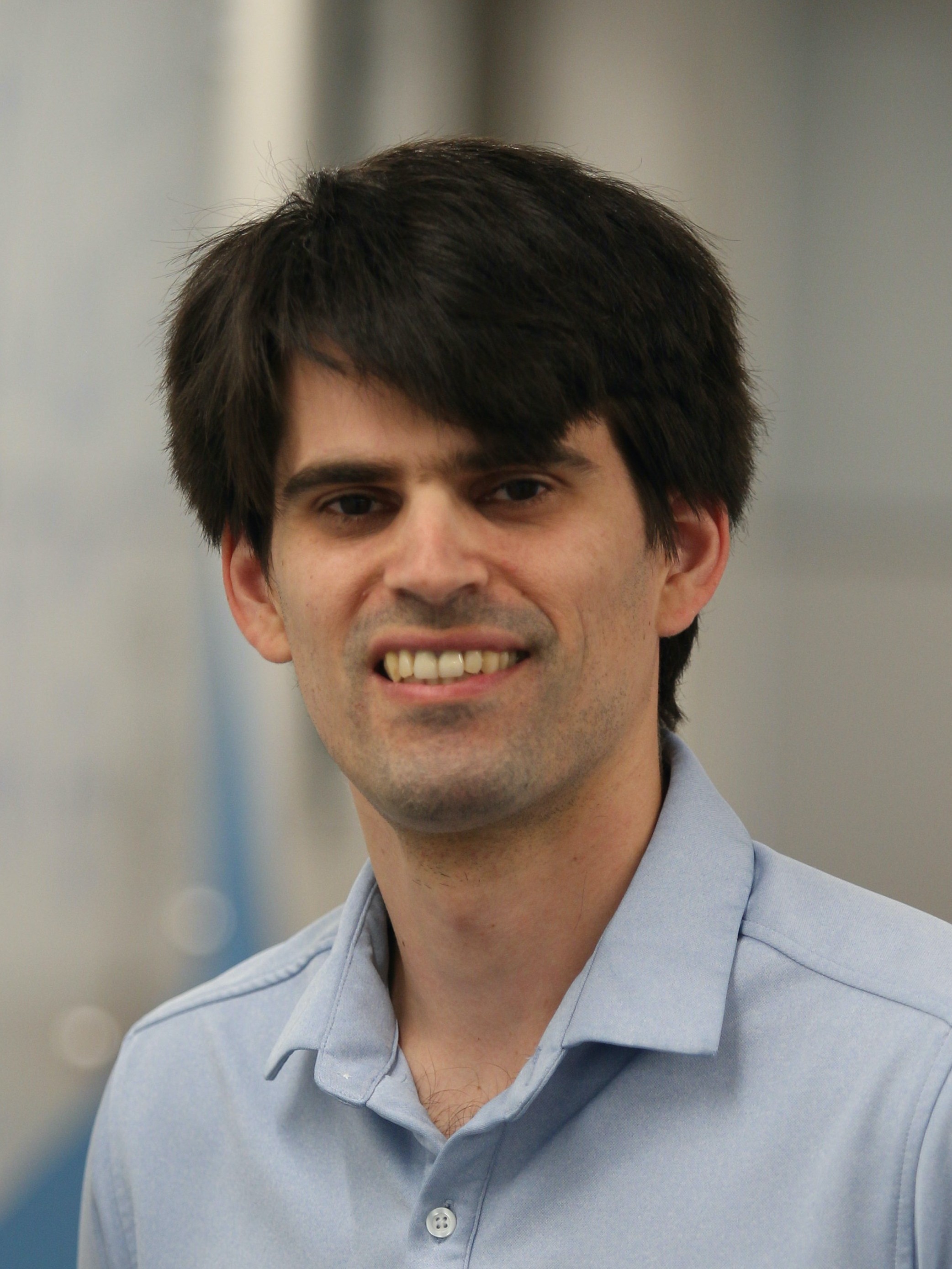
  1. Barkeshli Selected for Frontiers of Science Award
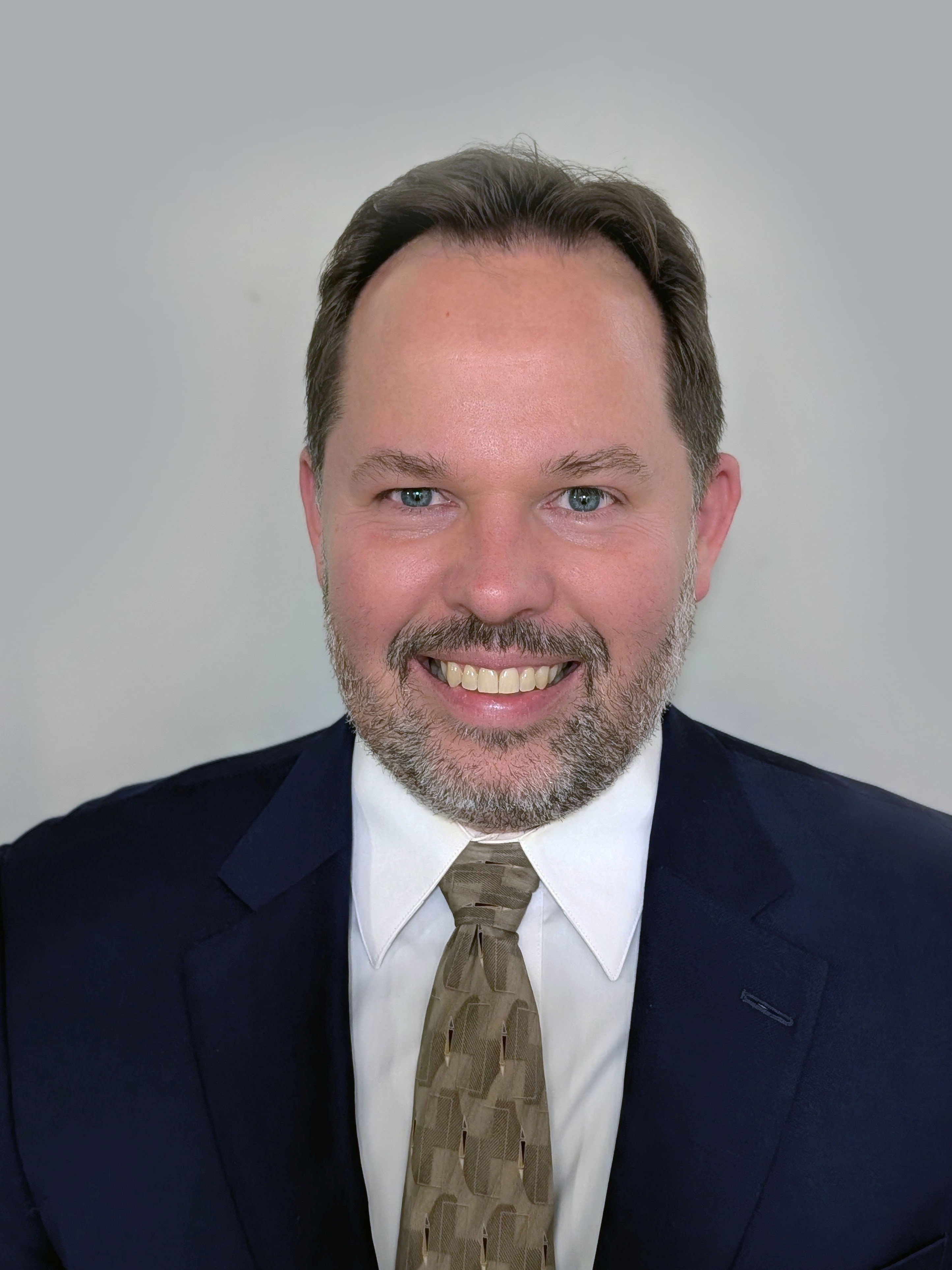
  2. Kara Hoffman Named Chair of Department of Physics
  3. College Celebrates 2026 Employee Award Recipients
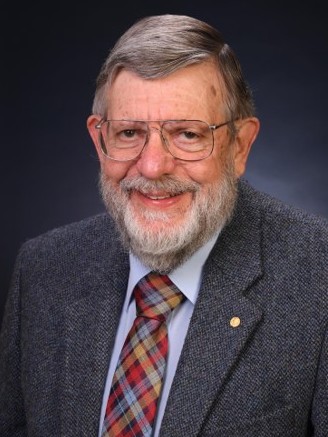
  4. Das Sarma and Greene Elected to the National Academy of Sciences
  5. Building Graduate Programs that Support Mental Well-being

Page 1 of 152

  • 1
  • 2
  • 3
  • 4
  • 5
  • 6
  • 7
  • 8
  • 9
  • 10
  • Physics Administration
  • Directions
  • Awards
  • Student Awards
  • Make a Donation
  • News
    • Research News
    • Department News
    • Newsletters
  • PTK Policy

College and Department Links

Department of Physics

Physical Sciences Complex
4296 Stadium Dr
College Park, MD 20742
Phone: 301.405.3401

Information

  • Campus Directory
  • Undergraduate Research
  • Scholarships
  • Prospective Undergraduates
  • Directions & Transit
  • Web Accessibility
© 2026 University of Maryland - Department of Physics
Top
  • Home
  • About Us
    • Physics Administration
    • Directions
    • Awards
    • Student Awards
    • Make a Donation
    • News
      • Research News
      • Department News
      • Newsletters
    • PTK Policy
  • People
    • All
    • Faculty
      • Current
      • Emeritus
      • Adjunct
      • Affiliate
      • Research Professors
    • Research Scientists
    • Postdocs
    • Staff
    • Lecturers
    • Visitors
    • Graduate Students
  • Research
    • Research Areas
      • AI and Physical Sciences
      • Astro Metrology
      • Atomic, Molecular & Optical
      • Biophysics
      • Chemical Physics
      • Condensed Matter Experiment
      • Condensed Matter Theory
      • Cosmic Ray Physics
      • Elementary Particles
      • Gravitation Experiment
      • Gravitational Theory
      • High Energy Physics
      • Nonlinear Dynamics, Chaos and Complex Systems
      • Nuclear Physics
      • Particle Astrophysics
      • Physics Education Research
      • Plasma Physics
      • Plasma Theory
      • Quantum Science and Technology
      • Quarks, Hadrons and Nuclei
      • Space Physics
    • Centers & Institutes
  • Academics
    • OSES Home (Student Services)
    • OSES News
    • Undergraduate Program
      • Prospective Students
      • Apply Now
      • Degree Requirements and Policies
      • Scholarships
      • Undergraduate Research
      • Advising
      • Undergraduate Forms
      • Undergraduate Events
      • Departmental Honors
      • Society of Physics Students
      • FAQ
      • Undergraduate Student Committee
    • Graduate Program
      • Prospective Students
      • Open House
      • Degree Requirements
      • Graduate Resources
      • Deadlines and Forms
      • PhD Defenses
        • PhD Defenses 2026
        • PhD Defenses 2025
        • PhD Defenses 2024
        • PhD Defenses 2023
        • PhD Defenses 2022
        • PhD Defenses 2021
        • PhD Defenses 2020
        • PhD Defenses 2019
        • PhD Defenses 2018
        • PhD Defenses 2017
        • PhD Defenses 2016
      • Events
      • Scholarships & Awards
      • Qualifier
      • Graduate Student Organizations
      • FAQ
    • Student Opportunities
      • GRAD-MAP
      • Graduate Student Organizations
      • Outreach Volunteering
      • Society of Physics Students
      • NSF S-STEM Program
      • Undergraduate Research
      • Women in Physics
      • Undergraduate Quantum Association
    • Courses
    • Academic Support
    • NSF S-STEM Program
    • Teaching Assistants
  • Events
    • Calendar
    • Physics Colloquia
    • W.J. Carr Lecture
    • Research Interaction Team (RIT) Math/Physics
    • Mechanick Quantum Biology Lecture
    • Irving and Renee Milchberg Endowed Lectureship
    • Charles W. Misner Endowed Lectureship in Gravitational Physics
    • John S. Toll Endowed Lecture
    • Prange Prize Lecture
    • Maryland Day
    • Outreach
      • Outreach Home
      • Physics is Phun
      • Discovery Days
    • Summer Programs
      • Physics Makers Camp
      • Physics of Quidditch
      • Science Discovery Camp
      • Advanced Physics Summer Program
      • Toolkit for Success
    • CUWiP
    • Vortex Makerspace
    • QURiSE Conference
  • Services
    • Building Access Requests
    • Computing Services
    • Conference Room Reservations
    • Department Operations Directory
    • Electronic and Mechanical Development
    • Hiring Procedures
    • Lecture Demo
    • Mental Health Resources
    • Parking
    • Physics Ombudspersons
    • Printing Services
      • Poster Print Request
    • Proposal Submissions
    • Purchase Order
    • Suggestion Box
    • Textbook Information
  • Give