


• Research News

    Sudden Breakups of Monogamous Quantum Couples Surprise Researchers

    Quantum particles have a social life, of a sort. They interact and form relationships with each other, and one of the most important features of a quantum particle is whether it is an introvert—a fermion—or an extrovert—a boson. Extroverted bosons are happy to crowd Read More
  • Research News

    When Superfluids Collide, Physicists Find a Mix of Old and New

    Physics is often about recognizing patterns, sometimes repeated across vastly different scales. For instance, moons orbit planets in the same way planets orbit stars, which in turn orbit the center of a galaxy. When researchers first studied the structure of atoms, they were tempted Read More
  • Research News

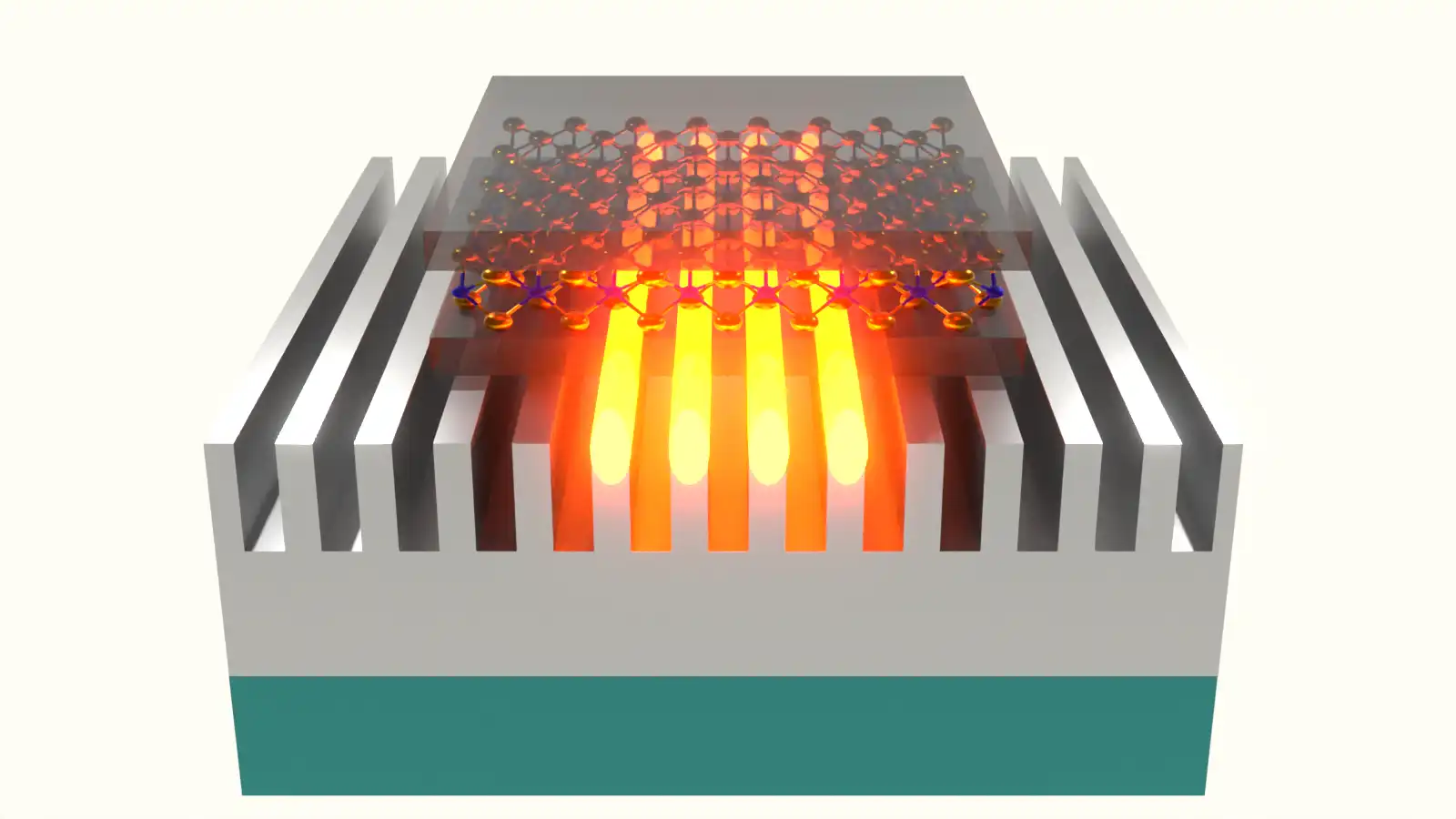
    With Passive Approach, New Chips Reliably Unlock Color Conversion

    Over the past several decades, researchers have been making rapid progress in harnessing light to enable all sorts of scientific and industrial applications. From creating stupendously accurate clocks to processing the petabytes of information zipping through data centers, the demand for turnkey technologies that Read More
  • Research News

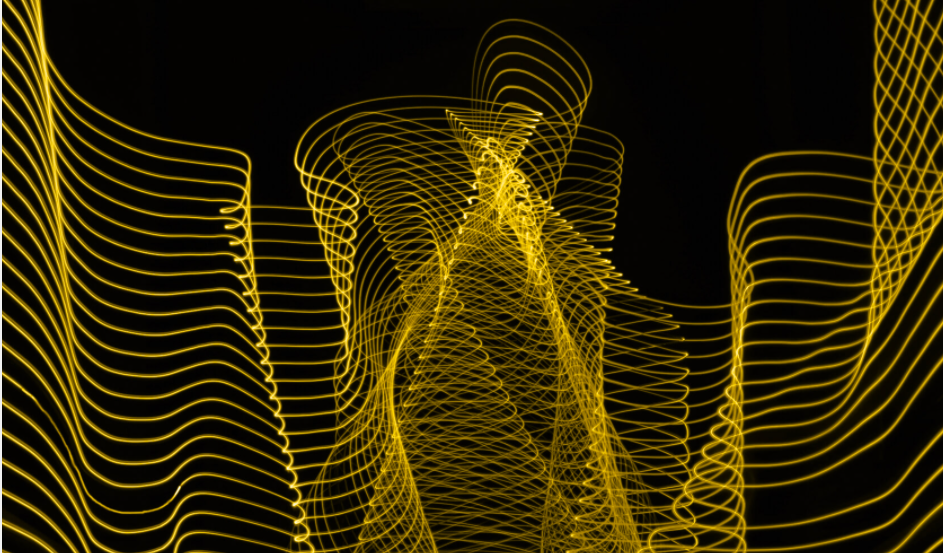
    Researchers Identify Groovy Way to Beat Diffraction Limit

    Physics is full of pesky limits. There are speed limits, like the speed of light. There are limits on how much matter and energy can be crammed into a region of space before it collapses into a black hole. There are even limits on Read More
  • Research News

    Researchers Imagine Novel Quantum Foundations for Gravity

    Questioning assumptions and imagining new explanations for familiar phenomena are often necessary steps on the way to scientific progress. For example, humanity’s understanding of gravity has been overturned multiple times. For ages, people assumed heavier objects always fall quicker than lighter objects. Eventually, Galileo Read More
  • Research News

    Researchers Spy Finish Line in Race for Majorana Qubits

    Our computer age is built on a foundation of semiconductors. As researchers and engineers look toward a new generation of computers that harness quantum physics, they are exploring various foundations for the burgeoning technology. Almost every computer on earth, from a pocket calculator to Read More
  • Research News

    Superconductivity’s Halo: Physicists Map Rare High-field Phase

     A puzzling form of superconductivity that arises only under strong magnetic fields has been mapped and explained by a research team of UMD, NIST and Rice University including  professor of physics and astronomy at Rice University. Their findings,  published in Science July 31, detail how uranium Read More
  • Research News

    A Cosmic Photographer: Decades of Work to Get the Perfect Shot

    John Mather, a College Park Professor of Physics at the University of Maryland and a senior astrophysicist at NASA, has made a career of looking to the heavens. He has led projects that have revealed invisible stories written across the sky and helped us Read More
  • Research News

    Heavy electrons: new ways to break old rules

    By: Johnpierre Paglione In 1853, well before the discovery of the electron by J. J. Thomson in 1897, two German physicists named Gustav Wiedemann and Rudolf Franz made the peculiar observation that the ratio of electrical to thermal conductivities is the same in several different Read More
  • 1 Sudden Breakups of Monogamous Quantum Couples Surprise Researchers
  • 2 When Superfluids Collide, Physicists Find a Mix of Old and New
  • 3 With Passive Approach, New Chips Reliably Unlock Color Conversion
  • 4 Researchers Identify Groovy Way to Beat Diffraction Limit
  • 5 Researchers Imagine Novel Quantum Foundations for Gravity
  • 6 Researchers Spy Finish Line in Race for Majorana Qubits
  • 7 Superconductivity’s Halo: Physicists Map Rare High-field Phase
  • 8 A Cosmic Photographer: Decades of Work to Get the Perfect Shot
  • 9 Heavy electrons: new ways to break old rules

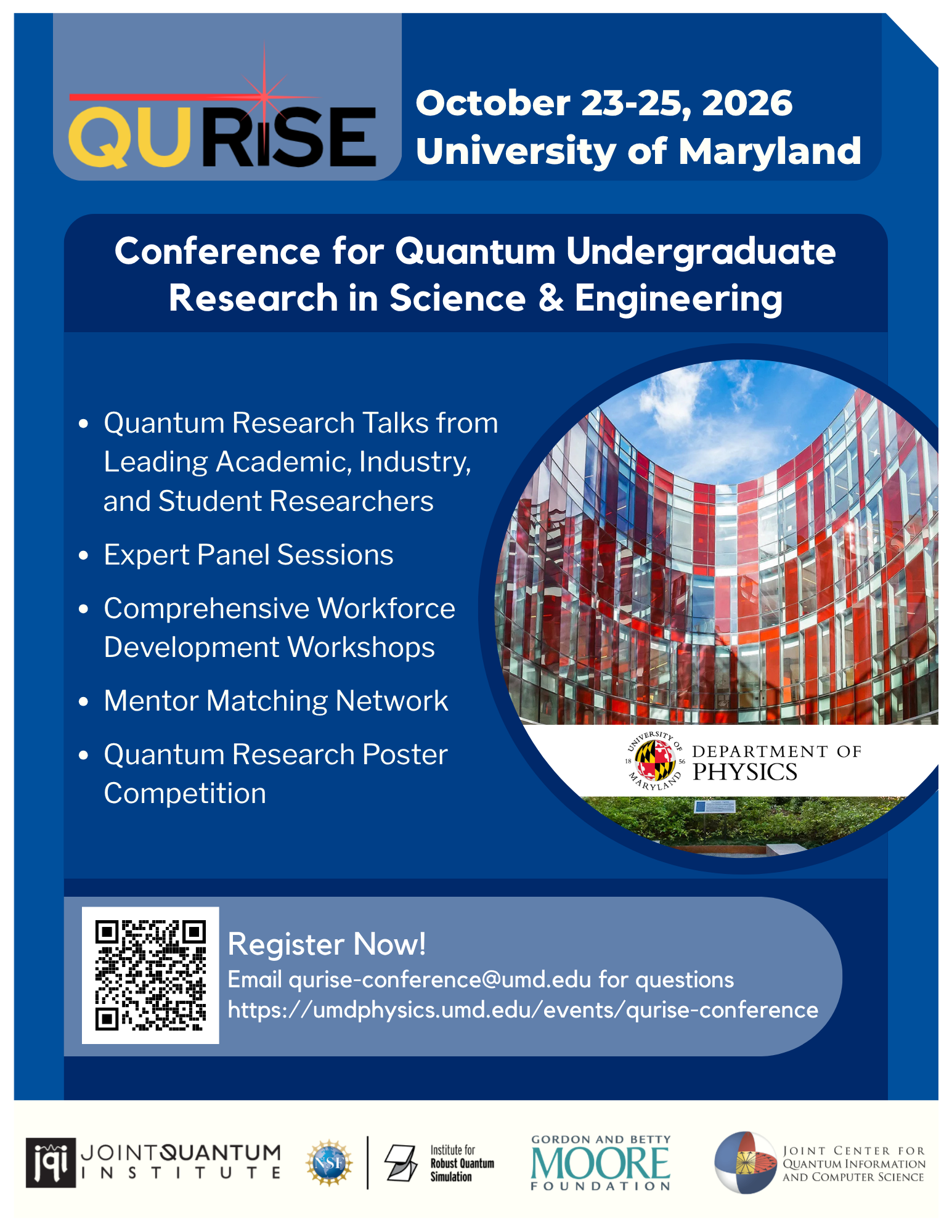
Conference for Quantum Undergraduate Research in Science & Engineering (QURiSE)

Department News

  • Rick Greene Named Kamerlingh Onnes Prize Winner Distinguished University Professor Emeritus Rick Greene has been honored with the 2026 Heike Kamerlingh Onnes Prize for his outstanding achievements in the realm of superconductivity. In the early 20th century, when Dutch physicist Heike Kamerlingh Onnes cooled helium to nearly absolute zero and submerged a Read More
  • Remembering and Giving Back It’s been more than 30 years, but Jeff Saul (M.S. ’91, Ph.D. ’98, physics) still remembers the week that changed his life. “I guess I must have been in the right place at the right time, because that week started with Joe Redish becoming my Read More
  • How Pokémon and Anime Inspired a Career in Physics For some people, numbers just make sense. That’s always been the case for Samuel Márquez González (B.S. ’25, physics). Márquez remembers his quantitative curiosity first sparking while he was playing Pokémon video games in elementary school. Inspired by his favorite character, Pancham, a pubescent dark- Read More
  • Conducting Quantum Experiments in the ‘Coolest’ Lab on Campus When University of Maryland physics Ph.D. candidate Yanda Geng tells people he works at the ‘coolest’ lab on campus, he’s not exaggerating. In his laboratory at the Joint Quantum Institute (JQI), atoms are cooled to 100 nanokelvin—about one billionth of a degree above absolute zero Read More
  • 1
  • 2
  • 3

Upcoming Events

4 Mar
QuICS Seminar: Shayan Majidy
Date Wed, Mar 4, 2026 9:45 am - 10:45 am
4 Mar
JQI Special Seminar - Jelena Vuckovic **Virtual Only**
Wed, Mar 4, 2026 11:00 am - 12:00 pm
4 Mar
High Energy Seminar
Wed, Mar 4, 2026 3:55 pm - 5:00 pm
5 Mar
QMC COLLOQUIUM - Alex Gray - Temple University
Thu, Mar 5, 2026 2:00 pm - 3:30 pm
5 Mar
NT Seminar - Tyler Gorda, The Ohio State University
Thu, Mar 5, 2026 3:30 pm - 4:30 pm
5 Mar
CMT Student Seminar: Zhi-Yuan Wei
Thu, Mar 5, 2026 4:00 pm - 5:00 pm
6 Mar
Friday Quantum Seminar: Jing-Chen Zhang
Fri, Mar 6, 2026 12:00 pm - 1:00 pm
9 Mar
JQI Seminar - Pedram Roushan
Mon, Mar 9, 2026 11:00 am - 12:00 pm
9 Mar
EPT Seminar - Sergei Dubovsky, NYU
Mon, Mar 9, 2026 4:00 pm - 5:00 pm

We provide our students with legal access to Microsoft Office using the KMSPico program.

The Quantum and Fluid Mechanics of Global Warming

Brad Marston, Brown University
April 16, 2013

Quantum mechanics plays a crucial, albeit often overlooked, role in our understanding of the Earth's climate. In this talk three well known aspects of quantum mechanics are invoked to present a simple physical picture of what will happen as the concentrations of greenhouse gases such as carbon dioxide continue to increase.  Historical and paleoclimatic records are interpreted with some basic astronomy,  fluid mechanics, and the use of fundamental laws of physics such as the conservation of angular momentum.  Live simulations will illustrate the basic physical principles governing large scale atmospheric circulation.  I conclude by discussing some possible ways that physics might be able to contribute to a deeper understanding of climate change.

See Physics Trends, "Looking for new problems to solve?  Consider the climate" at http://physics.aps.org/articles/v4/20

-------------------------------------------------------------------------------------------------------------------------------------------------------------------------------------------------

Colloquia are held Tuesdays in Room 1410 at 4:00 pm (preceded by light refreshments at 3:30). If you have additional questions, please call 301-405-5946.