• Home
  • About Us
    • Physics Administration
    • Directions
    • Awards
    • Student Awards
    • Make a Donation
    • News
      • Research News
      • Department News
      • Newsletters
    • PTK Policy
  • People
    • All
    • Faculty
      • Current
      • Emeritus
      • Adjunct
      • Affiliate
      • Research Professors
    • Research Scientists
    • Postdocs
    • Staff
    • Lecturers
    • Visitors
    • Graduate Students
  • Research
    • Research Areas
      • AI and Physical Sciences
      • Astro Metrology
      • Atomic, Molecular & Optical
      • Biophysics
      • Chemical Physics
      • Condensed Matter Experiment
      • Condensed Matter Theory
      • Cosmic Ray Physics
      • Elementary Particles
      • Gravitation Experiment
      • Gravitational Theory
      • High Energy Physics
      • Nonlinear Dynamics, Chaos and Complex Systems
      • Nuclear Physics
      • Particle Astrophysics
      • Physics Education Research
      • Plasma Physics
      • Plasma Theory
      • Quantum Science and Technology
      • Quarks, Hadrons and Nuclei
      • Space Physics
    • Centers & Institutes
  • Academics
    • OSES Home (Student Services)
    • OSES News
    • Undergraduate Program
      • Prospective Students
      • Apply Now
      • Degree Requirements and Policies
      • Scholarships
      • Undergraduate Research
      • Advising
      • Undergraduate Forms
      • Undergraduate Events
      • Departmental Honors
      • Society of Physics Students
      • FAQ
      • Undergraduate Student Committee
    • Graduate Program
      • Prospective Students
      • Open House
      • Degree Requirements
      • Graduate Resources
      • Deadlines and Forms
      • PhD Defenses
        • PhD Defenses 2026
        • PhD Defenses 2025
        • PhD Defenses 2024
        • PhD Defenses 2023
        • PhD Defenses 2022
        • PhD Defenses 2021
        • PhD Defenses 2020
        • PhD Defenses 2019
        • PhD Defenses 2018
        • PhD Defenses 2017
        • PhD Defenses 2016
      • Events
      • Scholarships & Awards
      • Qualifier
      • Graduate Student Organizations
      • FAQ
    • Student Opportunities
      • GRAD-MAP
      • Graduate Student Organizations
      • Outreach Volunteering
      • Society of Physics Students
      • NSF S-STEM Program
      • Undergraduate Research
      • Women in Physics
      • Undergraduate Quantum Association
    • Courses
    • Academic Support
    • NSF S-STEM Program
    • Teaching Assistants
  • Events
    • Calendar
    • Physics Colloquia
    • W.J. Carr Lecture
    • Research Interaction Team (RIT) Math/Physics
    • Mechanick Quantum Biology Lecture
    • Irving and Renee Milchberg Endowed Lectureship
    • Charles W. Misner Endowed Lectureship in Gravitational Physics
    • John S. Toll Endowed Lecture
    • Prange Prize Lecture
    • Maryland Day
    • Outreach
      • Outreach Home
      • Physics is Phun
      • Discovery Days
    • Summer Programs
      • Physics Makers Camp
      • Physics of Quidditch
      • Science Discovery Camp
      • Advanced Physics Summer Program
      • Toolkit for Success
    • CUWiP
    • Vortex Makerspace
    • QURiSE Conference
  • Services
    • Building Access Requests
    • Computing Services
    • Conference Room Reservations
    • Department Operations Directory
    • Electronic and Mechanical Development
    • Hiring Procedures
    • Lecture Demo
    • Mental Health Resources
    • Parking
    • Physics Ombudspersons
    • Printing Services
      • Poster Print Request
    • Proposal Submissions
    • Purchase Order
    • Suggestion Box
    • Textbook Information
  • Give
  1. Home
  2. About Us
  3. News

Written on 03 April 2023. Posted in Department News.

Deven Bowman Named 2023 Goldwater Scholar

Deven Bowman, a junior physics and mathematics double-degree student at the University of Maryland, has been awarded a 2023 scholarship by the Barry Goldwater Scholarship and Excellence in Education Foundation, which encourages students to pursue advanced study and research careers in the sciences, engineering and mathematics.

Deven Bowman. Courtesy of same.Deven Bowman. Courtesy of same.Bowman and UMD bioengineering majors Corinne Martin and Neel Panchwagh are among 413 Goldwater Scholars selected from 1,267 nominees nationally. Goldwater Scholars receive one- or two-year scholarships that cover the cost of tuition, fees, books, and room and board up to $7,500 per year.

Over the last 15 years, UMD’s nominations yielded 49 scholarships—the most in the nation. The Goldwater Foundation has honored 79 UMD winners and five honorable mentions since the program’s first award was given in 1989. In the last decade, 16 physics students have received Goldwater recognition: Bowman, Patrick Kim, Ela Rockafellow, Scott Moroch, John Martyn, Nicholas Poniatowski, Mark Zic, Paul Neves, Christopher Bambic, Eliot Fenton, Prayaag Venkat, Nathan Ng, Geoffrey Ji, Stephen Randall and Noah Roth Mandell.  

“We are immensely proud of all that Deven, Corinne and Neel have accomplished to this point and the bright futures ahead of them. Their success is a win for everyone at the University of Maryland and highlights the commitment of the university to provide opportunities for our students to advance knowledge in their research disciplines and address grand challenges that impact people and communities, both locally and globally,” said Robert Infantino, associate dean of undergraduate education in the College of Computer, Mathematical, and Natural Sciences. Infantino has led UMD’s Goldwater Scholarship nominating process since 2001.

Bowman started working remotely in a UMD research group the summer before his freshman year—during the height of the COVID-19 pandemic. He spent the next two years in that group led by Eun-Suk Seo, a professor of physics with a joint appointment in the Institute for Physical Science and Technology, studying the cosmic ray spectrum by fitting physically motivated models to data and investigating the connections to atmospheric neutrinos.

This research resulted in a first-author paper published in the journal Advances in Space Research, as well as a co-authored paper and a conference proceeding.

In summer 2021, Bowman joined the lab of physics chair and Joint Quantum Institute Fellow Steve Rolston, where he continues to work today on long-distance quantum communication.

Taking advantage of an eight-mile-long fiber optic cable buried on campus, the researchers in Rolston’s lab want to send polarization-encoded quantum information through the fiber for long distances. However, optical fibers can perturb and scramble the polarization signals due to stresses and temperature variations along the path, especially for long fibers like this one.  

To address this challenge, Bowman first measured the amount of variation in the signal and then devised a feedback system to correct for the perturbations of the fiber and the environment. Then, he designed two unique, complex polarimeters to compensate for signal drift and allow for continuous calibration. He presented this work at the Frontiers in Optics+Laser Science conference in 2022.

“Over my career, I have interacted with many undergraduates and graduate students—and it is clear Deven has an exceptionally bright future,” Rolston said. “He is highly motivated and very self-sufficient in both understanding the science and figuring out technical solutions.”

Outside the lab, Bowman spent time tutoring two high school students in math, science and English and advised them on preparing for college for the past three years. He also competed in the William Lowell Putnam Mathematical Competition in 2021.

Bowman spent the spring 2022 semester studying abroad in Italy through the Maryland-in-Florence (PHYS) program. There, he took three classes taught by UMD Physics Professor Emeritus Luis Orozco, who has since become a key physics mentor for Bowman.

“Studying in Florence, Italy, was a great opportunity to delve into advanced physics coursework, form enduring professional relationships and benefit from the unique experience of touring the gravitational wave detector Virgo,” Bowman said.

Visiting Virgo also set Bowman on a new research path for the coming summer, where he’ll work at Caltech on the Laser Interferometer Gravitational-Wave Observatory (LIGO), the U.S.-based gravitational wave detector, as part of a National Science Foundation Research Experiences for Undergraduates (REU) program.

During his time at UMD, Bowman received the President’s Scholarship and the Angelo Bardasis Scholarship from the Department of Physics.

After graduation, Bowman plans to pursue a Ph.D. in physics, following in his father’s footsteps. Bowman’s father Steven received his M.S. and Ph.D. in physics from UMD in 1980 and 1986, respectively. His mother Anuradha is also a Terp, receiving her B.S. in physics in 1986 and M.A. in geography in 1997 from UMD.

“Their unwavering support for my education has been paramount to my success thus far,” Bowman said of his parents. “Their support played a vital role when I first sought out research opportunities. Their encouragement helped me take myself seriously as a researcher and gave me the confidence to speak up in meetings, ask questions and seek help when confused. I hope that my parents will continue to be active in my academic life and we can continue to connect over our shared passion for physics.”

Written on 01 April 2023. Posted in Department News.

April 26, 2023: The Future of Nuclear Deterrence and Arms Control


“The most significant event of the past 60 years is the one that did not happen: the use of a nuclear weapon in conflict.”

Thomas Schelling (1921-2016), Nobel laureate and UMD Distinguished University Professor, in 2006.Click to read Maryland Today's coverage.Click to read Maryland Today's coverage.

After the fall of the Union of Soviet Socialist Republics (USSR) in 1991, the Doomsday Clock of the Bulletin of the Atomic Scientists—which gauges the likelihood of nuclear war—stood at 17 minutes to midnight. Today, that interval is down to 90 seconds, amid hostilities involving heavily-armed countries, the quest of smaller nations to build nuclear weapons, ongoing economic rivalries and increasing nationalism.   

The avoidance of nuclear conflict since the unspeakable destruction of Hiroshima and Nagasaki in 1945 has required diligent work by the arms control and nuclear deterrence experts of the world's superpowers.

On Wednesday, April 26, at 4 p.m. in Room 0224 of the Edward St. John building, four physicists who are renowned experts on deterrence and arms control will discuss the current global situation.  

  • Roald Sagdeev, former heard of the USSR space agency IKI and advisor to USSR leader Mikhail Gorbachev. Prof. Sagdeev, a pioneer in plasma physics and controlled nuclear fusion, is the recipient of the American Astronautical Society's Carl Sagan Memorial Award and the American Physical Society's James Clerk Maxwell Prize.  He is UMD Distinguished University Professor Emeritus and member of the National Academy of Sciences.

  • John Holdren, former Director of  the White House Office of Science and Technology Policy (OSTP) and Senior Advisor to President Barack Obama on science and technology from 2009-17.  Prof. Holdren is now a Research Professor in Harvard University’s Kennedy School of Government and Co-Director of the Science, Technology, and Public Policy Program in the School’s Belfer Center for Science and International Affairs.

  • Frank von Hippel, former Assistant Director for National Security in the OSTP from 1993-95. Prof. Von Hippel is now a Senior Research Physicist and Professor of Public and International Affairs Emeritus with Princeton’s Program on Science & Global Security, which he co-founded.  

  • Richard Garwin, IBM Fellow Emeritus at the Thomas J. Watson Research Center. Garwin was a member of the President’s Science Advisory Committee from 1962-1965 and 1969-1972, and a member of JASON Defense Advisory Group since its inception. He is a member of the National Academy of Sciences, the National Academy of Medicine, and the National Academy of Engineering, and is a recipient of the Presidential Medal of Freedom.

Moderating the panel will be Susan Eisenhower, author and expert on international security and arms control.  William E. “Brit” Kirwan, chancellor emeritus of the University System of Maryland, will open the forum.

All are welcome to attend, ask questions, and engage the panel. Questions sent in advance to  will have first consideration. 

Roald Sagdeev  Roald SagdeevJohn HoldrenJohn HoldrenFrank von HippelFrank von HippelRichard GarwinRichard GarwinSusan EisenhowerSusan Eisenhower

{source}<iframe width="560" height="315" src="https://www.youtube.com/embed/NVHf8rMKM3M" title="YouTube video player" frameborder="0" allow="accelerometer; autoplay; clipboard-write; encrypted-media; gyroscope; picture-in-picture; web-share" allowfullscreen></iframe>{/source}


Writeup of the event by the University of Maryland School of Public Policy: https://spp.umd.edu/news/eminent-nuclear-physicists-convene-umd-discuss-future-nuclear-deterrence-and-arms-control

Manuel Franco Sevilla installs ODMB modules into the CMS detector at CERN. (Photo: Jeff Richman)

Written on 21 February 2023. Posted in Department News.

Manuel Franco Sevilla Receives Junior Faculty Award

Manuel Franco Sevilla has received the 2022 Junior Faculty Award from the Board of Visitors of the College of Computer, Mathematics and Natural Sciences in recognition of his “exceptional accomplishments that have raised the profile and prestige of the college”.

Franco Sevilla is a particle physicist doing research at CERN’s Large Hadron Collider’s beauty (LHCb) experiment, which employs “beauty” (or “b”) hadrons produced in high-energy collisions of protons to study the fundamental laws of our Universe.Manuel Franco Sevilla Manuel Franco Sevilla

His research focuses on measurements that test lepton universality, a fundamental assumption within the Standard Model of particle physics that states that the interactions of all charged leptons (electrons, muons, and taus) differ only because of their different masses. His thesis in 2012 saw the first hints of possible lepton universality violation, and since then, several measurements in experiments across the world have found similar hints. He has covered this topic in multiple international forums and in reviews for Nature and Review of Modern Physics.

Additionally, Franco Sevilla works on the Upstream Tracker (UT), a new silicon tracker that is a crucial part of LHCb’s ongoing upgrade to achieve data taking rates five times larger than previously possible. Together with Professor Hassan Jawahery, he co-led the development and production of the readout electronics for the UT, a total of over 600 main boards and 3,000 ancillary ones. This immense effort included contributions from an electronics engineer, three postdocs, four graduate students and the recruitment and training of a group of 12 undergraduate students who were instrumental during the testing and assembly phases of the project.

Last year Franco Sevilla was named deputy project leader of the UT and spent the second half of 2022 at CERN coordinating the assembly and installation of this subdetector into the LHCb experiment, an effort that involved a team of over 25 engineers, technicians, postdocs, and students as well as other CERN resources such as survey, transportation, or radiation protection teams. Some pictures of theses activities are shown below.

  • Manuel at CERN 1
  • Manuel at CERN 2
  • Manuel at CERN 3
  • Manuel at CERN 4
  • Manuel at CERN 5
  • Manuel at CERN 6
  • Manuel at CERN 7
  • Manuel at CERN 8
  • Manuel at CERN 9
  • Manuel at CERN 10
  • Manuel at CERN 11
  • Manuel at CERN 12
  • Manuel at CERN 13
  • Manuel at CERN 14

Shining a light on LHCb's Upstream Tracker silicon sensors to measure whether their dark current increases—a sign that the sensors are properly connected to the high voltage circuit.

Transporting the last stave of the Upstream Tracker (UT).

The last stave being installed into the UT.

The team that installed the last UT stave on December 10, 2022.

The cutout on the inner staves as it is being laser surveyed to make sure it will not impact the beam pipe that carries LHC's protons.

Half of the UT being transported to the LHCb cavern.

Half of the UT being lowered 100 meters underground into the LHCb cavern.

Half of the UT at the bottom of the LHCb shaft.

The LHCb experimental cavern.

Half of the UT being lifted above the LHCb experiment to install it on the other side of the beam pipe.

One half of the UT being pushed into position.

The staves of half of the UT in position around the beam pipe that carries LHC's protons.

The team that cabled up the UT during CERN's Christmas closure.

After the UT installation, a break on the 25th of December at the Alps. Mont Blanc can be seen on the background.

Written on 09 February 2023. Posted in Research News.

(Possibly) Breaking the Standard Model, One Lepton-universality-violating Decay at a Time

Physicists in general, and high energy physicists in particular, like to "break" things. It can be useful to prove again that a well established theory is true, especially if you are probing a yet-untested prediction of the venerable theory. But proving that the theory is wrong--or at least not completely true--that is where the fun is. This is why a series of measurements of b hadron decays that seemingly break the Standard Model (SM) of particle physics is garnering so much excitement.

You see, the SM is the most well established theory of them all, the only one with predictions corroborated to the 11th digit (see the anomalous magnetic moment of the electron). It was fully fleshed out in the 70's, and since then it has racked up success after success. Its crowning achievement came in 2012 when the long-predicted Higgs boson was finally confirmed to be alive and well. Despite this resiliency, the SM is not the end of it all. It can't explain why the mass of the Higgs is so low, what the nature of dark matter is, or why there is so much more matter than antimatter in the universe. Finding answers to these questions will thus require breaking, or extending, the SM.

Enter Lepton Flavor Universality (LFU) violation. LFU is a fundamental assumption within the SM involving the three lepton flavors: electron, muon, and tau. All SM interactions other than the Higgs are assumed to be flavor universal, and this has been shown to be true in numerous measurements. Since 2012, however, an intriguing pattern has emerged in decays of b hadrons (particles with a b quark inside) to final states with a c quark, a tau lepton τ, and a neutrino ν. When results involving a tau lepton and a neutrino are compared to decays involving a muon or an electron and a neutrino, they tend to be higher than we'd expect from SM calculations. This is shown in the nearby figure by all the measurements keeping their distance from the theoretical predictions in blue. Measurements that measured the two LFU quantities RD and RD* are shown as Artistic representation of a proton-proton collision resulting in a B meson that subsequently decays to a charmed D0 or D* meson, a tau lepton, as well as a smaller antineutrino. Credit: Greg Stewart, SLAC National Accelerator Laboratory/BaBar and Manuel Franco Sevilla.Artistic representation of a proton-proton collision resulting in a B meson that subsequently decays to a charmed D0 or D* meson, a tau lepton, as well as a smaller antineutrino. Credit: Greg Stewart, SLAC National Accelerator Laboratory/BaBar and Manuel Franco Sevilla.ellipses while measurements of RD* alone are shown as markers with uncertainties.
 
None of these results on their own rises to what is typically known as an "observation" (5σ statistical significance), and it could very well go away. For instance, a similar pattern that had appeared when comparing decays involving a kaon and two muons to decays with a pair of electrons was recently shown to be an artifact  of an underestimated background. But the consistency among results that share the same b→ cτν underlying process is very suggestive. Multiple explanations have been proposed that would explain all of these with physics beyond the SM (BSM). A particularly neat solution postulates a new kind of exotic particle that interacts with both leptons and quarks: a vector leptoquark. 
 
In an article published last year in Review of Modern Physics ("Semitauonic b-hadron decays: A lepton flavor universality laboratory"), my co-authors and I comprehensively described these results, delved into the main sources of uncertainty, and mapped out the future measurements. Spoiler alert: while we do not know whether BSM physics will be discovered, we are rather confident that we will know whether these results are due to BSM physics or not within 5-10 years. 
 
And the first of these new results was just submitted to Physical Review Letters  Professor Hassan Jawahery and Dr. Phoebe Hamilton, together with Dr. Greg Ciezarek from CERN, measured for the first time RD and RD* simultaneously at LHCb. The uncertainties are still large, so it is hard to say whether the discrepancy will be proven true. But this result sets the stage for another meaThe results reflect analysis of two years of data by Phoebe Hamilton and Hassan Jawahery and their CERN collaborator, Greg Ciezarek.The results reflect analysis of two years of data by Phoebe Hamilton and Hassan Jawahery and their CERN collaborator, Greg Ciezarek.surement based on the same techniques that uses a data sample more than 6 times larger. This work, carried out by the all-UMD team Professor Manuel Franco Sevilla, Dr. Hamilton, Dr. Christos Hadjivasiliou, Yipeng Sun, and Alex Fernez, is now fairly advanced. So stay tuned, there's potential for SM-breaking ahead!


 --Manuel Franco Sevilla


Written on 05 February 2023. Posted in Department News.

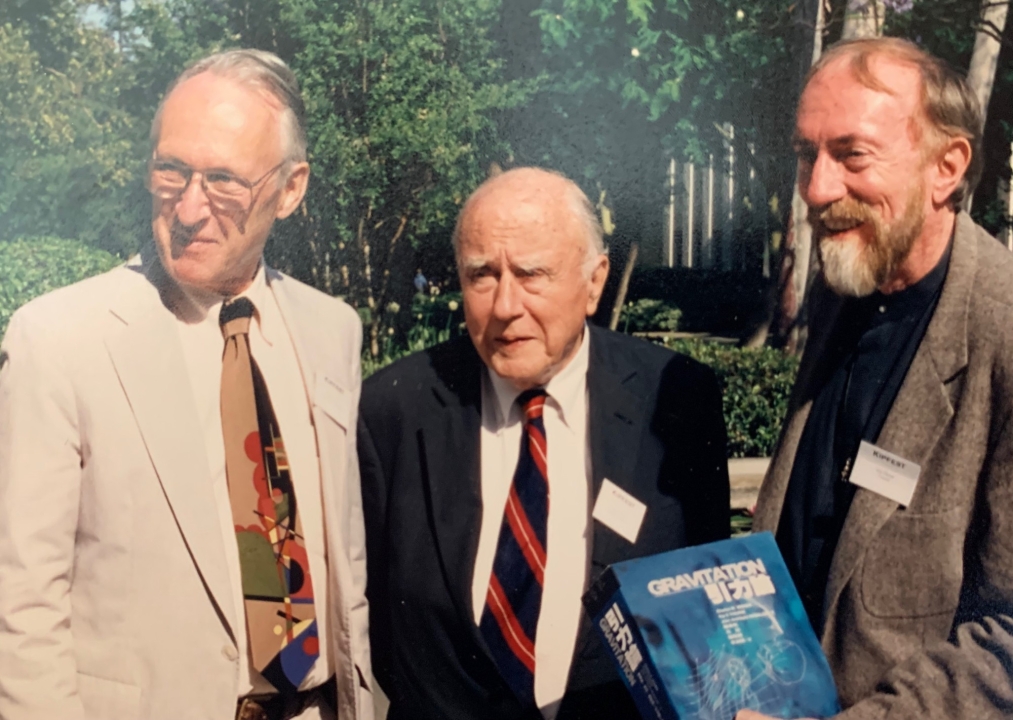
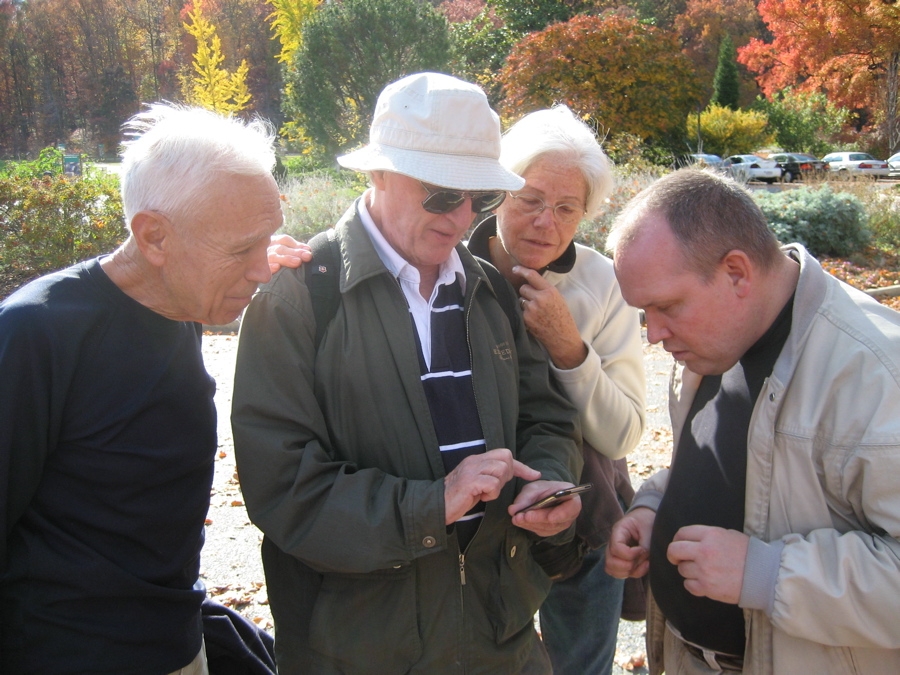
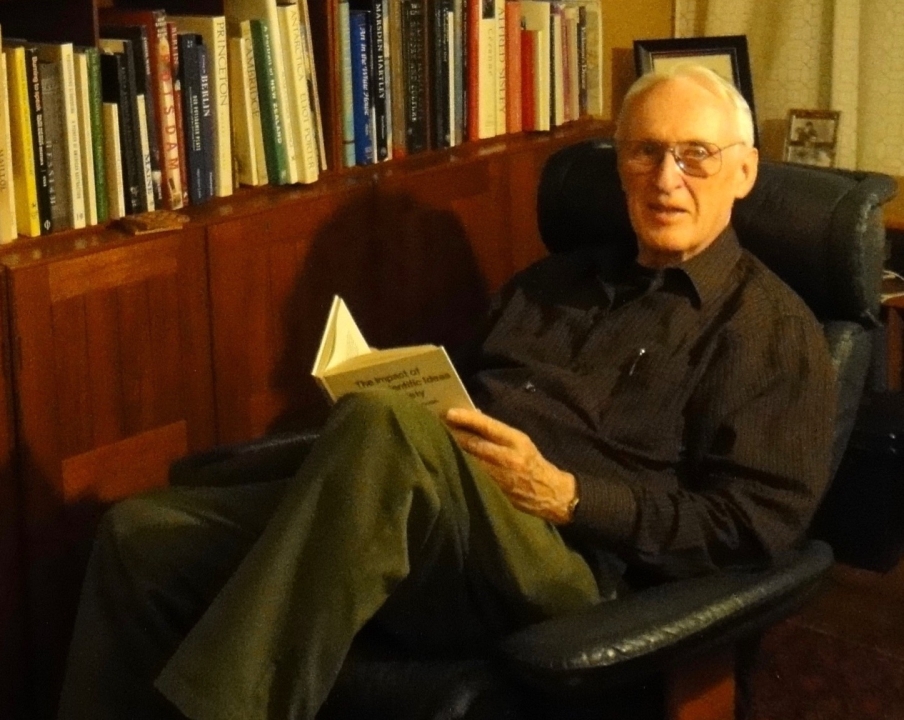
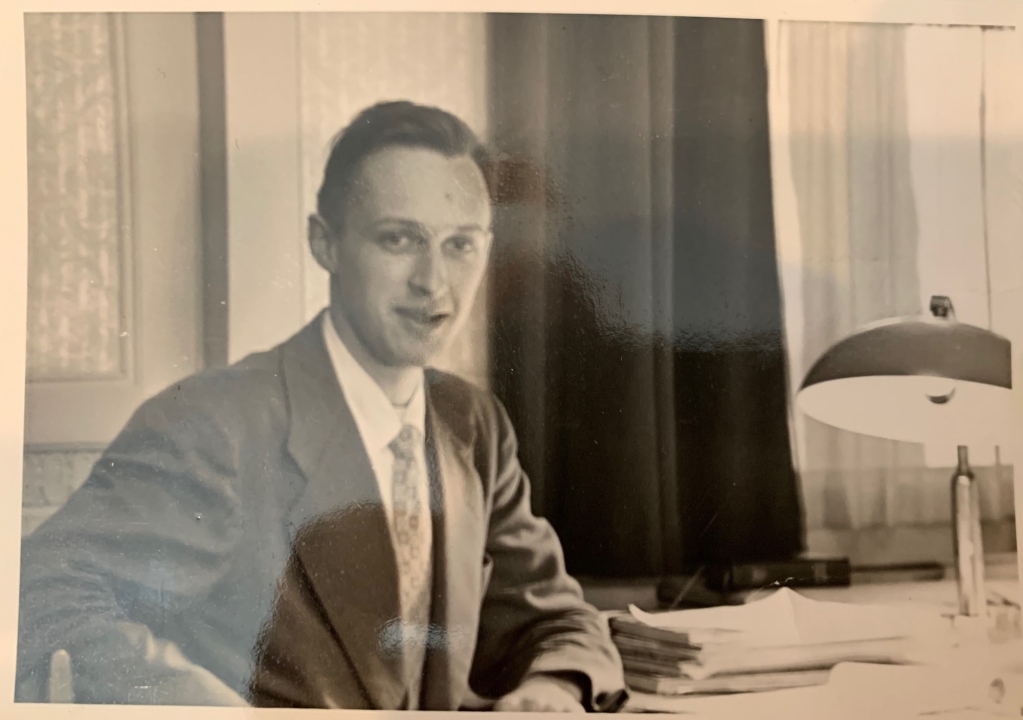
James J. Griffin, 1930-2022

Professor Emeritus James J. Griffin died on December 13, 2022.

Griffin earned his Ph.D. in theoretical physics at Princeton University in 1956 and then accepted a Fulbright Scholarship to the Institute for Theoretical Physics in Copenhagen. Following a National Science Foundation Fellowship at the University of Birmingham and an appointment as a Visiting Lecturer at the University of Wisconsin, he joined UMD as an assistant professor in 1966. He was promoted to associate professor and full professor in 1968 and 1973, respectively. In the 1968-69 academic year, Griffin served as Associate Chair of the UMD Department of Physics and Astronomy.

Griffin studied nuclear structure and heavy ions, and was perhaps best known for his publication, “The statistical model of intermediate structure,” which appeared in Physical Review Letters.  He received a John Simon Guggenheim Foundation Fellowship to work at the Lawrence Berkeley Laboratory in 1972-73. In 1975, he received an Alexander von Humboldt Foundation Senior Scientist Fellowship and worked at the Justus Liebig University in Giessen and the Hahn Meitner Institute for Nuclear Research in Berlin.   

During his career, Griffin also enjoyed visiting positions at Los Alamos National Laboratory, Oak Ridge National Laboratory, the University of California in Berkeley, and several institutions in France and Germany. He was an invited guest lecturer in Germany, Canada, Poland, China, Israel, Japan, France and Romania. 

A memorial is planned for the spring. If you'd like to be notified when it is scheduled, please contact .

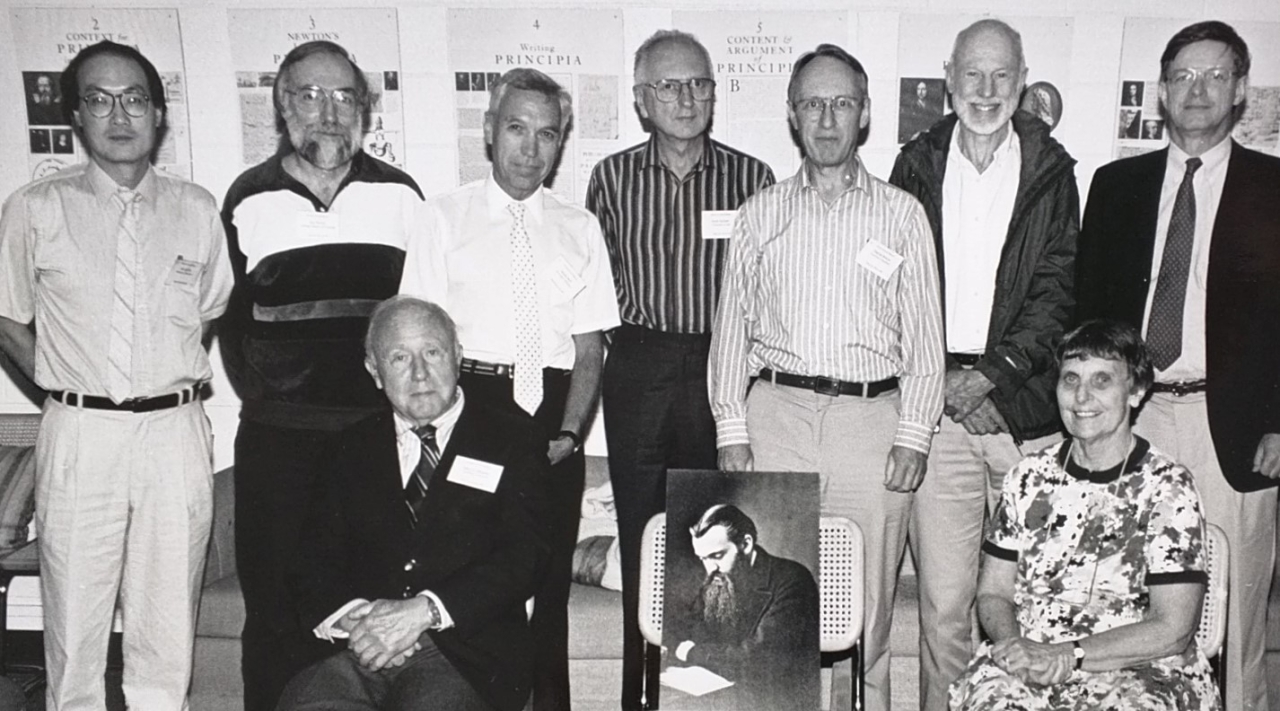
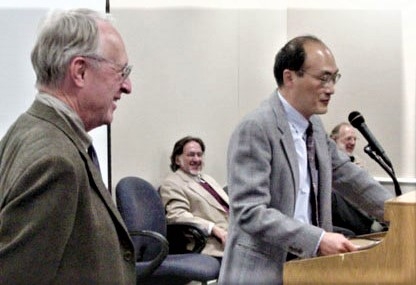
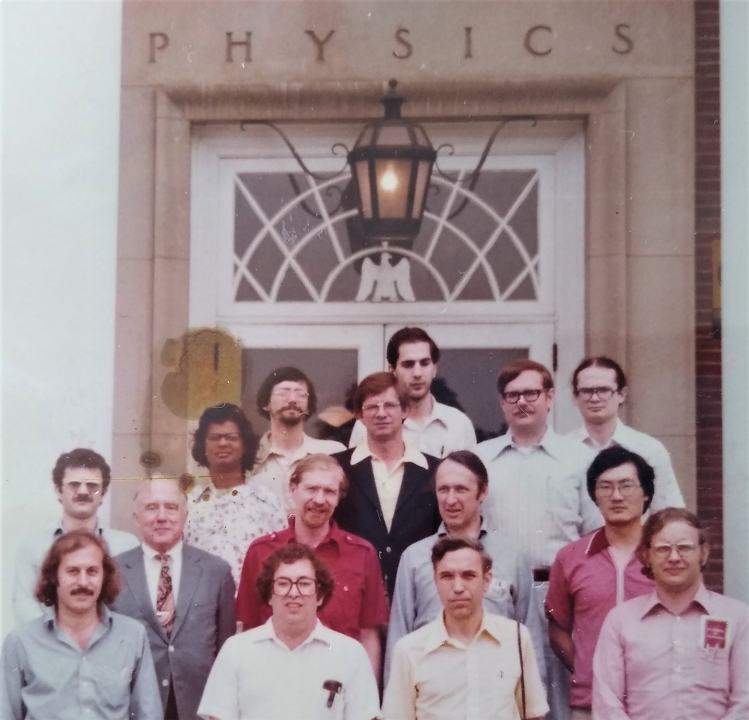
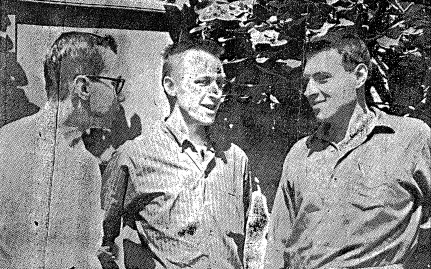
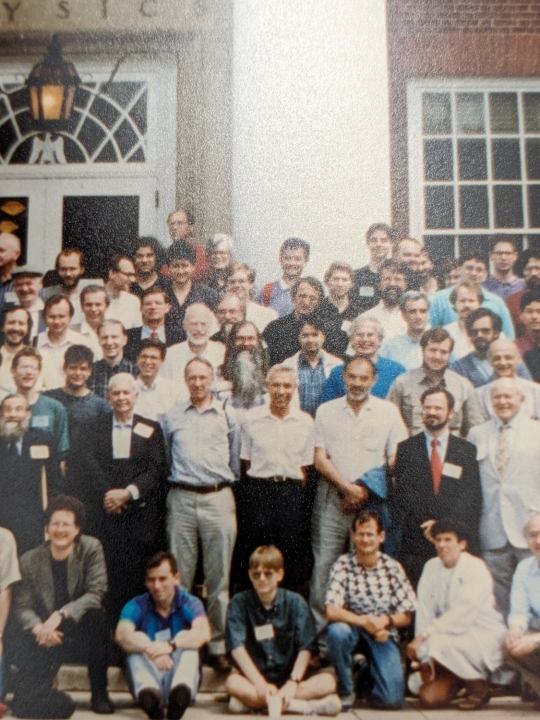
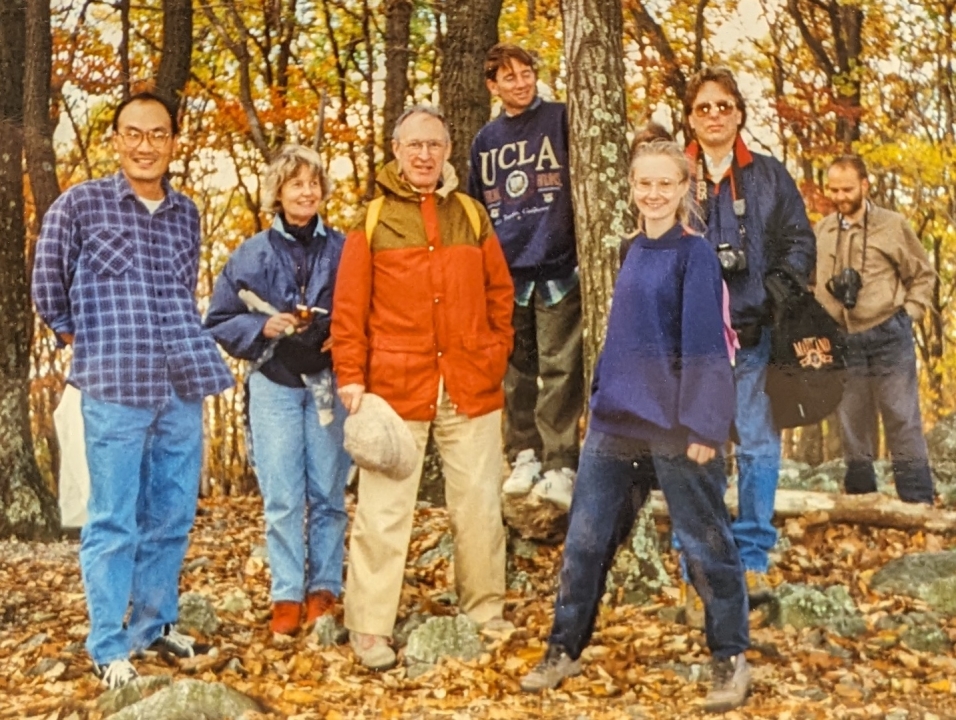
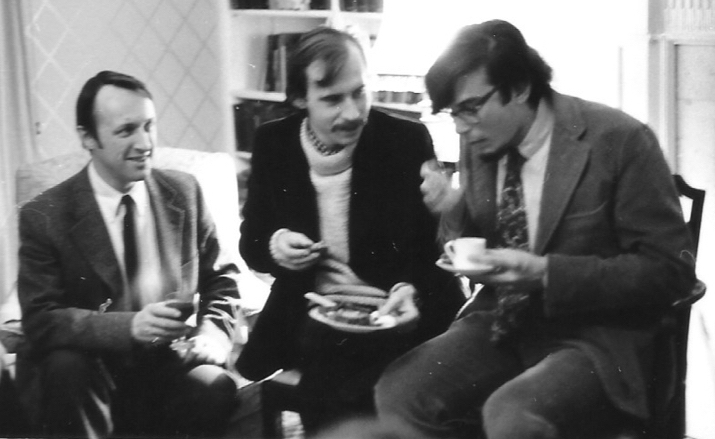
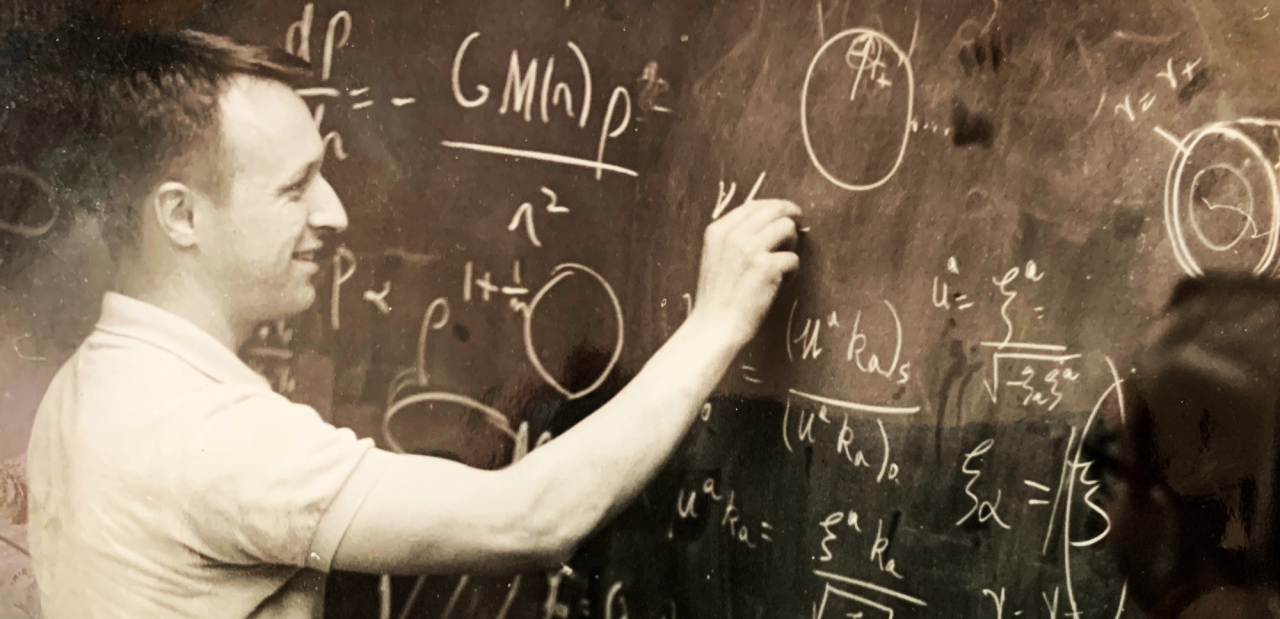
  • Griffin Toll
  • griffin at macdonald service
  • Griffin international night
  • Griffin
  • Richard Griffin Wallace
  • Retirement 012 jpg

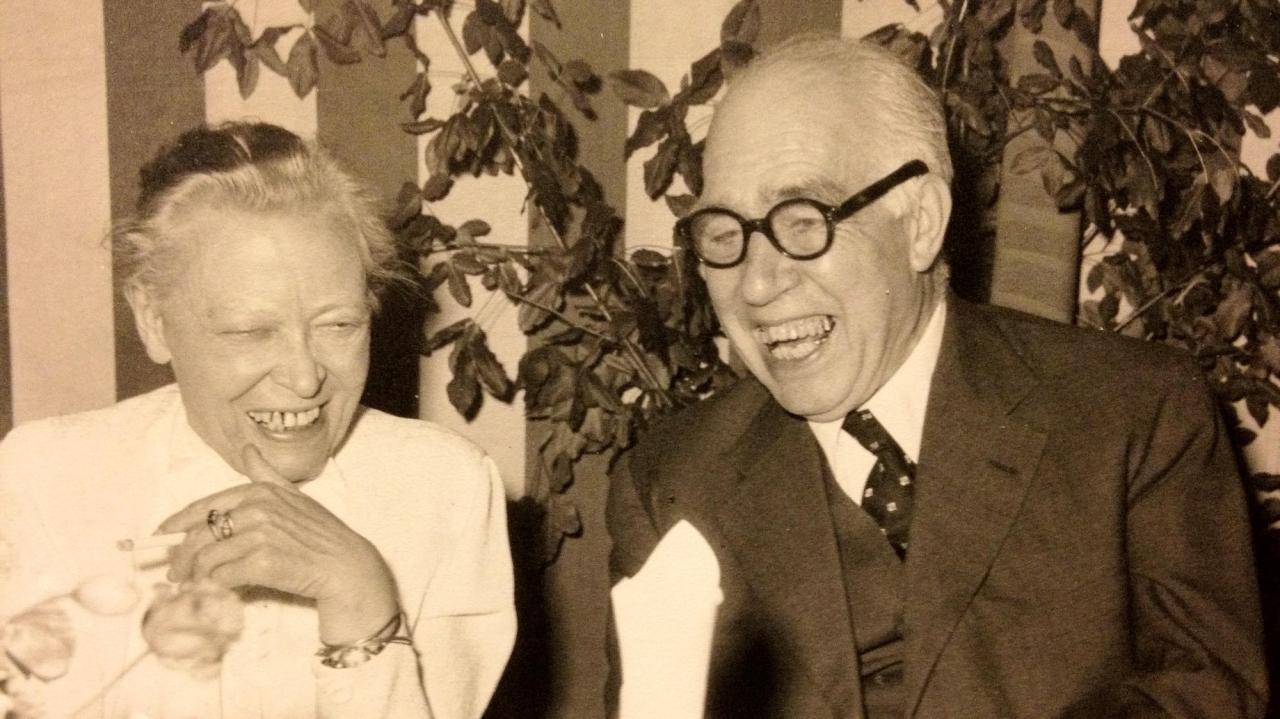
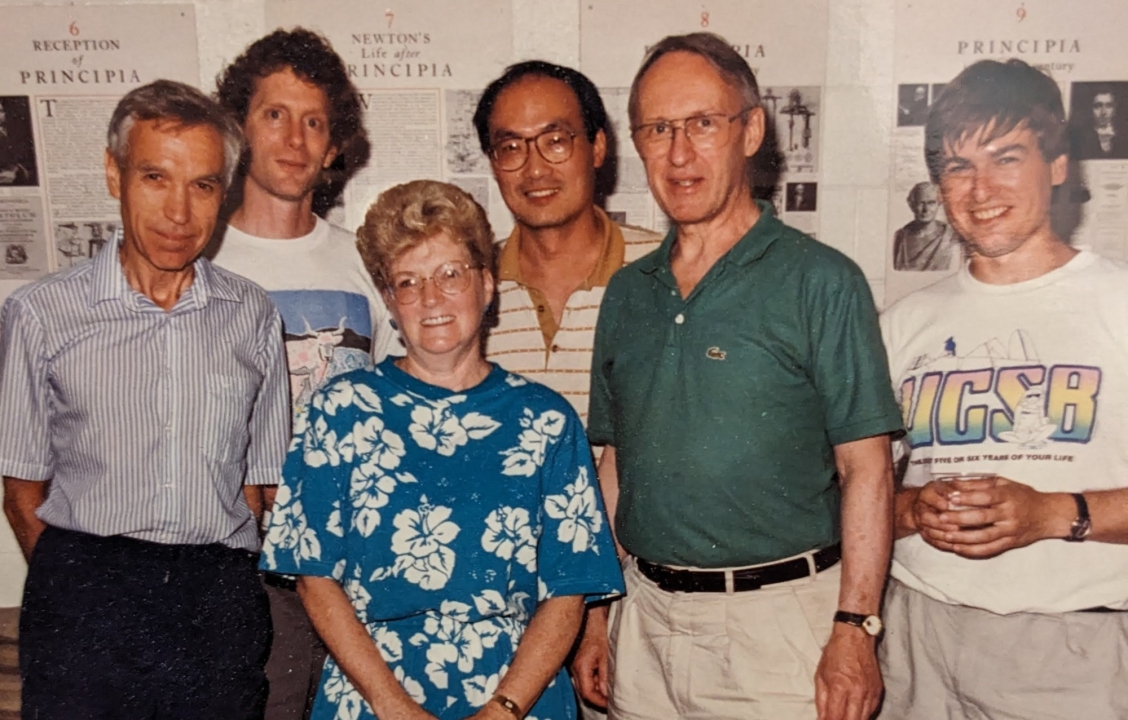
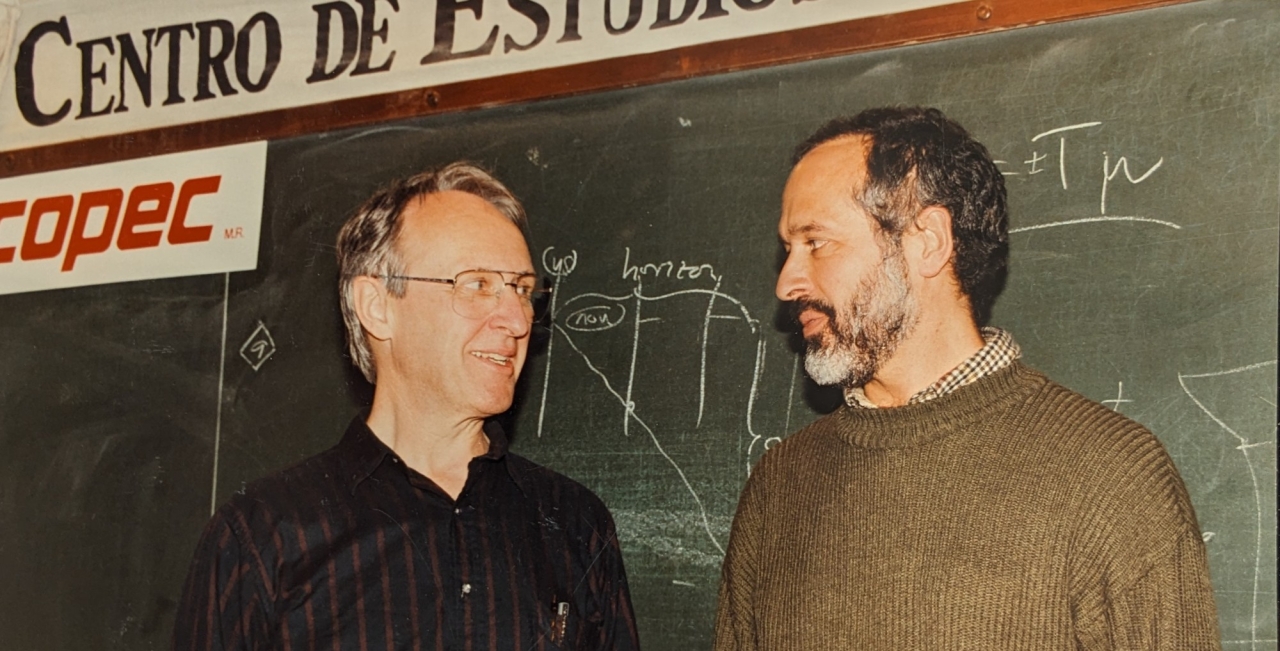
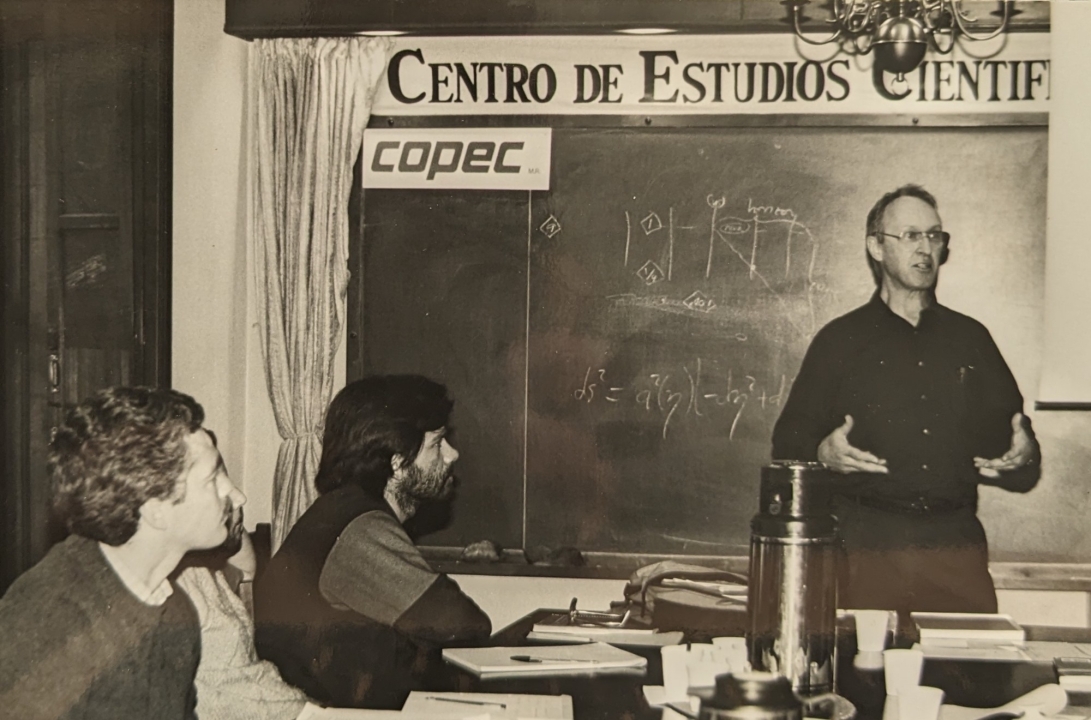
Jim Griffin and John Toll.

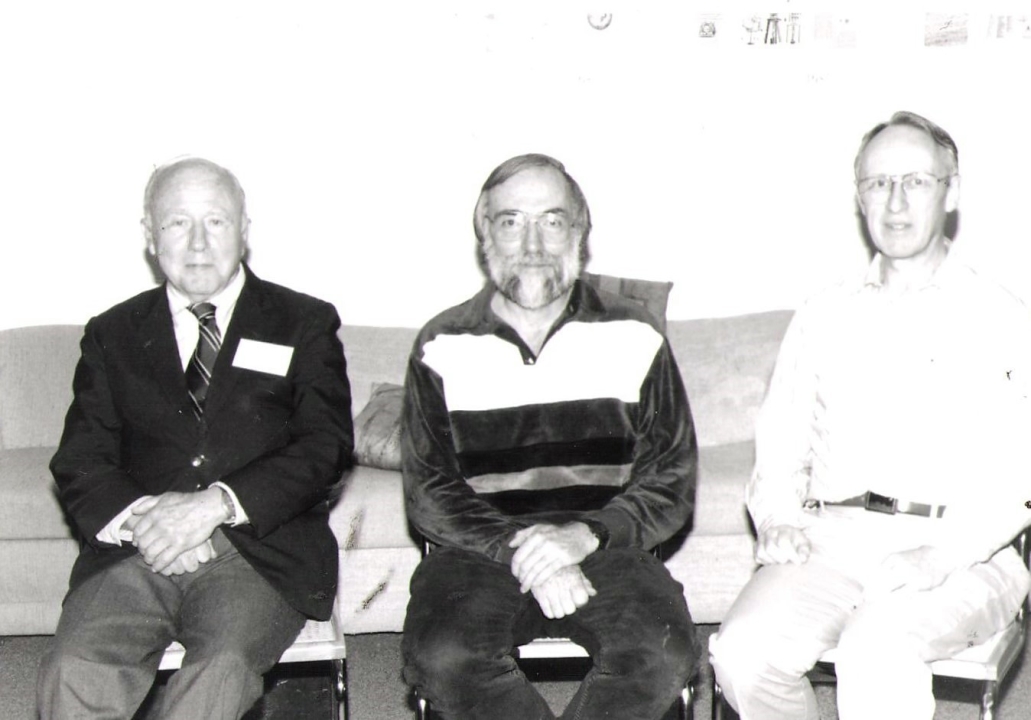
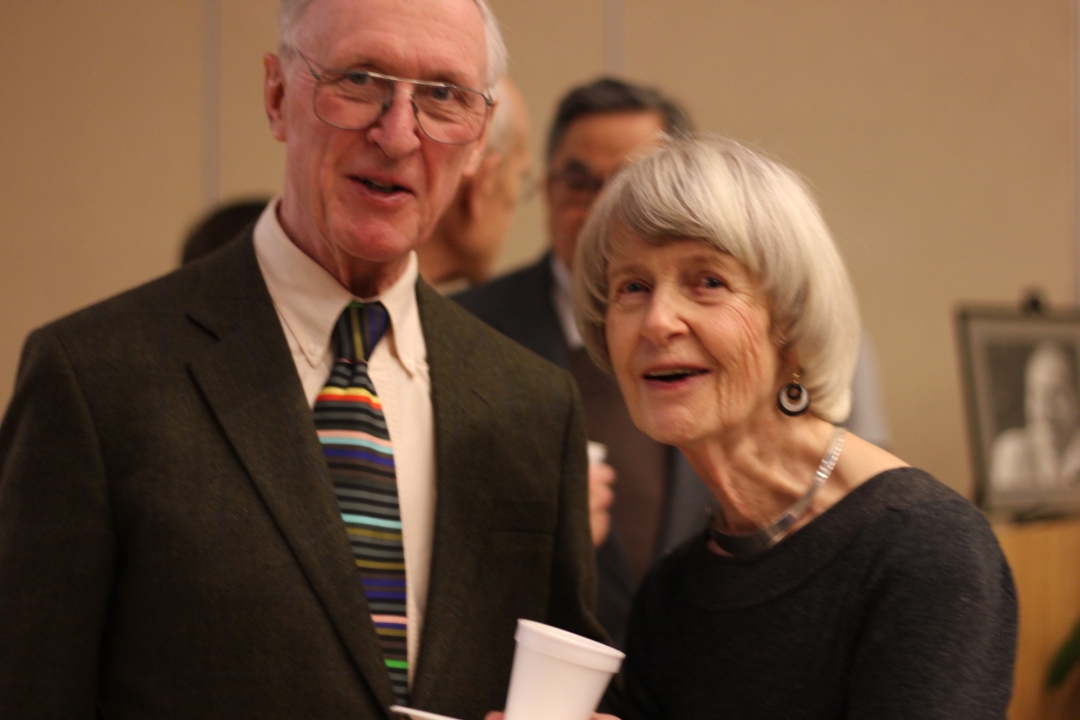
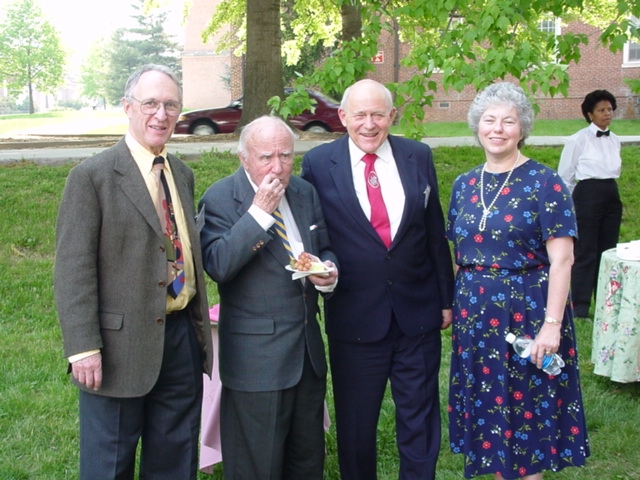
Jean-Paul Richard, Jim Griffin and Steve Wallace

Jim Griffin, Hans Griem and Doug Currie

More Articles …

  1. Wolfgang Losert Elected AAAS Fellow
  2. Distinguished University Professor Ed Ott Retires
  3. Rehearsals, Recitals and Research
  4. From Physics to Pharma

Page 39 of 203

  • 34
  • 35
  • 36
  • 37
  • 38
  • 39
  • 40
  • 41
  • 42
  • 43
  • Physics Administration
  • Directions
  • Awards
  • Student Awards
  • Make a Donation
  • News
    • Research News
    • Department News
    • Newsletters
  • PTK Policy

College and Department Links

Department of Physics

Physical Sciences Complex
4296 Stadium Dr
College Park, MD 20742
Phone: 301.405.3401

Information

  • Campus Directory
  • Undergraduate Research
  • Scholarships
  • Prospective Undergraduates
  • Directions & Transit
  • Web Accessibility
© 2026 University of Maryland - Department of Physics
Top
  • Home
  • About Us
    • Physics Administration
    • Directions
    • Awards
    • Student Awards
    • Make a Donation
    • News
      • Research News
      • Department News
      • Newsletters
    • PTK Policy
  • People
    • All
    • Faculty
      • Current
      • Emeritus
      • Adjunct
      • Affiliate
      • Research Professors
    • Research Scientists
    • Postdocs
    • Staff
    • Lecturers
    • Visitors
    • Graduate Students
  • Research
    • Research Areas
      • AI and Physical Sciences
      • Astro Metrology
      • Atomic, Molecular & Optical
      • Biophysics
      • Chemical Physics
      • Condensed Matter Experiment
      • Condensed Matter Theory
      • Cosmic Ray Physics
      • Elementary Particles
      • Gravitation Experiment
      • Gravitational Theory
      • High Energy Physics
      • Nonlinear Dynamics, Chaos and Complex Systems
      • Nuclear Physics
      • Particle Astrophysics
      • Physics Education Research
      • Plasma Physics
      • Plasma Theory
      • Quantum Science and Technology
      • Quarks, Hadrons and Nuclei
      • Space Physics
    • Centers & Institutes
  • Academics
    • OSES Home (Student Services)
    • OSES News
    • Undergraduate Program
      • Prospective Students
      • Apply Now
      • Degree Requirements and Policies
      • Scholarships
      • Undergraduate Research
      • Advising
      • Undergraduate Forms
      • Undergraduate Events
      • Departmental Honors
      • Society of Physics Students
      • FAQ
      • Undergraduate Student Committee
    • Graduate Program
      • Prospective Students
      • Open House
      • Degree Requirements
      • Graduate Resources
      • Deadlines and Forms
      • PhD Defenses
        • PhD Defenses 2026
        • PhD Defenses 2025
        • PhD Defenses 2024
        • PhD Defenses 2023
        • PhD Defenses 2022
        • PhD Defenses 2021
        • PhD Defenses 2020
        • PhD Defenses 2019
        • PhD Defenses 2018
        • PhD Defenses 2017
        • PhD Defenses 2016
      • Events
      • Scholarships & Awards
      • Qualifier
      • Graduate Student Organizations
      • FAQ
    • Student Opportunities
      • GRAD-MAP
      • Graduate Student Organizations
      • Outreach Volunteering
      • Society of Physics Students
      • NSF S-STEM Program
      • Undergraduate Research
      • Women in Physics
      • Undergraduate Quantum Association
    • Courses
    • Academic Support
    • NSF S-STEM Program
    • Teaching Assistants
  • Events
    • Calendar
    • Physics Colloquia
    • W.J. Carr Lecture
    • Research Interaction Team (RIT) Math/Physics
    • Mechanick Quantum Biology Lecture
    • Irving and Renee Milchberg Endowed Lectureship
    • Charles W. Misner Endowed Lectureship in Gravitational Physics
    • John S. Toll Endowed Lecture
    • Prange Prize Lecture
    • Maryland Day
    • Outreach
      • Outreach Home
      • Physics is Phun
      • Discovery Days
    • Summer Programs
      • Physics Makers Camp
      • Physics of Quidditch
      • Science Discovery Camp
      • Advanced Physics Summer Program
      • Toolkit for Success
    • CUWiP
    • Vortex Makerspace
    • QURiSE Conference
  • Services
    • Building Access Requests
    • Computing Services
    • Conference Room Reservations
    • Department Operations Directory
    • Electronic and Mechanical Development
    • Hiring Procedures
    • Lecture Demo
    • Mental Health Resources
    • Parking
    • Physics Ombudspersons
    • Printing Services
      • Poster Print Request
    • Proposal Submissions
    • Purchase Order
    • Suggestion Box
    • Textbook Information
  • Give