How Physics Powers EA’s Next-Gen Video Games

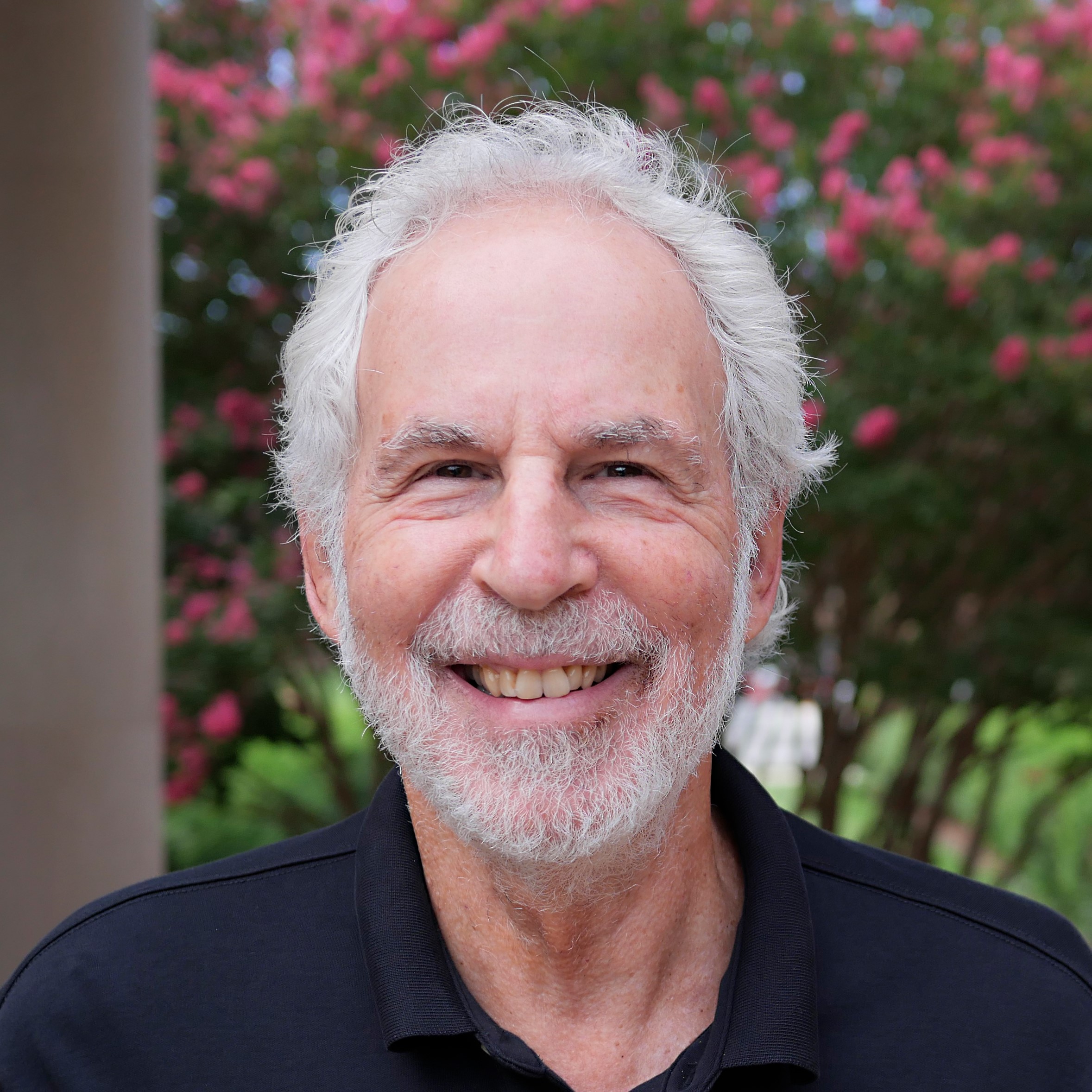
What does quantum research have to do with video game graphics? Well, nothing—at least not directly, according to William Donnelly (Ph.D. '12, physics). Donnelly conducted quantum entanglement and gravity research for his dissertation at the University of Maryland and is now a senior rendering researcher at Electronic Arts (EA)—the video game company behind hit franchises including The Sims, Battlefield, Star Wars: Battlefront, Need for Speed and the EA Sports titles. William DonnellyWilliam Donnelly

He works in EA’s Search for Extraordinary Experiences Division (SEED), which houses roughly 60 researchers working on bringing digital characters to life, using machine learning for game AI and content creation, and developing novel real-time graphics & physics techniques. Donnelly is part of SEED’s Future Graphics team, which works on next-generation computer graphics and breakthrough physics simulation.

“Our goal is to push forward the state of the art in electronic entertainment,” he said.

His team’s recent projects include developing advanced techniques to denoise graphics and to animate cloth and fluids—and some of their tools have already been incorporated into EA’s titles and its game engine, Frostbite.

Although Donnelly noted that there are no direct applications from his theoretical physics research to his computer graphics work now, he doesn’t regret studying physics—far from it.

In his work at EA, Donnelly often uses the skills he developed in writing and presenting research. He also uses techniques from theoretical physics, such as heat kernel methods used to solve heat equations, in his work on generative artificial intelligence and computer graphics.

“You’re never sure how useful these things will be in the ‘real’ world,” he said. “But ultimately, they’re invaluable.”

On a fundamental level, Donnelly said that physics is at the core of creating video games. To create a realistic or believable virtual reality, game designers must have a deep understanding of the rules that govern the physical realm.

“To make cool gamelike simulations, you really have to understand how the world works,” he explained. “All of my experience at UMD translated extremely well to the work that I do now.”

From computer graphics to physics and back again

SEED isn’t Donnelly’s first stint working in computer science. He earned a bachelor’s degree in computer science and a master’s degree in applied mathematics from the University of Waterloo in Canada.

As an undergraduate student in the early 2000s, he interned at computer graphics companies—including NVIDIA—where he published his first scientific papers on graphics processing units. These were brand-new technologies at the time, so Donnelly invented and demonstrated new techniques to make the best use of them.

One of his early publications, titled “Variance shadow maps,” was a “big hit,” he said. The technique he proposed, which provides a solution for a problem called shadow map aliasing, rapidly spread through the gaming industry and appeared in published games.

But around this time, Donnelly began pondering deeply about the inner workings of the world. He took coursework in quantum mechanics, quantum information and general relativity, and he was captivated by problems at the forefront of quantum gravity.

He debated between pursuing a Ph.D. in computer graphics and a Ph.D. in physics and opted for the latter, enrolling at UMD, where his dissertation focused on quantum entanglement, black hole entropy and quantum gravity. After graduating, he spent nine years as a postdoctoral researcher at the University of Waterloo; the University of California, Santa Barbara; and the Perimeter Institute for Theoretical Physics in Waterloo.

Still, he left the door open to return to computer graphics. And although he found quantum physics “fascinating, deep, mysterious and worthwhile,” he never particularly enjoyed academia. So, he pivoted to industry and joined SEED in 2021.

‘Computer rendering is actually a physics problem’

Although there are no direct ties between Donnelly’s quantum research and his computer graphics work, his broader physics education helps in his current role.

“If you want to make a character jump, you have to know how a body moves under gravity. To simulate smoke, it’s important to understand not only the underlying physics of fluids, but also how light interacts with the material,” he explained. “There’s a lot of math and physics involved.”

In addition to mechanics, computer rendering, which involves translating a 3D geometry description to pixels on a screen, applies concepts in optics.

“Computer rendering is actually a physics problem,” he said. “You actually have to solve equations of light transport. You have to study how the light from the sun and other sources bounces around and makes it into your eye.”

One of Donnelly’s biggest achievements so far is improving how programs solve light transport equations to reduce noise in renderings. Effectively, the new technology hides noise generated during the graphics rendering process by pushing it into sensory spaces that humans can’t perceive. He and his collaborators published the technique in May 2024 in the Proceedings of the ACM on Computer Graphics and Interactive Techniques, and it has already been incorporated into EA’s Frostbite game engine.

That’s what Donnelly enjoys most about his career in industry compared with academic research in theoretical physics—how rapidly new findings get applied.

“I love that things go straight into the real world. You know it works because it instantly looks more real or better,” he said. “You immediately get feedback—60 frames per second worth of it.”

Written by Jason P. Dinh

Remembering and Giving Back

It’s been more than 30 years, but Jeff Saul (M.S. ’91, Ph.D. ’98, physics) still remembers the week that changed his life.

“I guess I must have been in the right place at the right time, because that week started with Joe Redish becoming my advisor, then, the same week, I had my first date with Joy—who’s now my wife—and I got my first teaching job,” Saul recalled. “That week changed everything.”Jeff Saul and Joe Redish in cap and gown at Saul's PhD ceremony.Jeff Saul and Joe Redish

At the time, Saul was a physics graduate student at the University of Maryland, looking forward to a career teaching college-level physics. The late Physics Professor Joe Redish, a nuclear theorist who became an internationally recognized expert in physics education research, became Saul’s mentor and friend and made him part of the new Maryland Physics Education Research Group (PERG).

“It was great to work for Joe. It was exciting and fun,” Saul recalled. “For me, it was the first time I was working in a physics lab where everything just sort of clicked.”

In their work, Saul and Redish and the rest of the founding Maryland PERG group members (Richard Steinberg, Michael Wittmann, Mel Sabella, and Bao Lei) conducted research on students’ physics learning, developed new assessment strategies, and explored innovative, activity-based approaches to teaching college-level physics. As they developed strategies to make physics education less lecture-driven and more interactive, Saul and Redish operated on the same wavelength—in more ways than one.

“If you saw the two of them together, you could see the connection,” recalled Saul’s wife, Joy Watnik-Saul. “They both had the beards, and they both had the round glasses. And they both wore that same kind of fedora-type hat. So, people would sometimes call Jeff a ‘Mini Joe.’ Joe was just a really important part of Jeff’s life and his whole career.”

For Saul, Redish’s mentorship and their work in physics education research became the inspiration for a decades-long career as a teacher, advocate, innovator in physics and STEM education, and physics faculty member at the University of Central Florida, Florida International University and the University of New Mexico. Now retired, Saul is committed to paying that life-changing UMD physics experience forward.

“I knew I wanted to make a contribution that would last longer than me,” Saul explained. “I want physics education research to continue at Maryland, and I want Maryland to continue working at making physics more fun and more accessible and helping students get more out of it.”

Now, Saul and his wife are doing their part by making a planned gift to Forward: The University of Maryland Campaign for the Fearless, a $2.5 billion initiative that officially launched in November 2025 to accelerate advances in research, education and science.Joy Watnik-Saul and Jeff SaulJoy Watnik-Saul and Jeff Saul

“Joe Redish was one of the pioneers of physics education research – the recognition that if we want to improve the teaching of physics, it needs to be done by physicists, treating it as a science.  This has since broadened throughout the sciences as discipline-based science education research,” Physics Chair Steven Rolston explained.  “This gift from Jeff and Joy emphasizes the outsized impact of Joe’s work and helps continue the tradition here at UMD.”

The Sauls’ generous gift will establish the Dr. Jeff Saul and Joy Watnik-Saul Endowed Distinguished Graduate Fellowship in Physics.

“It’s a fellowship for graduate students doing physics education research,” Saul explained, “and the fact that there's a fellowship for that helps increase the prestige of the field, and it helps attract good graduate students to continue to work in the field.”

To support physics undergraduates interested in physics education, they will also establish the Dr. Jeff Saul and Joy Watnik-Saul Endowed Undergraduate Student Support Fund in Physics.

“The undergraduate scholarship is for a student doing physics education research,” Saul said. “The idea is to get students interested in this field and keep them going forward.”

The Sauls’ gift also includes a contribution to name a collaboration room in the Physical Sciences Complex in memory of Redish.

“A research group really should have its own space and its own conference room where they can get together and talk, and I remember that being part of an active group was a big part of being at Maryland, working on a lot of different things, sharing ideas and really being a team,” Saul said. “And I thought, what a great way to memorialize Joe as well.”

The Sauls’ commitment is also part of the Bequest Legacy Challenge, an incentive program that provides an immediate cash match for donors who document new or increased planned giving commitments to the College of Computer, Mathematical, and Natural Sciences. The Sauls hope their gift can inspire others to do the same thing.

“I'm happy we’re able to make a lasting difference for another generation of students,” Saul said.

Saul says he’ll never forget the many ways that UMD changed his life. Now, it’s all about giving back.

“I owe my career to the University of Maryland, and the people who mentored me and worked with me,” he reflected. “This is a way that I can continue to make a difference and give something back.”

Written by Leslie Miller

From Physics to Finance

For Nathan Frohna (B.S. ’22, physics, MQF ’25, quantitative finance), an undergraduate degree in physics from the University of Maryland opened the door to business school, a master’s degree and an unexpected detour—from science to the financial world.

“When I was starting college at UMD, I can honestly say that I thought I’d always stay in physics research and academia. Finance was not on the radar,” Frohna said. “But I have come to appreciate that just as physics governs our universe, business and finance govern the world we live in and interact with, and solving the problems, complexities and challenges in that field can be just as rewarding. I feel very good about my path.”Nathan FrohnaNathan Frohna

Frohna’s path may have shifted toward finance, but he didn’t leave physics behind. Now working as an associate on the financial risk and assessment team at Morgan Stanley in Baltimore, he discovered that many of the skills he learned and applied in physics—tools like critical thinking, complex problem-solving, programming and analytical thinking—are invaluable to his work in finance as well.

“I’m still quite new in my current role, but so far, the things that are important in my day to day work now—having an intuition with statistics and logical processes, the ability to persevere working through long, complex problems, and the instinct to always develop a mental understanding of all the variables and unknowns—are skills that I honed from years of studying physics,” Frohna explained. “Solving puzzles in the financial world has lots of interesting rewards, benefits and consequences that I didn’t really see with physics, but many of the problems are remarkably similar.

Puzzles waiting to be solved

Frohna has always looked at the world around him as an endless array of puzzles waiting to be solved.

“Even as a kid, I was all about trying to understand the reality around me, and that kind of led me to pick physics as my main interest, my passion and eventually my major for undergrad,” Frohna said. “There’s just something about being able to quantify the world around me. I love the problem-solving.”

Even before he started studying physics in college, Frohna took a deep dive into physics videos on YouTube.

“I think that through the years, that’s where I’ve gotten probably 90% of my physics knowledge, just finding interesting physics topics and diving into them,” he said. “Watching those videos, just kind of stumbling down different rabbit holes online, would give me the same enjoyment as playing video games or hanging with friends. There was always so much more to learn.”

As a physics major at Maryland, Frohna embraced every challenge, from thermodynamics to quantum mechanics, the tougher the better.

“I would say quantum was where the intuition that drove me through physics just failed for me, because you have to think about it completely differently,” Frohna recalled. “That was where I was struggling the most, but at the same time, it was the most fun challenge that I’ve had academically. It was really inspiring. I felt like if you can tackle something like that, you’re pretty much golden. You can do anything.”

A bridge to the future

Though Frohna loved physics, he couldn’t help wondering how it would fit into his future career plan. During his senior year, his UMD business student girlfriend convinced him to join her team for the Impact Competition, where student teams pitch innovative projects and compete for funds to advance their work. For Frohna, the experience was life-changing.

“I took over as the analytics guy, the numbers guy for the team’s pitch, and I think that’s when I realized that the way I was taught to solve problems in physics at Maryland is extremely translatable to business and finance,” he said. “It helped me see in a very meaningful way how physics could be a bridge to that world.”

Inspired by the discovery, Frohna went on to earn his master’s degree in quantitative finance at UMD’s Robert H. Smith School of Business, where he saw an even stronger connection between physics and finance.

“I learned there are plenty of equations in finance that look remarkably similar to physics equations,” Frohna explained. “For example, Brownian motion--the random motion of particles suspended in a medium, and the mathematics that describe how the system evolves with respect to diffusion--and the Black-Scholes model, which is a mathematical model for the dynamics of a financial market, are incredibly similar.”

Now, in his work at Morgan Stanley, Frohna leverages his physics skill set to help the company meet regulatory standards and manage risks in its day-to-day operations.

“I work on financial regulatory reporting, testing financial IT SOX controls for our annual Form 10K filing,” he said of his work measuring the accuracy and integrity of financial reporting. And I feel my physics background suits me well, as each control I test involves systems and software that I am unfamiliar with,” he said. “Trying to understand and develop theories for where risk may arise in these processes always comes down to logic, evoking the same skills I needed when I was facing unfamiliar classical thermodynamics problems in physics.”

Frohna hopes that as he gains more experience, his work will take him even deeper into quantitative finance.

“I’d like to get to a place where I’m really challenged, just like I was with quantum mechanics, because if I can get to a place where I can work on problems that push me to my limit, that’s where I can get the most out of it,” he explained. “What’s great about being at Morgan Stanley is that it’s so big, and they promote moving up and moving around within the company, so this is a great place for me to grow.

For Frohna, it’s all about applying his physics knowledge in a way that makes a difference. And he couldn’t be more grateful for the degree that started it all.

“I like mentioning to people that I have a degree in physics from Maryland, even before I mention quant finance. It’s something I’m really proud of,” Frohna said. “Physics taught me so much about deep analytical, challenging problems and what you can accomplish when you try not to get too overwhelmed, and you just keep putting in the effort. My physics degree opened doors I didn’t expect, and I think it’s the most valuable thing I’ve ever done for myself.”

Written by Leslie Miller

UMD Physicist Shrinks Down Massive Particle Accelerators with Laser-Driven Plasma

Particle accelerators are among the largest and most complex scientific projects ever built. The Large Hadron Collider spans 16 miles deep beneath Switzerland. Stanford’s linear accelerator stretches more than two miles. These massive, billion-dollar machines can probe the fundamental nature of reality—but their size and cost put them out of reach for most.

University of Maryland physics postdoctoral researcher Jaron Shrock (Ph.D. ’23, physics) is helping to change that.Jaron Shrock holds newly-developed equipment.Jaron Shrock holds newly-developed equipment.

In 2025, Shrock won the American Physical Society's Marshall N. Rosenbluth Outstanding Doctoral Thesis Award for demonstrating the first multi-GeV laser wakefield acceleration using optically generated plasma waveguides. In simpler terms, he figured out how to shrink a kilometers-long accelerator down to the size of a conference table.

“Getting a kilometers-long machine to fit inside a university lab, a manufacturing facility or a hospital room has enormous potential to bring advanced light and radiation sources to a variety of applications,” explained Shrock, who works with Distinguished University Professor of Physics Howard Milchberg in the Intense Laser Matter Interactions lab at UMD.

Traditional particle accelerators are already mainstays in research: scientists use them to study the universe’s origins, discover new particles, produce isotopes for medical imaging, manufacture computer chips and much more. Shrock says that overcoming the limitations that come with their massive size could open doors for other applications and users, allowing more people to access the benefits of accelerators on a more portable and more cost and energy-efficient level.

“This is a major step to really democratizing the capabilities of this kind of tech,” Shrock explained. “Our findings help make this more accessible to a whole variety of people, including researchers, hospitals and industries.”

From musical harmonics to plasma physics

Shrock’s current success is a long way from where his journey began in a high school physics classroom when a music project about harmonics suddenly made the universe click into place.

“I saw the connection between the musical training I had and physics,” Shrock recalled. “There are really fascinating, deep relationships that govern all these things around us, and I realized I wanted to learn more.”

Always a tactile person, Shrock excelled at working with his hands. After graduating from high school, he attended Swarthmore College in Pennsylvania to play baseball and study physics.

“I got to work in a plasma physics lab there, and I discovered that I wanted to be in a lab where I get to touch stuff, make things, have physical connections to the experiment,” Shrock said. “My then-advisor told me to go and meet Howard Milchberg at UMD, see what they do with intense lasers. I did and got hooked on it immediately.”

Since that initial visit to College Park in 2018, Shrock never looked back. He became fascinated by the idea of using lasers to accelerate electrons through plasma, a special state of matter found in lightning and the sun.

“Traditional particle accelerators face fundamental limits: they push particles using electromagnetic fields inside vacuum chambers, but those fields can only be so strong before destroying the machine’s walls,” Shrock explained. “The only solution was to just build longer and longer, which is why conventional accelerators span kilometers.”

Shrock’s laser-driven approach sidesteps this entirely. Ultrapowerful laser pulses—lasting just femtoseconds (a millionth of a billionth of a second)—can rip through plasma like a snowplow, separating electrons from ions. This creates a wave that accelerates trapped electrons with forces a thousand times stronger than conventional accelerators.

“We could push particles a thousand times harder with this laser method, so it meant that we only need to push them a thousand times shorter distance,” Shrock said. “All of a sudden, a kilometer-size machine becomes a meter-scale machine.”

The key innovation is a plasma waveguide—essentially a fiber optic cable made of plasma that keeps ultra-intense lasers focused over meter-long distances. Although Milchberg pioneered these waveguides at UMD in the 1990s, the laser tech wasn’t ready to test at that time. But when Shrock joined Milchberg’s lab in 2018 as a physics Ph.D. student, they finally made it happen.

After spending months in Colorado running experiments, Shrock and Milchberg’s team produced the breakthrough that would anchor Shrock’s award-winning thesis—the first single-shot muon radiography using a laser-driven source.

“Muons are subatomic particles that can penetrate dense materials, but while they’ve been used to successfully discover hidden chambers in Egyptian pyramids, those applications relied on cosmic rays and took weeks,” Shrock explained. “We rolled a rental truck loaded with detectors into the beam path and were able to see, on single shots, shadows of the material we were scanning. If the accelerator fits on a truck, then you can take it directly to the feature that you want to image, quick and easy.”

Small team, massive impact

Shrock says these breakthroughs would’ve been impossible without a uniquely supportive research environment.

“The culture here at UMD, I think, makes a big difference,” Shrock said. “Students don’t just run experiments—they design equipment, fabricate optics, engineer gas jets and intimately understand every component.”

Shrock believes that the deep technical expertise, combined with Milchberg’s mentorship style, allowed him and his groupmates to thrive. The team’s success in Colorado wasn’t a massive national laboratory or industry effort but simply a handful of dedicated graduate students—now postdocs—working closely together. Despite the limited personnel, their work completely transformed the trajectory of particle accelerator technology around the world, including research at Lawrence Berkeley National Laboratory, the birthplace of particle accelerator technology.

In 2021, Shrock led a multi-institutional collaboration with the Defense Advanced Research Projects Agency (DARPA) as a graduate student. He directed a team of senior scientists—an unusual level of responsibility that reflected Milchberg’s commitment to developing the next generation of physicists.

“Howard really empowers young scientists,” Shrock noted. “Whenever our lab receives invitations to give talks, he always passes it to graduate students. He’s never stingy about opportunities, and it’s led to our work being widely recognized. I’m the fourth person from his group to receive the Rosenbluth Award, which reflects his efforts to support us.”

This year, as UMD’s upgraded 100-terawatt laser system comes online, the campus will have its very own compact particle accelerator, thanks to foundational work from Milchberg’s group. Faculty members are already designing experiments to take advantage of its unprecedented capabilities.

“There's a whole lot that will come out of reconsidering the economic calculation for what you can do with a high-energy particle beam,” Shrock said. “It saves a lot of time, money and effort if you can just walk across campus to use an accelerator rather than needing to go someplace far away.”

Looking ahead, Shrock envisions compact accelerators taking on research and production to the next level, beyond what conventional accelerators have provided in fields such as medical isotope production, advanced manufacturing and fusion research diagnostics.

“It's been both incredibly thrilling and exhausting to see this platform grow from ideas developed by our small team to the centerpiece of international research efforts,” Shrock reflected. “I believe we're only scratching the surface of what these accelerators can do.”

Written by Georgia Jiang